


As global temperatures steadily ascend and climate patterns shift in unpredictable ways, the intricate dynamics of zoonotic diseases are also undergoing profound transformations. A groundbreaking study from researchers at the University of California, Davis, projects an unsettling future for South America: the expansion and intensification of arenavirus infections, spread by rodents, into regions that have historically been free from such threats. This emerging risk heralds a new frontier in public health challenges, demanding urgent attention and innovative scientific responses.
The study, published in the esteemed journal npj Viruses, employs advanced computational modeling techniques to forecast how the interplay between climate change, rodent ecology, and human populations will redefine the risk landscape of arenaviral hemorrhagic fevers over the next two to four decades. By integrating high-resolution climate projections with detailed habitat suitability models for several rodent species known to harbor arenaviruses, the researchers have created an interactive platform called AtlasArena. This tool utilizes machine learning algorithms to unravel the complex chain of ecological and epidemiological factors that drive zoonotic spillover events, crucially enabling the identification of novel hotspots for potential human infection.
South American New World arenaviruses, although comparatively understudied relative to their Old World counterparts such as Lassa virus in Africa, are no less perilous. Viruses like Guanarito, Machupo, and Junin are responsible for hemorrhagic fevers marked by severe clinical manifestations and significant mortality rates ranging between 5% and 30%. Historically confined to localized ecological niches, these viruses have now been modeled to potentially widen their geographic foothold, exposing populations without prior immunity or experience with these diseases to unprecedented risks.
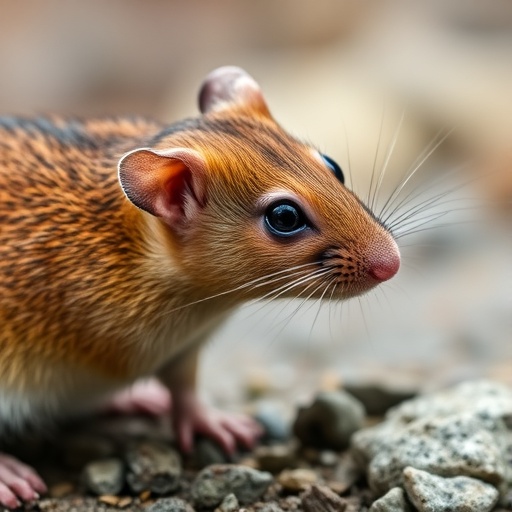
A nuanced understanding of rodent reservoir species’ shifting ranges forms the cornerstone of this research. Species such as the drylands vesper mouse in Argentina epitomize how climate-driven habitat changes compel rodents to migrate into novel territories. As these carriers venture into new regions, they facilitate the enzootic circulation of arenaviruses beyond their prior confines. For instance, projections indicate that Guanarito virus, once primarily restricted to central Venezuela, may soon infiltrate border areas within Colombia, Suriname, and northern Brazil due to expanding suitable habitats driven by climatic changes and land use alterations.
Concurrently, the Machupo virus—which traditionally inhabits the plains and lowlands of Bolivia—is anticipated to advance into the more elevated Andes foothills and mountainous terrains, representing a significant ecological shift altering human exposure dynamics. This vertical migration underscores the multifaceted nature of climate change effects encompassing temperature gradients, precipitation patterns, and habitat fragmentation. Similarly, Junin virus distributions are modeled to shift within Argentina, retracting from some grassland regions but progressing into hitherto unaffected zones, thereby altering regional risk profiles in complex ways.
One of the study’s most striking revelations concerns populations encountering these viruses for the first time, where immunological naïveté might translate into heightened vulnerability to infection and severe disease outcomes. This phenomenon accentuates the epidemiological concern that emergence zones—where viruses move beyond historical boundaries—may become epicenters for future outbreaks, posing formidable challenges for surveillance, diagnosis, and healthcare infrastructure development.
Addressing the drivers of spillover risk, the researchers identify anthropogenic land use changes as critical factors, particularly agricultural expansion and urbanization, which augment human-rodent interfaces. Combined with fluctuations in temperature and precipitation influenced by climate change, these factors create landscapes primed for cross-species viral transmission. Importantly, the team’s machine learning approach allows for the capture of nonlinear interactions within these environmental variables, facilitating more robust and reliable projections compared to conventional epidemiological models.
At the heart of the research effort is the AtlasArena platform—a publicly accessible, interactive computational tool enabling stakeholders to visualize and analyze zoonotic risk across diverse spatial and temporal scales. By synthesizing ecological, environmental, and epidemiological data layers, AtlasArena stands as a pioneering example of how technological innovation can underpin proactive public health strategies. Its capacity for adaptation means that it could be extended to monitor other emerging pathogens tightly linked to climate factors and wildlife reservoirs, positioning it as a vital asset in global disease surveillance frameworks.
Despite the insights provided, the authors emphasize the necessity for coordinated, transboundary public health policies responsive to these emerging risks. The inherently international nature of zoonotic disease threats—exemplified by rodent movements and virus spread across national borders—requires collaborative surveillance systems, data sharing, and response planning. Investing in climate-resilient health infrastructure, rodent habitat management, and community-based awareness initiatives will be crucial components in preempting future arenaviral outbreaks.
Integral to translating these findings into actionable policy are continued interdisciplinary efforts bridging ecology, epidemiology, computational modeling, and public health. The study’s funding by the Wellcome Trust underscores the importance of sustained support for research at this critical nexus. Furthermore, ongoing updates to the AtlasArena platform and integration of newer climate models will refine risk assessments as conditions evolve.
This pioneering research illuminates a disconcerting facet of climate change’s impact on infectious diseases, highlighting arenaviral hemorrhagic fevers as emblematic of broader zoonotic threats looming in our warming world. The findings stand as a clarion call for intensified scientific inquiry, comprehensive monitoring, and preemptive public health planning to safeguard millions of people potentially at risk across South America. As the climate crisis unfolds, leveraging computational tools alongside field surveillance will be indispensable in anticipating and mitigating the next generation of infectious disease challenges.
News Publication Date: 15-Apr-2026
Web References:
Reference:
Kulkarni, P.S., Pandit, P.S., Flores-Perez, N., Jian, A., Bird, B., Johnson, C., & Uhart, M. (2026). Climate-driven changes in zoonotic risk of arenaviral hemorrhagic fevers in South America. npj Viruses. DOI: 10.1038/s44298-026-00189-2
Cite Scienmag News
Sloane Callahan. (May 4, 2026). Climate Change Amplifies Spillover Risk of Rodent-Borne Arenaviruses. Scienmag. https://scienmag.com/climate-change-amplifies-spillover-risk-of-rodent-borne-arenaviruses/
Sloane Callahan. "Climate Change Amplifies Spillover Risk of Rodent-Borne Arenaviruses." Scienmag, 4 May 2026, https://scienmag.com/climate-change-amplifies-spillover-risk-of-rodent-borne-arenaviruses/. Accessed 4 September 2026.
Sloane Callahan. "Climate Change Amplifies Spillover Risk of Rodent-Borne Arenaviruses." Scienmag. May 4, 2026. https://scienmag.com/climate-change-amplifies-spillover-risk-of-rodent-borne-arenaviruses/


