


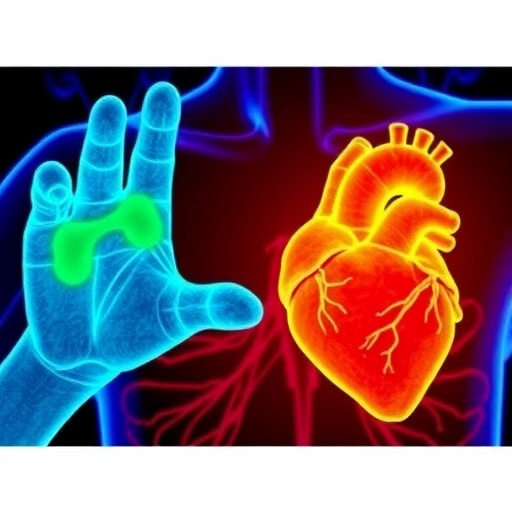
A groundbreaking study from UC Davis School of Medicine has unveiled a fascinating biological mechanism that mirrors the old adage “cold hands, warm heart.” This long-held metaphor now finds a literal counterpart in the behavior of the TRPM4 ion channel, a protein whose mutations lead to distinct diseases based on the temperature of the tissue where it is active. This discovery clarifies a puzzling medical mystery concerning how the same gene can cause separate ailments without overlap, depending entirely on the thermal environment of the tissue.
TRPM4, a gene located on human Chromosome 19, encodes an ion channel integral to cellular signaling by regulating the flow of positively charged ions—or cations—across cell membranes. This gating mechanism is particularly sensitive to intracellular calcium levels, which trigger the channel to open, allowing ions such as sodium to enter the cell. The resulting electrical changes within the cell act as signals that orchestrate a variety of physiological functions, notably maintaining proper cardiac rhythms and regulating immune and skin cell behaviors.
Historically, mutations in TRPM4 have been associated with two distinct clinical conditions: inherited cardiac arrhythmias, including progressive familial heart block and Brugada syndrome, and rare hereditary skin disorders like progressive symmetric erythrokeratodermia (PSEK). The perplexing clinical observation has been that these conditions never co-occur in the same patient, despite both mutations causing increased TRPM4 activity. This phenomenon raised significant questions about the tissue-specific pathology and the functional dynamics of TRPM4 mutations.
Researchers at UC Davis, led by first author Yuhua Tian and senior author Jie Zheng, tackled this enigma through an interdisciplinary approach integrating electrophysiology, advanced molecular modeling, and mouse genetic models. Their investigation scrutinized how mutant TRPM4 channels responded to internal calcium, the lipid environment of the membrane—particularly the phospholipid PIP2—and varying temperatures that simulate conditions in different body tissues.
It was revealed that TRPM4 channel activity is finely tuned by the interplay of three factors: intracellular calcium concentration, binding with PIP2 (phosphatidylinositol 4,5-bisphosphate), and local temperature. PIP2 functions as a regulatory molecule, toggling the channel’s open and closed states. Importantly, the thermal environment was found to be critical—different mutations activate TRPM4 only within the narrow physiological temperature range of the tissue they affect.
Mutations linked to skin diseases disrupt TRPM4’s regulation by PIP2, causing the channel to remain abnormally active at the cooler temperatures typical of the skin’s outer layers, approximately 25 to 30 degrees Celsius. Given that extremities such as hands and feet experience lower temperatures than the body’s core, this activity drives pathological changes exclusively in skin cells. Conversely, mutations implicated in heart conditions increase the surface expression of TRPM4 on cardiac cells and enhance their electrical signaling, but only at the normal core body temperature of 37 degrees Celsius. These mutations are largely inert at the cooler temperatures characteristic of skin tissue.
This temperature-dependent dichotomy elegantly explains why patients with TRPM4 mutations affecting skin do not develop cardiac symptoms, and vice versa. The channel’s response is essentially context-dependent, governed by the nuanced environment of its cellular locale rather than only the genetic mutation. This insight fundamentally shifts the paradigm on how genetic mutations manifest as disease by highlighting the role of systemic and microenvironmental factors.
Moreover, this study underscores the pivotal influence of membrane lipids in modulating ion channel function. PIP2’s role as a molecular switch emphasizes that post-translational and environmental modulation are as important as genetic sequence changes in determining protein behavior and associated pathologies. Manipulating such interactions may open avenues for precision medicine targeting specific channelopathies.
Clinically, these findings hold promise for refined diagnostic frameworks and therapeutic interventions. Samuel Hwang, chair of the Department of Dermatology at UC Davis and a co-author on the paper, notes that although PSEK is a rare disease that often resolves after puberty, the insights gained could transform approaches to many inherited skin and cardiac conditions. Recognizing tissue-specific mutation effects could lead to tailored treatments targeting pathological activity at appropriate temperatures or membrane environments.
Further, the interdisciplinary nature of this research—from biophysics and computational biology to clinical dermatology—highlights the importance of collaborative science for unraveling complex biological problems. The model system developed here, combining experimental data with molecular simulations, provides a robust platform to investigate other ion channel-related diseases and their environmental sensitivities.
Looking ahead, pharmaceutical development efforts might harness these findings to modulate TRPM4 activity with greater specificity, potentially offering new therapies for patients with inherited heart block, arrhythmias, or skin disorders linked to TRPM4. Understanding how environmental factors like temperature and lipid composition influence ion channel function could also have broader implications for conditions impacted by cellular signaling dynamics.
In summary, the discovery that TRPM4’s disease-causing mutations differentially operate based on tissue temperature and membrane lipid context provides a paradigm shift in understanding genotype-phenotype relationships. It underscores the principle that “where” and “under what conditions” a gene’s protein product functions can determine disease outcomes as much as the genetic alteration itself. This breakthrough illustrates the intricate sophistication of cellular physiology and opens innovative paths for clinical intervention.
News Publication Date: 3-Mar-2026
Web References:
- TRPM4 gene – NCBI
- Proceedings of the National Academy of Sciences
- Progressive familial heart block – MedlinePlus
- Brugada syndrome – MedlinePlus
- Progressive symmetric erythrokeratodermia – PMC Article
- Zheng Lab at UC Davis
- Hwang Research Lab at UC Davis
References:
Zheng J., Tian Y., et al. Heat- and PIP2-dependent TRPM4 activity underlies mutually exclusive human diseases. Proceedings of the National Academy of Sciences, 2026. DOI: 10.1073/pnas.2530328123
Cite Scienmag News
Juliet Wilcox. (May 1, 2026). Chilly Extremities, Steamy Hearts: How Body Temperature Influences Disease from TRPM4 Mutations. Scienmag. https://scienmag.com/chilly-extremities-steamy-hearts-how-body-temperature-influences-disease-from-trpm4-mutations/
Juliet Wilcox. "Chilly Extremities, Steamy Hearts: How Body Temperature Influences Disease from TRPM4 Mutations." Scienmag, 1 May 2026, https://scienmag.com/chilly-extremities-steamy-hearts-how-body-temperature-influences-disease-from-trpm4-mutations/. Accessed 1 September 2026.
Juliet Wilcox. "Chilly Extremities, Steamy Hearts: How Body Temperature Influences Disease from TRPM4 Mutations." Scienmag. May 1, 2026. https://scienmag.com/chilly-extremities-steamy-hearts-how-body-temperature-influences-disease-from-trpm4-mutations/


