


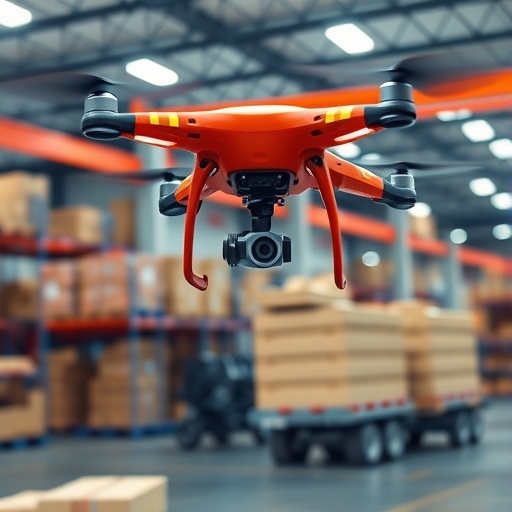
The production of drones and autonomous robots is on the brink of an unprecedented surge, with projected increases reaching up to tenfold for commercial drones and an astonishing one hundredfold for humanoid and quadruped robots by the late 2030s. This exponential growth heralds profound implications not only for the technology sector but also for the global and U.S. supply chains that support the materials composing these sophisticated devices. Detailed in a commentary published in the Cell Press journal Chem Circularity, researchers have meticulously forecasted how the demand for eighteen critical raw materials could reshape supply dynamics and potentially introduce significant bottlenecks.
At the core of this assessment lies an intricate analysis of the essential constituents used in constructing drones and robots. These materials, spanning metals, composites, and specialty chemicals, are integral to various functional components, including motors, energy storage units, electronic circuits, and structural frameworks. By comparing projected material volumes required for manufacturing one million and ten million units annually with the raw material consumption in 2024, the study reveals a nuanced landscape where most resource demands appear manageable, albeit with critical caveats regarding specific substances.
Foremost among the materials singled out for potential scarcity is neodymium-praseodymium (NdPr), a rare earth element indispensable in manufacturing high-performance permanent magnets. These magnets are the beating heart of electric motors powering drones and robots, particularly the larger humanoid variants, which necessitate significantly more NdPr due to the substantial torque and efficiency demands of their actuators. The study estimates that producing one million large humanoid robots annually could escalate U.S. NdPr demand by approximately 20% relative to 2024 consumption levels. This surge occurs amid ongoing efforts by the U.S. government to fortify domestic supply chains and reduce reliance on offshore sources, underscoring the geopolitical sensitivity surrounding rare earth materials.
Alongside NdPr, carbon fiber and magnesium emerge as materials with notable risk profiles for both global and U.S. supply chains. These lightweight yet robust materials are preferred for constructing the skeletons of drones and robots due to their strength-to-weight attributes, which are critical for enhancing performance and energy efficiency. However, fluctuations in availability and price volatility might undermine the scalability of high-end, lightweight designs. Notably, aluminum offers a relatively abundant and cost-effective substitute, potentially alleviating supply pressures in scenarios of extraordinary material demand.
Despite these material-specific concerns, the overall outlook suggests that the drone and robotics industries can avert catastrophic shortages through strategic, forward-thinking approaches. Lead authors Anthony Ku and Chris Greig, both chemical engineers affiliated with Princeton University, emphasize the importance of preemptive planning. They caution that geopolitical upheavals and unexpected supply disruptions could amplify the risks, arguing that complacency is a luxury the industry cannot afford given the materials’ pivotal role in emerging digital technologies, decarbonization strategies, and national defense.
To build resilient supply chains capable of meeting future demand, the researchers propose a triad of strategic initiatives. The first involves integrating drone and robotics supply chains with established industries that already utilize similar raw materials—particularly the electric vehicle (EV) sector. This approach allows for “piggybacking” on existing extraction, processing, and recycling infrastructures. For example, Tesla’s current efforts to incorporate humanoid robot production within its manufacturing ecosystem exemplify leveraging synergies between robotics and EV supply chains.
Secondly, the study advocates for thoughtful product design focused on end-of-life material recovery. Unlike longer-lived technologies such as wind turbines, drones and robots generally have shorter operational lifespans—approximately 3 to 5 years for drones and 5 to 10 years for humanoid robots. This shorter cycle opens a valuable opportunity to engineer devices that facilitate the efficient disassembly and reclamation of critical materials. Designing for recyclability from the outset could streamline the reintegration of scarce elements like NdPr, reducing environmental impacts and supply vulnerabilities.
Finally, the researchers underscore the necessity of fostering early and ongoing dialogues among technologists, materials scientists, supply chain experts, and policymakers. Multidisciplinary communication is vital to anticipate constraints, explore alternative materials, and develop contingency plans before shortages materialize. Proactive collaboration can facilitate flexible substitution strategies and adaptive system designs that maintain performance while reducing dependence on at-risk resources.
The rising demand for drones and robots symbolizes a broader technological revolution with transformative potential across commerce, defense, and daily life. However, this revolution is inseparably linked to the complex and often fragile networks of raw materials underpinning its hardware. The insights conveyed in this forward-looking commentary underscore the imperative for coordinated, innovative supply chain management strategies, emphasizing that sustainable growth in autonomous technology hinges equally on material stewardship and engineering ingenuity.
Keywords
Robot components, Rare earth elements, Supply chain resilience, Neodymium-praseodymium, Carbon fiber, Magnesium, Autonomous robots, Drones, Circular economy, Material recovery, Electric vehicle supply chain integration
Cite Scienmag News
Denise Maddox. (May 1, 2026). Strategies to Prevent Supply Chain Disruptions Amid the Rapid Growth of Drone and Robot Manufacturing. Scienmag. https://scienmag.com/strategies-to-prevent-supply-chain-disruptions-amid-the-rapid-growth-of-drone-and-robot-manufacturing/
Denise Maddox. "Strategies to Prevent Supply Chain Disruptions Amid the Rapid Growth of Drone and Robot Manufacturing." Scienmag, 1 May 2026, https://scienmag.com/strategies-to-prevent-supply-chain-disruptions-amid-the-rapid-growth-of-drone-and-robot-manufacturing/. Accessed 31 August 2026.
Denise Maddox. "Strategies to Prevent Supply Chain Disruptions Amid the Rapid Growth of Drone and Robot Manufacturing." Scienmag. May 1, 2026. https://scienmag.com/strategies-to-prevent-supply-chain-disruptions-amid-the-rapid-growth-of-drone-and-robot-manufacturing/


