


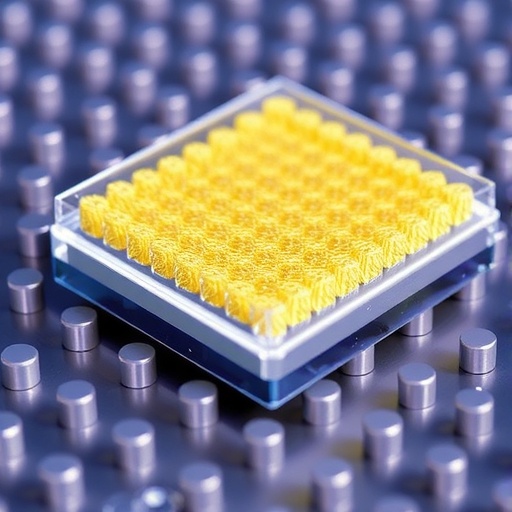
High-temperature polymer electrolyte membrane fuel cells (PEMFCs) have emerged as a promising clean energy technology due to their operational advantages such as intrinsic tolerance to fuel impurities and simplified thermal and water management systems. These characteristics make high-temperature PEMFCs highly attractive for various energy applications, ranging from stationary power generation to automotive propulsion. Despite these benefits, the mainstream use of phosphoric acid-doped membranes in such cells has faced significant challenges. Notably, conventional membranes require a thick structure—typically greater than 50 micrometers—to resist mechanical degradation caused by the phosphoric acid environment. This thickness inherently raises the internal resistance of the fuel cell, limiting its overall performance and efficiency.
Recent technological advancements in membrane design have aimed to address these limitations by producing thinner yet mechanically robust electrolyte membranes capable of withstanding the harsh conditions of high-temperature operation without compromising on durability. A breakthrough study now reports a novel phosphoric acid-doped membrane that is remarkably thin at just 20 micrometers, yet exhibits exceptional mechanical strength and longevity. This is achieved through the strategic incorporation of dynamic copper ion (Cu-ion) crosslinking within the polymer matrix. This innovative approach fundamentally alters the membrane’s properties, leveraging metal-ion coordination chemistry to create dynamic crosslinking networks that significantly enhance mechanical resilience.
The Cu-ion crosslinking is more than a mere structural reinforcement. It endows the membrane with remarkable toughness and extensibility, pushing the boundaries of what can be achieved with polymer electrolyte membranes under high-temperature conditions. Importantly, these dynamic crosslinks exhibit self-healing capabilities. This unique feature allows the membrane to spontaneously recover from small mechanical damages or microcracks, thereby extending the operational lifetime of the fuel cell dramatically. Self-healing is a highly desirable trait in energy membranes, as it reduces maintenance needs and improves reliability—a critical factor for real-world applications and commercialization.
In parallel with mechanical improvements, the presence of Cu ions within the membrane plays a dual role in enhancing the electrochemical environment for proton transport. The Cu ions facilitate better retention of phosphoric acid molecules through robust electrostatic interactions, effectively reducing acid leaching over time. Moreover, these ions contribute to the polarization of O–H bonds within the phosphoric acid molecules, which promotes improved proton dissociation rates. This molecular-level enhancement translates directly to lower ohmic resistance in the membrane, a primary bottleneck in traditional thick membranes.
Measurements demonstrate that the newly developed thin membrane maintains an impressively low ohmic resistance value of approximately 0.06 ohm centimeters squared—a performance metric that rivals or even surpasses that of much thicker conventional membranes. This reduction in resistance is crucial as it minimizes the voltage losses inside the fuel cell, thereby enabling higher energy conversion efficiencies. At the same time, the membrane exhibits a low hydrogen crossover current density of just 0.95 milliamps per square centimeter. This low crossover rate is essential to prevent fuel waste and ensure the safety and stability of the fuel cell during operation.
Fuel cell assemblies integrating this dynamic Cu-crosslinked membrane have achieved remarkable power densities, reaching a peak value of 3.08 watts per square centimeter when operated at 200 degrees Celsius under hydrogen and oxygen atmospheres. Such a performance level is unprecedented for high-temperature polymer electrolyte membranes and represents a significant stride towards the practical deployment of PEMFCs in demanding applications. The high power density means that devices can be more compact and energy-dense, offering better performance over weight and size metrics compared to earlier designs.
Beyond power output, the durability tests conducted on these membranes underscore their potential for long-term use. The fuel cells retained their stable operation with negligible performance degradation after continuous operation exceeding 500 hours at a sustained current density of 1 ampere per square centimeter and at 160 degrees Celsius. This level of endurance highlights the exceptional chemical and mechanical stability imparted by the Cu-ion crosslinking mechanism. Stability under prolonged stress is paramount for commercial viability, particularly in sectors such as transportation where reliability directly impacts adoption rates.
The utilization of dynamic Cu-ion coordination in polymer membranes thus addresses two of the most critical hurdles in the development of high-temperature PEMFCs: mechanical robustness and proton conductivity. By concurrently solving degradation issues and improving proton transport, this technology significantly advances the membrane electrolyte field. This dual-function approach could ignite a paradigm shift in how future fuel cells are designed, moving the field towards thinner, faster, and more durable membranes capable of transforming the clean energy landscape.
Materials chemistry plays a pivotal role in this innovation. The introduction of metal-ion coordination into polymer matrices exemplifies an emerging field where chemical and physical properties can be synergistically tailored to achieve multifunctionality. The ability to incorporate dynamic crosslinks that respond to stress and self-heal provides new avenues for creating polymers with lifetimes and resilience previously thought unattainable. Moreover, these chemical interactions facilitate enhanced proton conduction mechanisms, pushing the frontier of membrane electrochemical performance.
It is important to note that the intersection of materials science, electrochemistry, and engineering in this development is a testament to the interdisciplinary efforts driving advances in energy technologies. The detailed molecular design allows for optimal Cu-ion coordination, balancing crosslink density, mechanical flexibility, and proton conduction pathways. Such precise engineering is enabled by state-of-the-art fabrication and characterization techniques, which together inform the iterative tailoring of membrane properties towards ideal high-temperature fuel cell operation.
Future work may explore scaling the synthesis of these Cu-ion crosslinked membranes and incorporating them into full-scale fuel cell systems applicable to commercial markets. Challenges such as long-term chemical stability in operational environments, compatibility with different fuel configurations, and cost-effective manufacturing remain areas of active research. However, the reported performance benchmarks and fundamental understanding laid out by this study provide a solid foundation for ongoing innovation in the high-temperature PEMFC domain.
In conclusion, the development of a 20-micrometer thin, Cu-ion crosslinked phosphoric acid-doped membrane represents a landmark achievement in polymer electrolyte membrane technology. Its combination of mechanical strength, self-healing capability, enhanced proton conductivity, and demonstrated durability charts a new course for high-temperature fuel cells. This technology not only surmounts long-standing material limitations but also offers a scalable pathway to power-dense and robust clean energy systems. As energy demands escalate globally, such cutting-edge developments are pivotal to meeting sustainability goals and accelerating the transition to hydrogen-based economies.
The promise exhibited by these membranes has the potential to further invigorate research into advanced polymer ionomers and metal-ligand coordination chemistries. It may inspire the design of multifunctional membranes that extend beyond fuel cells into other electrochemical devices such as electrolyzers, batteries, and sensors. Ultimately, this breakthrough underscores the critical role of innovative materials in overcoming fundamental obstacles and enabling the widespread adoption of next-generation clean energy technologies.
Cite Scienmag News
Victoria Harrison. (May 1, 2026). Cu-Ion Crosslinked Membranes Boost High-Temp Fuel Cells. Scienmag. https://scienmag.com/cu-ion-crosslinked-membranes-boost-high-temp-fuel-cells/
Victoria Harrison. "Cu-Ion Crosslinked Membranes Boost High-Temp Fuel Cells." Scienmag, 1 May 2026, https://scienmag.com/cu-ion-crosslinked-membranes-boost-high-temp-fuel-cells/. Accessed 1 September 2026.
Victoria Harrison. "Cu-Ion Crosslinked Membranes Boost High-Temp Fuel Cells." Scienmag. May 1, 2026. https://scienmag.com/cu-ion-crosslinked-membranes-boost-high-temp-fuel-cells/


