


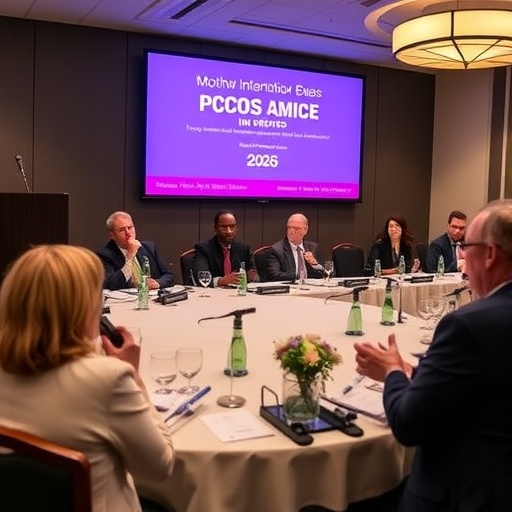
The annual gathering of the American College of Obstetricians and Gynecologists (ACOG) continues to serve as a crucial platform for unveiling pioneering research and clinical advancements in women’s health. This year, experts from the Raquel and Jaime Gilinski Department of Obstetrics, Gynecology and Reproductive Science at the Icahn School of Medicine at Mount Sinai are poised to present critical new findings and innovative approaches at the 2026 ACOG Annual Clinical and Scientific Meeting in Washington, D.C.
At the heart of these groundbreaking presentations are two pressing facets of women’s health: hypertensive disorders in pregnancy and the reconceptualization of Polycystic Ovary Syndrome (PCOS) as a chronic disease requiring comprehensive management. Together, these topics address both acute and long-term health challenges that impact millions of women worldwide.
Hypertensive disorders of pregnancy, including gestational hypertension and preeclampsia, remain significant contributors to maternal and fetal morbidity and mortality. Despite their prevalence, variations among different hypertensive disorder subtypes and their disproportionate impacts on distinct sociodemographic groups have not been fully characterized. Mount Sinai researchers have embarked on an epidemiological analysis utilizing an extensive nationwide cohort to elucidate these disparities comprehensively.
This research endeavors to parse out the complex interaction between sociodemographic factors and the incidence of specific hypertensive disorder subtypes during delivery hospitalizations. By employing robust statistical modeling and leveraging vast datasets drawn from diverse populations, the study promises to highlight inequities in maternal health outcomes and inform tailored clinical interventions. Such granular understanding is indispensable in guiding healthcare policies to mitigate risk factors among vulnerable groups.
The presentation of these data, scheduled for May 2, 2026, in Hall DE during the ePoster session, represents a stride towards fostering precision medicine approaches in obstetrics. Co-led by MD candidate Lily Leibner and Dr. Cynthia Abraham, a board-certified obstetrician-gynecologist and director of undergraduate medical education, the study combines academic rigor with clinical insight—vital for translating epidemiological patterns into actionable healthcare strategies.
Meanwhile, on May 3, Dr. Basma S. Faris from the same department will challenge prevailing paradigms around Polycystic Ovary Syndrome during her session “Beyond Infertility and Irregular Periods: Managing PCOS as a Chronic Disease.” PCOS affects a significant fraction of women, manifesting through metabolic imbalances, menstrual irregularities, and infertility, among other symptoms. Historically managed as a reproductive disorder, the session underscores the necessity of reclassifying PCOS through a chronic disease lens to improve patient outcomes.
Dr. Faris’s presentation will delve deeply into evidence-based, multidisciplinary strategies to manage PCOS holistically. Drawing upon emerging research and clinical practice, she will outline metabolic management approaches, emphasize patient-centered counseling techniques, and propose integration of chronic disease principles into routine gynecologic care. Her dual expertise in gynecology and nutrition allows for an enriched perspective on how lifestyle modification and clinical interventions can synergistically optimize long-term health in PCOS patients.
The reframing of PCOS careful not only to address the reproductive implications but also the metabolic and psychological impacts signals a paradigm shift in the field. This approach, highlighted by Dr. Faris, advocates for sustained patient engagement and regular monitoring aimed at mitigating comorbidities such as insulin resistance, obesity, and cardiovascular risks—thereby enhancing quality of life throughout the lifespan.
Mount Sinai Health System’s participation at the 2026 ACOG Annual Meeting vividly illustrates their commitment to advancing women’s health through research, education, and patient care. Boasting over 47,000 employees across multiple hospitals, outpatient clinics, and research laboratories, the institution integrates cutting-edge science with compassionate clinical practice. Their comprehensive approach spans from conception to geriatrics, supported by innovations including artificial intelligence applications and informatics infrastructure designed to tailor treatments and predict health trajectories effectively.
The convergence of expertise at Mount Sinai’s Gilinski Department exemplifies the nexus between academic research and real-world clinical challenges. Presenting at one of the premier obstetrician-gynecologist assemblies elevates their contribution to national and global discourses on maternal health inequities and chronic women’s health disorders, promising transformative impacts on healthcare delivery.
The strategic timing of these embargoed presentations also highlights the dynamic pace of discovery and translation in obstetrics and gynecology. As maternal health disparities persist and chronic conditions increasingly shape women’s lives, Mount Sinai’s work represents a beacon guiding future research, clinical guidelines, and public health initiatives.
Stakeholders—including clinicians, policymakers, and patient advocates—will be closely watching to integrate these insights into practice. By spotlighting epidemiological nuances and reframing clinical conditions, Mount Sinai’s experts contribute valuable knowledge to improve health equity and tailor patient care models in obstetrics and gynecology.
For additional context and updates during the conference, media outlets and interested parties are encouraged to engage with Mount Sinai’s team, who are prepared to discuss implications and applications of these novel findings. Their readiness for dialogue exemplifies the proactive dissemination strategy essential for advancing evidence-based women’s healthcare at scale.
In sum, the presentations by Mount Sinai signal a critical leap forward in understanding and managing two pivotal aspects of women’s health—hypertensive disorders of pregnancy and the chronic dimensions of PCOS—offering hope for improved clinical outcomes and enhanced quality of life for countless women internationally.
News Publication Date: April 30, 2026
Web References:
– 2026 ACOG Annual Clinical and Scientific Meeting: https://www.acog.org/education-and-events/meetings/acog-annual-clinical-and-scientific-meeting
– Presentation on hypertensive disorders: https://www.abstractsonline.com/pp8/#!/21317/presentation/992
– Presentation on PCOS management: https://www.abstractsonline.com/pp8/#!/21317/session/99
Cite Scienmag News
Harold Sullivan. (April 30, 2026). Mount Sinai Experts Discuss PCOS and Disparities in Hypertensive Pregnancy Disorders at 2026 ACOG Annual Meeting. Scienmag. https://scienmag.com/mount-sinai-experts-discuss-pcos-and-disparities-in-hypertensive-pregnancy-disorders-at-2026-acog-annual-meeting/
Harold Sullivan. "Mount Sinai Experts Discuss PCOS and Disparities in Hypertensive Pregnancy Disorders at 2026 ACOG Annual Meeting." Scienmag, 30 April 2026, https://scienmag.com/mount-sinai-experts-discuss-pcos-and-disparities-in-hypertensive-pregnancy-disorders-at-2026-acog-annual-meeting/. Accessed 1 September 2026.
Harold Sullivan. "Mount Sinai Experts Discuss PCOS and Disparities in Hypertensive Pregnancy Disorders at 2026 ACOG Annual Meeting." Scienmag. April 30, 2026. https://scienmag.com/mount-sinai-experts-discuss-pcos-and-disparities-in-hypertensive-pregnancy-disorders-at-2026-acog-annual-meeting/


