


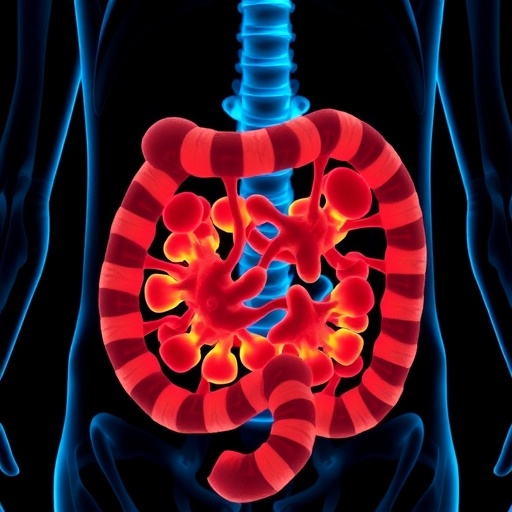
A groundbreaking advancement in the realm of nuclear medicine and precision oncology has emerged from recent preclinical investigations targeting colorectal cancer, leveraging an innovative pretargeted radioimmunotherapy (PRIT) strategy. This novel approach harnesses the matched ^203Pb/^212Pb theranostic pair to deliver alpha-emitting radionuclide therapy with superior tumor specificity, thus minimizing off-target radiation exposure to healthy tissue. The implications of this research, published in The Journal of Nuclear Medicine, suggest a transformative potential for treating advanced colorectal malignancies, a field that urgently demands more efficacious and less toxic therapeutic modalities.
Central to this study is the exploitation of a multi-step PRIT methodology that circumvents the limitations traditionally associated with Pb-based radionuclides, particularly their nephrotoxicity. Alpha particles emitted from ^212Pb offer high linear energy transfer, inflicting irreversible double-stranded DNA breaks in cancer cells with unmatched cytotoxic precision. However, the intrinsic toxicity to the kidneys necessitates strategies that can precisely localize radiation to tumor cells while sparing normal tissues. PRIT accomplishes this by decoupling the targeting antibody and the radioisotope in distinct phases, thereby enhancing tumor uptake and accelerating blood clearance to mitigate renal accumulation.
The molecular target at the heart of this therapy is GPA33, a glycoprotein antigen notoriously overexpressed in approximately 95% of colorectal tumors but minimally present in normal tissues. By conjugating DOTA chelators to GPA33-specific antibodies, researchers engineered a system capable of binding Pb isotopes with high affinity and stability. This bioconjugation facilitates targeted delivery of both the diagnostic ^203Pb for imaging and radionuclide dosimetry via single-photon emission computed tomography/computed tomography (SPECT/CT), and the therapeutic ^212Pb for alpha-particle-mediated cytotoxicity.
A critical component of the preclinical validation involved comprehensive biodistribution and dosimetry studies assessing the pharmacokinetics and tissue specificity of the PRIT complex. Mice bearing human colorectal cancer xenografts underwent serial imaging, demonstrating robust and exclusive tumor uptake of the radiolabeled conjugate. This specificity lays the foundation for a therapeutic window broad enough to administer effective radiation doses without incurring significant collateral damage to vital organs, especially the kidneys and bone marrow.
Administering two sequential doses of the ^203Pb/^212Pb-DOTA-based PRIT, spaced 48 hours apart, proved to be the optimal regimen for maximizing therapeutic efficacy. This dosing scheme not only prolonged survival but also resulted in histopathological cures in a significant subset of animals. Importantly, hematologic parameters remained within normal ranges, and renal function was preserved post-treatment, underscoring the safety profile of this approach and highlighting its advantage over conventional RIT where dose-limiting toxicities often curtail clinical application.
The strength of this PRIT platform lies in its modularity and adaptability. While this study focuses on GPA33 as a colorectal cancer target, the underlying scaffold can be engineered to recognize a multitude of tumor-associated antigens. This flexibility enables a personalized medicine paradigm where radionuclide therapy can be tailored to individual tumor antigen profiles, opening avenues for treatment across diverse solid tumors and hematologic malignancies.
Leading voices in oncology and nuclear medicine, including Dr. Sarah M. Cheal from Weill Cornell Medicine and Dr. Nai-Kong V. Cheung at Memorial Sloan Kettering Cancer Center, emphasize the potential of this strategy to revolutionize cancer theranostics. They note that future investigations will involve refining radionuclide dosing, optimizing antibody formats, and potentially integrating this PRIT approach with immunotherapies or conventional chemotherapy to enhance synergistic anti-tumor responses.
Furthermore, the theranostic capability of the ^203Pb/^212Pb pair offers real-time, non-invasive feedback on biodistribution and dosimetry, enabling clinicians to monitor therapeutic delivery dynamically and adjust treatment plans promptly. This precision approach significantly mitigates risks associated with cumulative radiation exposure and fosters more personalized treatment regimens based on patient-specific pharmacokinetics.
The ongoing evolution of theranostic agents highlights the growing prominence of molecular imaging as not only a diagnostic tool but also an integral component of targeted cancer therapy. The ability to visualize and quantify tumor targeting prior to administering the therapeutic payload ushers in a new era of informed radionuclide therapy, elevating treatment efficacy while dramatically reducing adverse systemic effects.
As colorectal cancer remains a leading cause of cancer-related mortality worldwide, innovations such as this PRIT system represent a beacon of hope. They underscore the critical synergy between chemistry, molecular biology, and nuclear medicine in advancing oncologic care. This research serves as a compelling example of how precision radiopharmaceuticals may redefine the therapeutic landscape for patients with refractory or advanced-stage malignancies.
Ultimately, this study lays the groundwork for translating preclinical successes into clinical trials, promising a future where radioimmunotherapy can be administered with unprecedented safety and effectiveness. The integration of cutting-edge molecular imaging tools with targeted alpha therapy epitomizes the next frontier in precision oncology, where the ultimate goal is complete tumor eradication with minimal harm to the patient.
News Publication Date: April 30, 2026
Web References:
– Journal of Nuclear Medicine article: https://jnm.snmjournals.org/content/early/2026/02/12/jnumed.125.270604
– JNM website: https://jnm.snmjournals.org/
– SNMMI website: http://snmmi.org/
References:
DOI: 10.2967/jnumed.125.270604
Cite Scienmag News
Nathaniel Bowman. (April 30, 2026). Innovative Theranostic Strategy Delivers Curative Outcomes in Colorectal Cancer Radioimmunotherapy. Scienmag. https://scienmag.com/innovative-theranostic-strategy-delivers-curative-outcomes-in-colorectal-cancer-radioimmunotherapy/
Nathaniel Bowman. "Innovative Theranostic Strategy Delivers Curative Outcomes in Colorectal Cancer Radioimmunotherapy." Scienmag, 30 April 2026, https://scienmag.com/innovative-theranostic-strategy-delivers-curative-outcomes-in-colorectal-cancer-radioimmunotherapy/. Accessed 5 September 2026.
Nathaniel Bowman. "Innovative Theranostic Strategy Delivers Curative Outcomes in Colorectal Cancer Radioimmunotherapy." Scienmag. April 30, 2026. https://scienmag.com/innovative-theranostic-strategy-delivers-curative-outcomes-in-colorectal-cancer-radioimmunotherapy/


