


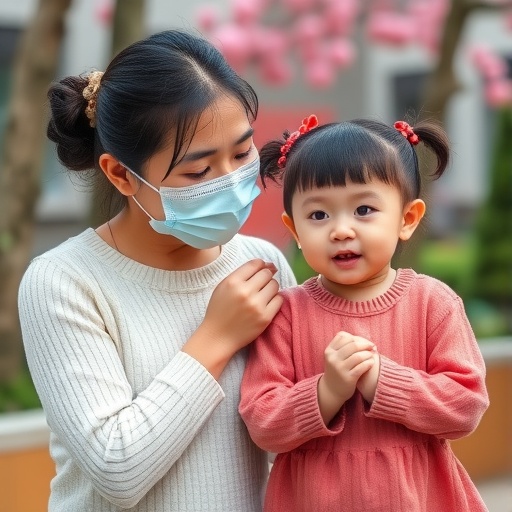
As the intricate ties between early childhood experiences and long-term health outcomes gain increasing scientific attention, the phenomenon of parent-child separation (PCS) emerges as a crucial factor warranting intense scrutiny. The latest research from a team of Chinese scientists has shed groundbreaking light on how PCS not only affects direct offspring but remarkably extends its influence across multiple generations. Published in Pediatric Research, this study meticulously details the intergenerational continuity of PCS and its consequential impact on allergic diseases and total immunoglobulin E (IgE) levels, a marker deeply embedded in the pathophysiology of allergies, within a large Chinese cohort.
Parent-child separation, a condition resulting from various socio-economic and cultural circumstances, has long been implicated in adverse psychological and physical health outcomes for children. The novel contribution of this research is its focus on the “double hit” effect—how PCS experienced by parents themselves during their childhood can predispose their offspring to heightened vulnerabilities. This concept not only broadens the conventional understanding of PCS effects but also highlights a potential cascade of biological and behavioral consequences that may perpetuate health disparities.
Central to the investigation was the comprehensive evaluation of allergy prevalence and total IgE concentrations in children, in relation to the history of PCS in both the children and their parents. Allergic disorders, increasingly prevalent worldwide, represent a complex interplay between genetic susceptibility and environmental influences, with immune system dysregulation at its core. Total IgE serves as a crucial biomarker reflecting allergic sensitization and immune reactivity, thus providing a measurable endpoint to assess the immunological repercussions of early-life stressors like PCS.
The researchers harnessed a robust epidemiological design, leveraging data from a significant population sample spread across diverse regions in China. The methodology integrated rigorous assessments of family history, detailed PCS exposure histories spanning two generations, and serological measurements of IgE. This multidimensional approach allowed the disentangling of the nuanced relationships linking a parent’s own separation experience with their child’s immunological health.
Biological mechanisms underpinning this intergenerational transmission likely involve complex epigenetic modifications triggered by early-life stress. Stress during sensitive developmental windows can mark the genome with chemical tags that alter gene expression without changing the DNA sequence itself. Such epigenetic modifications can be transmitted through the germline or influenced by postnatal environmental factors, effectively encoding trauma-related immunological vulnerabilities that materialize in descendants as heightened allergic sensitivity.
Moreover, the study elucidated behavioral and socio-economic mediators that might compound the biological impact. Parents who experienced separation in their youth often face ongoing psychosocial stressors, disrupted caregiving patterns, and altered attachment schemas. These factors can influence the child’s early environment, further amplifying immune system dysregulation through stress-induced pathways, including heightened hypothalamic-pituitary-adrenal axis activation and inflammatory responses.
Results from this study demonstrated a statistically significant increase in allergy occurrence among children exposed to PCS, with an even more pronounced effect when both parent and child experienced separation. Intriguingly, total IgE levels were substantially elevated in these “double-hit” cases, underscoring an additive or possibly synergistic effect of intergenerational PCS exposure on allergic sensitization. This finding holds profound implications for understanding how early adverse events propagate immunological risk.
The findings bear relevance beyond allergy, hinting at broader immuno-inflammatory conditions that might be linked to early-life adversity, including autoimmune diseases and chronic inflammatory disorders. Given the increasing prevalence of allergic disorders globally, these insights provide vital clues toward preventative strategies focused not only on the immediate environment of the child but also on historical familial contexts.
Clinically, this research underscores the necessity of holistic patient histories that incorporate familial psychosocial backgrounds. Pediatricians and allergists could benefit from integrating inquiries about parental childhood experiences into routine assessments, enabling more tailored interventions that address underlying psychosocial determinants of health.
Policymakers and social service agencies might also leverage these findings to bolster support systems aimed at minimizing parent-child separations, such as providing resources for family reunification or sustained caregiving during times of parental absence. Interventional programs targeting mental health and social stability for parents may also serve as indirect shields protecting the immunological health of future generations.
Further research is warranted to decode the precise molecular pathways through which PCS exerts its intergenerational effects. Longitudinal studies tracking epigenetic changes, neuroendocrine adaptations, and immune system parameters from parent to child would illuminate mechanisms and identify biomarkers predictive of allergic disease risk.
In addition, cultural specificity remains an essential consideration. This study’s context within Chinese society, where unique familial structures and social norms influence PCS dynamics, opens avenues to explore how varying patterns of separation and reconnection affect health in other populations. Comparative studies across different ethnic and cultural groups would be instrumental in validating these findings globally.
Technological advances in high-throughput epigenomic profiling, coupled with comprehensive psychosocial data collection, will empower future research to interrogate the confluence of genetics, environment, and social determinants driving the inheritance of immune vulnerabilities. Integrating these disciplines paves the way for precision medicine approaches in pediatric allergy prevention.
In conclusion, the pioneering work by Ma et al. substantially advances the frontier in understanding the complex legacy of parent-child separation. By exposing its enduring and cascading effects on immune development and allergy susceptibility, this research impels a multidimensional approach combining biological, psychological, and social interventions to mitigate a transgenerational health burden. The resonance of these findings transcends pediatrics, reverberating through public health and social policy spheres as humanity seeks to unravel and interrupt cycles of adversity.
Such integrative insights spotlight the urgency for interdisciplinary dialogue and concerted action to safeguard children’s health in an era marked by unprecedented societal mobility and change. Ultimately, recognizing the deep temporal roots of allergic disease etiology may catalyze novel preventive paradigms that honor the intricate connections binding family, environment, and biology across time.
Cite Scienmag News
Juliet Wilcox. (April 30, 2026). Parent-Child Separation Links to Allergies in China. Scienmag. https://scienmag.com/parent-child-separation-links-to-allergies-in-china/
Juliet Wilcox. "Parent-Child Separation Links to Allergies in China." Scienmag, 30 April 2026, https://scienmag.com/parent-child-separation-links-to-allergies-in-china/. Accessed 1 September 2026.
Juliet Wilcox. "Parent-Child Separation Links to Allergies in China." Scienmag. April 30, 2026. https://scienmag.com/parent-child-separation-links-to-allergies-in-china/


