


In a groundbreaking advance that could transform cancer immunotherapy, researchers at Weill Cornell Medicine have uncovered a novel mechanism by which activated T cells enhance the immune system’s ability to recognize and combat tumors. Published in the prestigious journal Cancer Cell, this study elucidates how tiny extracellular vesicles secreted by T cells carry DNA fragments that infiltrate both immune and tumor cells, thereby orchestrating a more robust anti-cancer immune response.
Extracellular vesicles, nanoscale lipid-bound particles secreted by virtually all cell types, are emerging as crucial mediators of intercellular communication. While prior research primarily emphasized vesicles secreted by tumor cells modulating immune responses, this new study uniquely investigates vesicles released by activated T cells, the immune system’s frontline defenders against malignancies. These vesicles are now shown to shuttle DNA fragments loaded with immune-related genetic information to recipient cells within the tumor microenvironment.
The study reveals that under physiological conditions, T cell-derived extracellular vesicles display remarkable tropism for immune hubs such as lymph nodes and spleen. Here, dendritic cells, pivotal antigen-presenting cells, engulf these vesicles. The vesicle-associated DNA, predominantly enriched with immune function genes, amplifies the antigen presenting capacity of dendritic cells. This enhancement of antigen presentation promotes T cell priming, setting in motion an expanded and intensified adaptive immune response against cancer cells.
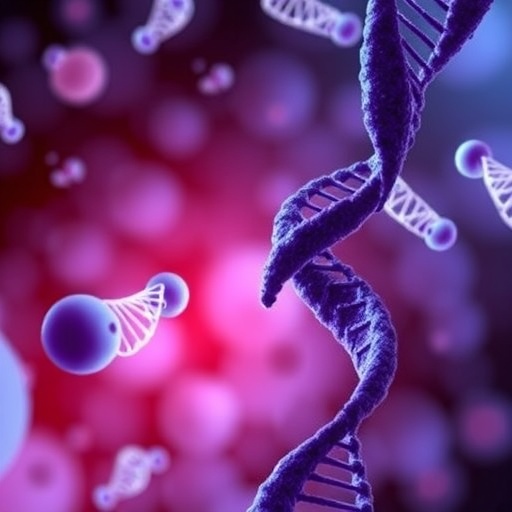
A striking discovery disclosed by the researchers is that the DNA fragments are largely localized on the vesicle surfaces rather than encapsulated within. These DNA snippets are not random genomic debris but are selectively enriched for genes implicating antigen processing and immune activation. This surface-bound DNA is accompanied by a specialized enzyme tethered to the vesicles, resembling a molecular “drill,” that facilitates the translocation of DNA cargo directly into the nuclei of recipient cells.
When tested in mouse models bearing immunologically inert tumors, including glioblastoma, pancreatic, and triple-negative breast cancers—types typically resistant to immunotherapy—the infusion of these DNA-laden vesicles effectively ‘awakened’ the immune system. Treated tumors exhibited slower growth kinetics and showed pronounced infiltration by cytotoxic T lymphocytes and other immune effector populations. This indicated a successful reversal of tumor immune evasion mechanisms, rendering cancer cells visible to immune surveillance once more.
Importantly, the vesicles influence tumor cells themselves, not just antigen-presenting cells. By delivering DNA encoding immune stimulatory pathways, the vesicles reprogram malignant cells to enhance their own antigen presentation machinery and to disseminate similar DNA-containing vesicles, establishing a self-propagating positive feedback loop. This amplifies the immune response on multiple fronts, turning immunologically “cold” tumors “hot,” and more amenable to immune system eradication.
The discovery positions T cell extracellular vesicles as promising therapeutic agents that could act synergistically with existing immune checkpoint inhibitors. By co-administering vesicles alongside these checkpoint blockade therapies, researchers observed markedly improved anti-tumor outcomes in preclinical models. This synergism offers hope for tackling tumors that historically respond poorly to monotherapies.
Beyond their therapeutic potential, these vesicles represent a cutting-edge platform for gene delivery. Their natural propensity to transfer DNA transiently and efficiently into recipient cells opens avenues for non-viral, safer gene therapy modalities. This property could be harnessed to deliver custom genetic payloads transiently, mitigating risks associated with permanent genomic insertion typically encountered in conventional gene therapy.
The research team’s multidisciplinary approach combined advanced vesicle isolation techniques, in vivo imaging, and molecular profiling to comprehensively characterize the trafficking, genetic cargo, and functional impact of T cell-derived extracellular vesicles. These insights deepen our molecular understanding of intercellular communication in the immune-tumor interface and represent a paradigm shift in immuno-oncology.
Authors emphasize the potential broad application of this strategy not only for cancer but possibly for other diseases where immune surveillance is compromised. The DNA-carrying vesicles could be engineered or adapted to boost immunity in chronic infections, autoimmune disorders, or vaccine development. The implications for precision immunotherapy and personalized medicine are profound.
Currently, efforts are underway to translate these compelling preclinical findings into clinical trials. Optimizing production, dosage, and delivery methods for human applications will be critical next steps. The prospect of deploying a natural, endogenous system for transiently reprogramming immune and tumor cells heralds a new chapter in the fight against cancer.
These findings were supported by substantial funding from prominent agencies such as the National Institutes of Health, alongside foundations dedicated to pediatric oncology and cancer research. The collaboration across immunology, cell biology, and clinical disciplines underscores the integrative nature of this breakthrough.
As this innovative science advances toward clinical reality, hope mounts for patients facing previously untreatable cancers. By harnessing the immune system’s intrinsic capabilities through T cell extracellular vesicles, researchers are charting a transformative path toward more effective, less toxic, and versatile cancer therapies.
Cite Scienmag News
Nathaniel Bowman. (April 30, 2026). T Cells Release DNA to Enhance Immune System’s Cancer-Fighting Power. Scienmag. https://scienmag.com/t-cells-release-dna-to-enhance-immune-systems-cancer-fighting-power/
Nathaniel Bowman. "T Cells Release DNA to Enhance Immune System’s Cancer-Fighting Power." Scienmag, 30 April 2026, https://scienmag.com/t-cells-release-dna-to-enhance-immune-systems-cancer-fighting-power/. Accessed 2 September 2026.
Nathaniel Bowman. "T Cells Release DNA to Enhance Immune System’s Cancer-Fighting Power." Scienmag. April 30, 2026. https://scienmag.com/t-cells-release-dna-to-enhance-immune-systems-cancer-fighting-power/


