


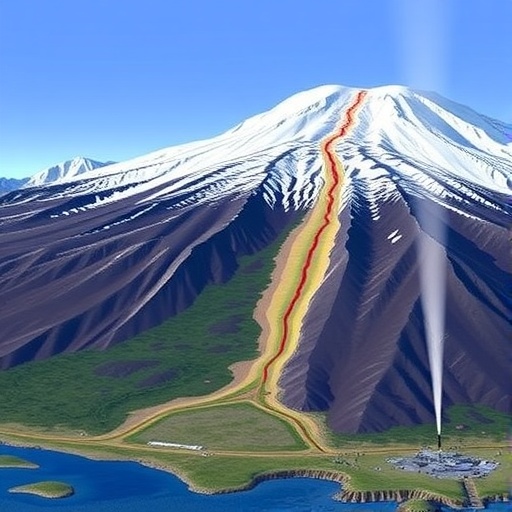
On the morning of July 29, 2025, a colossal seismic event shook the region surrounding the Kamchatka Peninsula, registering a magnitude of 8.8. This earthquake instantly garnered scientific attention, not only for its sheer power but also because it stood as the sixth-largest earthquake ever documented through modern instrumentation. As tectonic plates continuously sculpt our planet’s dynamic crust, the subduction zones, where one plate dives beneath another, represent some of the most volatile and intriguing boundaries. The Kamchatka Peninsula is one such region known for intense tectonic activity, and the 2025 earthquake opened a new chapter in understanding these deep geological processes.
The Kamchatka Peninsula is situated on a convergent plate boundary marked by the subduction of the Pacific Plate beneath the North American Plate. This boundary is notorious for producing megathrust earthquakes, such as the devastating magnitude 9.0 event in 1952. However, despite decades of research, many questions have persisted about the lateral and depth extent of fault slip during major subduction zone earthquakes. The 2025 event provided a rare opportunity because it was the first in this area to be captured comprehensively by contemporary geodetic and satellite technologies, presenting unprecedented detail on how the fault ruptured beneath the surface.
A team of researchers at Tohoku University’s International Research Institute of Disaster Science (IRIDeS), led by Chi-Hsien Tang, embarked on an intricate investigation to reconstruct the fault slip during this enormous earthquake. By integrating multiple datasets derived from satellite radar imagery – specifically Interferometric Synthetic Aperture Radar (InSAR) – and Global Positioning System (GPS) measurements positioned on land and at sea, the team was able to create a three-dimensional picture of the fault displacement. These cutting-edge methods allowed for high-resolution tracking of ground deformation over extensive areas, charting the immense forces at work during the rupture process.
What makes subduction zone earthquakes particularly complex is the variability in how the fault slips at different depths and along the fault’s length. Traditionally, deeper segments of the fault tend to slip more freely, while the shallower portions near the seafloor can either rupture or remain locked, which has critical implications for tsunami generation. The July 2025 Kamchatka earthquake defied some expectations by exhibiting significant slip along deeper sections while showing relatively limited rupture in the shallower parts of the fault zone. This nuanced slip distribution offers insight into why the subsequent tsunami was smaller than many initial models predicted, despite the earthquake’s enormous magnitude.
Reconstructing the fault slip involved developing and comparing three separate slip models, each designed to simulate fault behavior under different assumptions. The team then matched these simulated models against real-world tsunami records collected from monitoring stations across the Pacific Rim. The congruence between the model that incorporated limited shallow slip and the actual tsunami data underscored the importance of precise fault slip characterization. It also demonstrated how variable slip patterns along subduction zones dramatically influence tsunami hazards, stressing that magnitude alone is insufficient to forecast tsunami severity.
This research highlights not only the immense power locked within subduction zone megathrusts but also exposes the intricate details of their rupture mechanics. Of particular concern is the segment of the fault that did not rupture during the 2025 event, often referred to as “unruptured asperities.” These patches may be accumulating strain and could harbor the potential for future earthquakes. Tang’s team points out the increased tsunami risk posed by these unruptured areas, especially toward the northern extent of the rupture zone and in the shallow fault segments near the seafloor, which remain vulnerable to sudden, large-scale slip.
Furthermore, the study brings to the fore an urgent message for seismologists and disaster mitigation planners: reliance solely on terrestrial data is insufficient to unravel the full complexity of offshore seismic events. The observational gap in monitoring the subseafloor remains a significant hurdle in earthquake science. This research underscores the necessity of combining seafloor geodetic measurements — including ocean-bottom GPS and pressure sensors — with satellite remote sensing and land-based networks to create a comprehensive seismic monitoring system.
The Kamchatka earthquake of July 29, 2025, thus serves as a critical case study for refining earthquake rupture models and improving tsunami hazard assessment methodologies. The ability to integrate large-scale geodetic datasets and tsunami observations into a cohesive model sets a new standard for seismological research. Accurate characterization of fault slip not only enhances our understanding of subduction zone dynamics but also builds the scientific foundation needed for more effective early-warning systems capable of saving lives and reducing economic losses.
Tsunamis generated by subduction zone earthquakes often pose enormous risks to coastal communities across the Pacific Rim, where millions live near unstable fault lines. The findings from this study emphasize that beyond earthquake magnitude, the distribution and depth of slip on the fault are fundamental to tsunami generation. This nuanced understanding assists in refining early-warning thresholds, particularly for regions with complicated fault geometries like Kamchatka’s.
The research was a collaboration across geophysics, geology, and oceanography, blending multidisciplinary perspectives to tackle a central problem in natural disaster risk management. The results elucidate the complexities inherent in these giant ruptures and provide actionable intelligence for policymakers, forecasters, and engineers. Planned advances in satellite constellations and undersea monitoring arrays promise even more granular data for understanding future earthquakes.
Published in the journal Geoscience Letters on April 17, 2026, this study is poised to influence the trajectory of seismic hazard research globally. It presents a compelling example of how advancements in technology and cross-disciplinary cooperation can yield transformative insights into Earth’s most powerful natural events. As the threat of megathrust earthquakes continues, such research is indispensable for communities to prepare and adapt to nature’s formidable forces.
Cite Scienmag News
Violet Maxwell. (April 30, 2026). New Models Reveal Fault Movements Behind the 2025 Kamchatka Earthquake. Scienmag. https://scienmag.com/new-models-reveal-fault-movements-behind-the-2025-kamchatka-earthquake/
Violet Maxwell. "New Models Reveal Fault Movements Behind the 2025 Kamchatka Earthquake." Scienmag, 30 April 2026, https://scienmag.com/new-models-reveal-fault-movements-behind-the-2025-kamchatka-earthquake/. Accessed 1 September 2026.
Violet Maxwell. "New Models Reveal Fault Movements Behind the 2025 Kamchatka Earthquake." Scienmag. April 30, 2026. https://scienmag.com/new-models-reveal-fault-movements-behind-the-2025-kamchatka-earthquake/


