

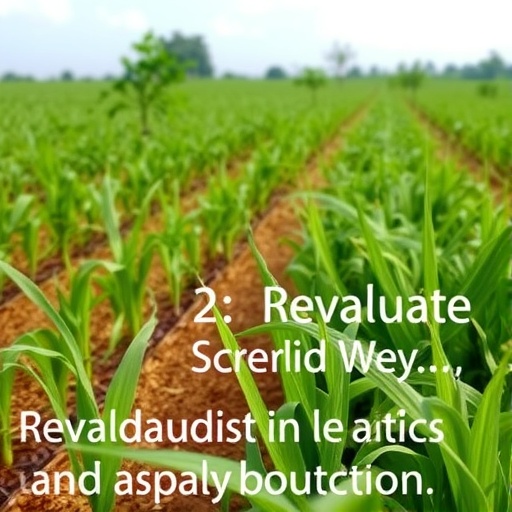
In a groundbreaking advancement poised to transform global nutrition and agricultural sustainability, researchers have unveiled novel strategies to biofortify staple cereal crops such as rice, wheat, and maize. These initiatives are rooted in recent scientific insights into the metabolic and genetic mechanisms that regulate protein accumulation and amino acid profiles within cereal grains. The implications of this work extend far beyond enhancing the nutritional value of staple foods, promising significant benefits for public health and climate resilience as well.
With over 14 million people worldwide suffering from protein-energy malnutrition, elevating the protein content in cereals is a pivotal step toward addressing a pervasive yet often overlooked facet of malnutrition. Cereals, which constitute the primary caloric intake for much of the global population, particularly in Asia and Africa, inherently contain limited protein levels with an incomplete spectrum of essential amino acids. For instance, rice, a dietary cornerstone for more than half the world’s population, naturally harbors only about 6% protein, lacking sufficient lysine, an essential amino acid critical for human growth and immunity.
The International Rice Research Institute (IRRI), in collaboration with a consortium of global scientific partners, recently published a comprehensive review in Nature Plants elucidating the prospects and challenges inherent in cereal protein biofortification. This research delves into the intricate balance between protein synthesis and carbohydrate accumulation in cereal grains, revealing how partial decoupling of these metabolic pathways could allow for significant improvements in grain nutritional quality without compromising yield.
One of the core scientific breakthroughs highlighted by the IRRI team revolves around manipulating nitrogen allocation and endosperm buffering capacities within cereal grains. Nitrogen partitioning is critical, as it governs the synthesis of protein-rich compounds versus starches, affecting both the grain’s nutritional profile and its energy content. By harnessing gene-metabolism-phenotype-agronomy continuum frameworks, researchers have proposed innovative breeding trajectories that enable a precise modulation of these parameters, effectively enhancing protein concentrations while mitigating the typical trade-offs seen in yield.
Further elevating the potential of this approach, Dr. Nese Sreenivasalu and colleagues developed rice varieties that exhibit not only elevated total protein content but also increased levels of essential amino acids such as lysine. Moreover, these biofortified rice strains demonstrate an ultra-low glycemic index (low-GI), an attribute that holds promise for better management of blood glucose levels, potentially mitigating the risk of chronic diseases like diabetes. Such multi-faceted benefits underscore the transformative potential of integrating nutritional genomics with practical breeding programs.
Beyond human nutrition, the environmental impact of cereal protein biofortification is especially noteworthy. By enhancing the protein density of plant-based staples, the dependency on animal-sourced proteins—which contribute significantly higher greenhouse gas emissions—could decrease substantially. This plant-centric nutritional strategy aligns well with global climate mitigation goals, potentially reducing livestock-related emissions by up to 32%. Coupling these nutritional improvements with sustainable agronomy and breeding interventions that alleviate the carbon footprint of crop production constitutes a holistic One Health approach.
The multidisciplinary collaboration bringing together IRRI scientists, molecular plant physiologists from the Max Planck Institute, and geneticists from Huazhong Agricultural University has been instrumental in advancing this field. By applying systems biology lenses and integrating recent genomic insights, the team has delineated the complex interactions governing carbon-nitrogen resource partitioning and grain protein accumulation. This systems approach has helped clarify why protein biofortification has historically been difficult and how emerging technologies can circumvent prior bottlenecks.
Crucially, these newly developed protein-enhanced rice varieties maintain high yields and possess shorter maturation periods of 100-110 days, compared to traditional rice cultivars. This accelerated development cycle offers compelling agronomic advantages, allowing for increased cropping intensity or flexibility in cropping calendars amid changing climate scenarios. This attribute ensures that the nutritional enhancements do not come at the expense of farmers’ economic viability or food production volumes.
The proposed “High-Protein Cereal Biofortification: A One Health Framework” synthesizes the connections across genetics, metabolism, phenotypic expression, and agronomic practices. This conceptual model serves as a roadmap for future engineering trajectories, enabling strategic decoupling of starch and protein pathways to achieve sustainable biofortification goals. It emphasizes integrated resource management, underscoring the crucial intersection of nutrition science, agricultural productivity, and environmental stewardship.
Importantly, these insights unlock avenues for transferring biofortification traits beyond rice into other staple cereals like wheat and maize, which are vital for different regions’ food security. Leveraging the conserved genetic and metabolic pathways in these cereals could amplify the global impact, fostering resilience against hidden hunger and fortifying food systems against the pressures of population growth and climate change.
Looking forward, the integration of advanced molecular breeding techniques, genomics, and phenotyping platforms heralds a new era of precision agriculture focused on sustainability and human health. As these high-protein cereal varieties advance through breeding pipelines and field trials, the potential to reshape nutritional landscapes on a global scale becomes increasingly feasible. By improving dietary quality without altering established food preferences or habits, biofortified cereals represent a culturally acceptable and impactful intervention to combat malnutrition.
Ultimately, this paradigm shift redefines staple foods as not merely sources of calories but as vehicles for delivering balanced nutrition while harmonizing with climate-smart agricultural practices. The culmination of these scientific efforts sets a promising trajectory towards healthier, more resilient populations and planetary ecosystems, addressing some of the most pressing challenges of the 21st century through the lens of agricultural innovation.
- Addo, A., et al., “Cereal protein biofortification at the interface of nutrition, yield and sustainability,” Nature Plants, 2026.
Image Credits: Augustus Addo for IWMI
Keywords: Agriculture, Farming, Sustainability
Cite this news
SCIENMAG. (April 28, 2026). Reevaluating Staple Food Crops: Balancing Human Nutrition, Climate Impact, and Sustainability. https://scienmag.com/reevaluating-staple-food-crops-balancing-human-nutrition-climate-impact-and-sustainability/
SCIENMAG. "Reevaluating Staple Food Crops: Balancing Human Nutrition, Climate Impact, and Sustainability." Scienmag, 28 April 2026, https://scienmag.com/reevaluating-staple-food-crops-balancing-human-nutrition-climate-impact-and-sustainability/. Accessed 27 August 2026.
SCIENMAG. "Reevaluating Staple Food Crops: Balancing Human Nutrition, Climate Impact, and Sustainability." Scienmag. April 28, 2026. https://scienmag.com/reevaluating-staple-food-crops-balancing-human-nutrition-climate-impact-and-sustainability/


