


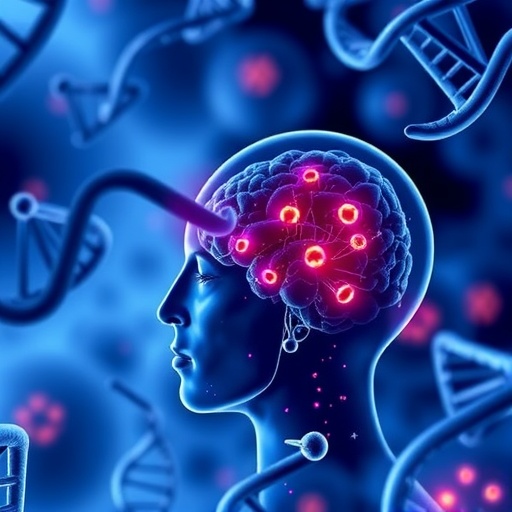
In a groundbreaking collaboration, scientists from the University of California San Diego School of Medicine, the Salk Institute, and Sanford Burnham Prebys have secured a significant four-year, $13 million grant from the California Institute for Regenerative Medicine (CIRM). This funding will propel an ambitious research project centered on reversing neurodegenerative decline by targeting a newly characterized phenomenon known as “RNA pollution” in aging neurons. The investigation promises to chart transformative paths toward innovative therapies aimed at combating devastating brain diseases.
Neurodegeneration has long been linked to the accumulation of cellular damage over time, but recent advances highlight that errors in RNA processing within neurons play an underappreciated yet critical role. RNA, the molecular messenger derived from DNA, is essential for guiding protein synthesis. However, as neurons age, they falter in accurately transcribing and managing RNA molecules. This results in persistent RNA “pollutants,” aberrant RNA species that accumulate intracellularly, inducing stress responses and diminishing cellular functionality. These defects are hypothesized to exacerbate susceptibility to neurodegenerative disorders such as Alzheimer’s disease, Parkinson’s disease, and Amyotrophic Lateral Sclerosis (ALS).
Principal investigator Dr. Gene Yeo of UC San Diego elucidates that genetic mutations predisposing individuals to neurodegeneration are insufficient in isolation to cause disease pathology. Rather, these risk factors interact synergistically with the progressive buildup of RNA pollution in aged neurons to manifest clinical symptoms. This model shifts the focus from deterministic mutation-centric views to a more nuanced, age-dependent pathogenic landscape orchestrated by RNA dysregulation.
Traditional in vivo models have made great strides but inherently lack fidelity in modeling human neuronal aging due to species differences and limitations in recapitulating the aging process. Furthermore, classical induced pluripotent stem cell (iPSC) techniques introduce a challenge for age-related studies because the genome resetting step rejuvenates cells, effectively erasing the biological age signature and any accumulated RNA errors. To circumvent this limitation, the research team capitalizes on a technique known as transdifferentiation. This innovative approach directly converts human skin cells from aged donors into induced neurons (iNs) without resetting their cellular age. As a result, iNs preserve the donor’s “molecular age” and accumulated RNA damage, providing a realistic human neuronal aging model to interrogate RNA pollution mechanisms.
Over 200 patient-derived iN lines and biofluids—including cerebrospinal fluid and blood plasma—will be profiled for unique RNA pollution signatures. The project aims to differentiate patterns present in neurodegenerative versus healthy aging brains by leveraging cutting-edge transcriptomic technologies and bioinformatics. This comprehensive mapping is expected to uncover novel biomarkers of neurodegeneration and identify mechanisms leading to RNA aberration accumulation.
Mitochondrial dysfunction, known to impair cellular energy supply and elevate oxidative stress, is also implicated in exacerbating RNA pollution. The team will explore how disruptions in mitochondrial bioenergetics accelerate RNA misprocessing and neuronal vulnerability. Illuminating this connection may reveal critical therapeutic targets that restore mitochondrial health and thereby limit RNA damage.
Harnessing high-throughput robotic screening platforms, thousands of chemical compounds and approved drugs will be evaluated for their capacity to cleanse RNA pollution and rejuvenate neuronal function. These small molecules and RNA-targeting therapies represent promising candidates with potential for rapid clinical translation due to prior regulatory approvals or favorable safety profiles.
Top-performing therapeutics will undergo rigorous assessment in advanced three-dimensional “iSpheroid” models that mimic human brain tissue architecture and function. This innovative in vitro system bridges the gap between cell culture and animal experimentation, providing a physiologically relevant platform to study treatment efficacy and toxicity before progressing to animal models.
The overarching hypothesis driving this initiative proposes that mitigating age-induced RNA dysregulation can endow neurons with sustained resilience, even in the presence of pathogenic genetic variants. If successful, this foundational work could alter the paradigm of neurodegenerative treatment from symptomatic management to proactive cellular rejuvenation.
California’s CIRM maintains a vital role as a pioneering state agency supporting stem cell and gene therapy advancements. The $80 million allotment across six awarded discovery projects like this one exemplifies their strategic commitment to breakthroughs that hold the promise of altering the trajectory of chronic and incurable diseases.
Dr. John M. Carethers, Vice Chancellor for Health Sciences at UC San Diego, emphasizes that state-backed funding is crucial in advancing ambitious, high-risk science that is less prioritized by federal sources. This renders CIRM’s support indispensable for pushing the envelope of innovative medicine designed to protect millions from the ravages of neurodegeneration.
The interdisciplinary leadership of this initiative spans several esteemed laboratories and expertise: alongside Dr. Yeo, collaborators include Dr. Douglas Galasko and Dr. Jerome Mertens of UC San Diego Neurosciences, Dr. Alex Chaim of the Department of Cell and Developmental Biology, Dr. Fred Gage of the Salk Institute, and Dr. Anne Bang of Sanford Burnham Prebys. Their combined dedication underscores the project’s potential to produce paradigm-shifting discoveries that reverberate across clinical and research landscapes.
This pioneering research not only elevates our understanding of fundamental neurobiological aging processes but also lays the groundwork for tangible therapeutic interventions. By targeting the elusive and damaging RNA pollution phenomenon, the team aspires to usher in a new era of neurodegenerative disease prevention and treatment.
Cite Scienmag News
Diana Fleming. (April 27, 2026). $13 Million CIRM Grant Funds Research on RNA Pollution’s Impact in Neurodegenerative Diseases. Scienmag. https://scienmag.com/13-million-cirm-grant-funds-research-on-rna-pollutions-impact-in-neurodegenerative-diseases/
Diana Fleming. "$13 Million CIRM Grant Funds Research on RNA Pollution’s Impact in Neurodegenerative Diseases." Scienmag, 27 April 2026, https://scienmag.com/13-million-cirm-grant-funds-research-on-rna-pollutions-impact-in-neurodegenerative-diseases/. Accessed 31 August 2026.
Diana Fleming. "$13 Million CIRM Grant Funds Research on RNA Pollution’s Impact in Neurodegenerative Diseases." Scienmag. April 27, 2026. https://scienmag.com/13-million-cirm-grant-funds-research-on-rna-pollutions-impact-in-neurodegenerative-diseases/


