

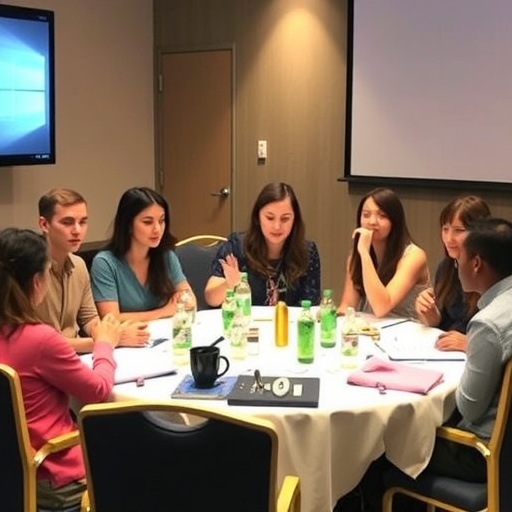
In the evolving landscape of oncology, translating molecular biomarkers into actionable clinical decisions has become a critical frontier, particularly within the realm of solid tumors. This major challenge was the central focus of the recently convened 6th LabMed Discovery Youth Scholars Salon, an innovative, open-access academic forum spearheaded by the LabMed Discovery editorial team. This event facilitated an in-depth discourse on the mechanisms underpinning neoadjuvant immunotherapy in rectal cancer and the sophisticated construction of predictive systems designed to tailor targeted therapies to individual tumor profiles.
The first keynote presentation delivered by Dr. Yang profoundly addressed the clinical journey of neoadjuvant immunotherapy in rectal cancer, emphasizing a comprehensive framework moving from raw clinical evidence to established treatment guidelines. Dr. Yang’s lecture meticulously dissected four essential dimensions: the foundational background and clinical challenges encountered, robust validation of therapeutic efficacy, progressive exploration of underlying immunological mechanisms, and finally, the integration of accumulated evidence to shape standardized clinical protocols. This holistic analysis underscores the transformative potential of immunotherapy in converting historically intractable rectal cancer cases into more manageable clinical scenarios.
Crucially, this approach targets the preoperative (neoadjuvant) window, capitalizing on the immunological priming of tumors before surgical intervention. By harnessing the synergy of immune checkpoint inhibitors and conventional modalities, the therapeutic paradigm is being redefined, potentially enhancing pathological complete response rates and reducing tumor recurrence risk post-surgery. Dr. Yang’s insights contribute to a burgeoning body of evidence aiming to refine patient selection criteria, optimize treatment regimens, and mitigate adverse events, advancing personalized medicine in colorectal oncology.
Parallel to these developments, Dr. Cheng presented a groundbreaking exploration into the realm of predictive oncology. His discourse, titled “From Biomarkers to Clinical Decision-Making: Construction of a Predictive System for Targeted Therapy Sensitivity in Solid Tumors,” unveiled a meticulously engineered framework designed to stratify patient response to novel agents such as anlotinib. This investigational tyrosine kinase inhibitor has shown multi-targeted efficacy, warranting detailed mechanistic studies elucidated during the talk.
Dr. Cheng’s presentation highlighted three pivotal axes: the unique vantage point surgeons possess in biomarker acquisition and clinical correlation, mechanistic elucidation of anlotinib’s antitumor pathways, particularly in colorectal cancer, and preliminary clinical data underscoring anlotinib’s therapeutic potential. By integrating surgical insights with molecular profiling, this predictive system aims to transcend traditional one-size-fits-all paradigms, ushering in an era where treatment can be precisely calibrated to tumor biology and patient-specific factors.
The intersecting themes of these presentations—the precision of neoadjuvant immunotherapy protocols and the stratification power of predictive biomarker systems—reflect the larger ambition within oncology: to harness molecular data for real-time, individualized clinical decision-making. This ambition addresses the pressing clinical conundrum of heterogeneous treatment responses in solid tumors, where patient outcomes can vary dramatically even among those with ostensibly similar disease characteristics.
An essential takeaway from the salon is the critical importance of multidisciplinary collaboration. The integration of surgical expertise, molecular biology, bioinformatics, and clinical trial data is paramount to advance these promising therapeutic strategies from research settings into routine clinical practice. The forum emphasized the need for seamless data sharing and the standardization of biomarker assays to ensure reproducibility and broad applicability.
Further technical discussion centered around the challenges of biomarker validation, which require multicentric validation cohorts and robust statistical models to discern true predictive value from incidental correlations. Both speakers underscored the need for ongoing prospective clinical trials to verify the efficacy of these novel treatment algorithms, advocating for designs that incorporate adaptive methodologies to refine patient stratification dynamically.
Moreover, the introduction of digital and machine learning tools into biomarker research was noted as a transformative force, enabling unprecedented analytical depth in interpreting complex genomic and proteomic datasets. The construction of predictive pipelines integrating these advanced computational techniques promises to revolutionize how clinicians approach tumor heterogeneity and resistance mechanisms.
The session concluded with an open invitation to clinicians, researchers, and students alike, welcoming participants from diverse backgrounds and encouraging curiosity-driven engagement with these cutting-edge topics. The organizers emphasized that while specialized knowledge enhances understanding, the forum’s accessibility ensures that even those new to oncology can grasp the critical concepts propelling contemporary cancer care forward.
In essence, the 6th LabMed Discovery Youth Scholars Salon exemplified the fusion of academic rigor, clinical relevance, and collaborative spirit necessary to transcend the current limits of solid tumor management. It illuminated a path where translational research and patient-centered innovation converge, ultimately aspiring to improve survival outcomes and quality of life for cancer patients worldwide.
This event marks a significant milestone in the ongoing quest to bridge molecular oncology insights with practical, guideline-driven therapies, setting the stage for a new era in oncology where science and patient care advance hand in hand.
Cite Scienmag News
Rowan B. (April 24, 2026). LabMed Discovery Youth Scholars Salon: Insights from Session 6. Scienmag. https://scienmag.com/labmed-discovery-youth-scholars-salon-insights-from-session-6/
Rowan B. "LabMed Discovery Youth Scholars Salon: Insights from Session 6." Scienmag, 24 April 2026, https://scienmag.com/labmed-discovery-youth-scholars-salon-insights-from-session-6/. Accessed 28 August 2026.
Rowan B. "LabMed Discovery Youth Scholars Salon: Insights from Session 6." Scienmag. April 24, 2026. https://scienmag.com/labmed-discovery-youth-scholars-salon-insights-from-session-6/


