


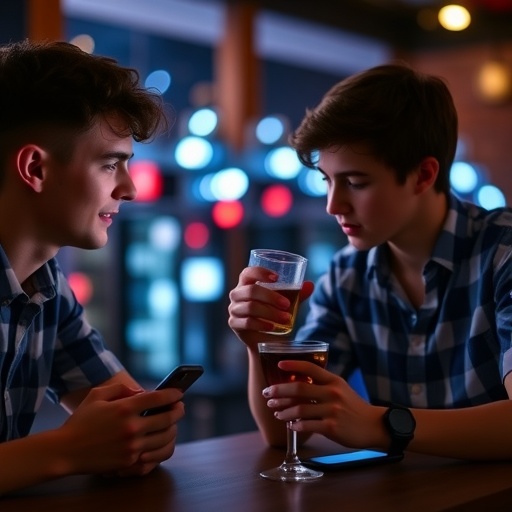
In a groundbreaking study that sheds new light on adolescent behavior, researchers from Northwell Health have revealed a compelling link between high social media usage and increased alcohol consumption among U.S. high school students. This study, unveiled at the Pediatric Academic Societies (PAS) 2026 Meeting held in Boston, signals a pressing public health concern amid the ever-expanding digital landscape that dominates teenage life.
The study employed data from the 2023 National Youth Risk Behavior Surveillance Survey (YRBSS), a comprehensive, nationally representative school-based survey that captures a wide range of youth behaviors. The researchers meticulously categorized social media use into four distinct groups: No Use, Low Use (a few times per month to a few times per week), Moderate Use (once to several times per day), and High Use (more than once per hour), allowing for a nuanced analysis of patterns and behaviors.
Results demonstrated a stark gradient: nearly 28% of high social media users reported consuming alcohol within the past 30 days, compared to just 9.2% among those who did not use social media. Even after adjusting for variables including sex, grade level, race/ethnicity, and sexual orientation, high social media usage was associated with over three times the odds of recent alcohol use, starkly emphasizing the potential risks embedded within digital environments.
These findings gain additional significance considering the diversity of social media platforms available today, such as TikTok, Instagram, and Snapchat—platforms that were not adequately represented in previous research. Unlike prior studies limited by small sample sizes or outdated social media contexts, this research offers a timely and robust examination pertinent to today’s adolescents immersed in highly visual and interactive online spaces where alcohol-related content proliferates.
Dr. Neel Sharma, the study’s lead author and research intern at Northwell Health, articulated the broader implications: “Our work underscores the critical need for targeted digital literacy programs that equip young people with skills to critically evaluate and navigate social media content. The pervasiveness of alcohol promotion in these online spaces may inadvertently normalize risky behaviors among youth.”
A particularly salient finding emerged from the interaction analyses: while the association between high social media use and alcohol consumption did not significantly vary by grade, sex, or race/ethnicity, sexual minority youth—specifically those identifying as gay or lesbian—exhibited disproportionately higher odds of alcohol use at both moderate and high levels of social media engagement. This intersection highlights a nuanced vulnerability that warrants focused interventions.
Technically, the study utilized chi-square analyses to establish prevalence differences across social media use categories, revealing significant trends (p < .001). Subsequent logistic regression models adjusted for confounders confirmed the robustness of the associations, with adjusted odds ratios delineating a clear dose-response relationship: moderate users had 1.72 times higher odds of alcohol use, while high users exceeded a threefold increase.
The research methodology merits appreciation for its rigorous design. Incorporating interaction terms, the analyses tested for potential effect modification by key demographic variables, offering a comprehensive view essential for developing tailored prevention strategies. Such statistical sophistication enhances the credibility and applicability of the findings in real-world settings.
This study’s findings resonate with broader concerns about the digital ecosystem’s impact on adolescent development. Social media platforms’ algorithms often amplify content that garners engagement, potentially increasing exposure to pro-alcohol imagery, peer behaviors, and marketing efforts, subtly shaping youth attitudes and behaviors toward drinking.
Importantly, the research draws attention to the complex dynamics influencing adolescent substance use. It suggests that interventions must move beyond traditional frameworks and integrate an understanding of the digital contexts in which today’s youth are embedded. Policies promoting responsible content moderation, alongside educational initiatives, could form the backbone of multifaceted approaches to mitigate these risks.
Moreover, this study contributes to a growing body of literature emphasizing the intersectionality of social determinants and digital exposure. It highlights the importance of inclusive research paradigms acknowledging how sexual identity and online environments converge to influence health outcomes, laying groundwork for future research to unpack underlying mechanisms.
As the PAS 2026 Meeting continues to spotlight innovative pediatric research, this study acts as a clarion call for clinicians, educators, parents, and policymakers to confront the challenges posed by social media in shaping adolescent health trajectories. Enhanced surveillance and proactive, evidence-based interventions can empower youth to navigate digital landscapes safely.
In conclusion, Northwell Health’s investigation into social media usage and adolescent alcohol consumption represents a critical step in understanding the multifaceted influences on youth behavior. The dose-dependent relationship elucidated by this study, coupled with insights about vulnerable populations, underscores the urgency for targeted public health strategies that adapt to the digital age’s complexities.
News Publication Date: April 24, 2026
Web References:
– Pediatric Academic Societies (PAS) Meeting: https://www.pas-meeting.org
– PAS 2026 program guide: https://2026pas-meeting.eventscribe.net/
– Figure 1: https://www.abstractscorecard.com/uploads/Tasks/upload/25975/OCBVEGWT-2269926-1-PDF.png
– Figure 2: https://www.abstractscorecard.com/uploads/Tasks/upload/25975/OCBVEGWT-2269926-2-IMG.png
Cite Scienmag News
Celia Amberley. (April 24, 2026). New Research Reveals Strong Link Between Heavy Social Media Use and Higher Alcohol Consumption in Adolescents. Scienmag. https://scienmag.com/new-research-reveals-strong-link-between-heavy-social-media-use-and-higher-alcohol-consumption-in-adolescents/
Celia Amberley. "New Research Reveals Strong Link Between Heavy Social Media Use and Higher Alcohol Consumption in Adolescents." Scienmag, 24 April 2026, https://scienmag.com/new-research-reveals-strong-link-between-heavy-social-media-use-and-higher-alcohol-consumption-in-adolescents/. Accessed 28 August 2026.
Celia Amberley. "New Research Reveals Strong Link Between Heavy Social Media Use and Higher Alcohol Consumption in Adolescents." Scienmag. April 24, 2026. https://scienmag.com/new-research-reveals-strong-link-between-heavy-social-media-use-and-higher-alcohol-consumption-in-adolescents/


