


University of Washington Researchers Take Flight with New Insights on Bat Evolution

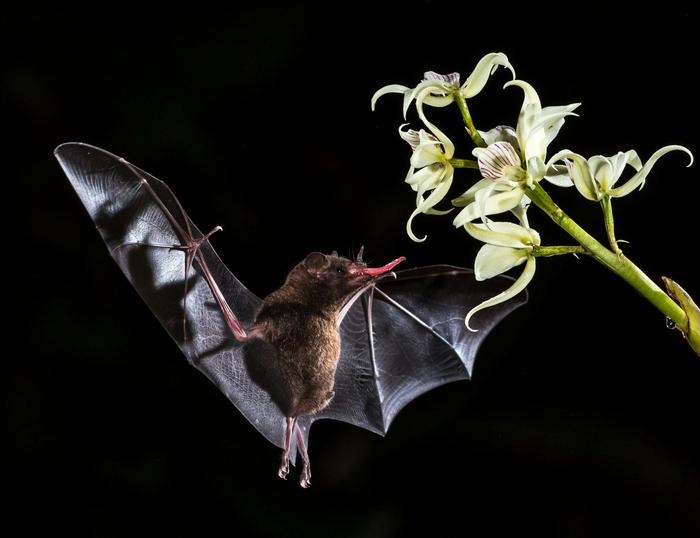
Credit: Zdeněk Macháček
University of Washington Researchers Take Flight with New Insights on Bat Evolution
Video Interview with Authors –
In new research published in PeerJ Life & Environment, researchers from the University of Washington, University of Texas at Austin and Oregon Institute of Technology, led by undergraduate student Abby Burtner, have advanced our understanding of the evolutionary origins of flight in bats. The study, titled “Gliding toward an Understanding of the Origin of Flight in Bats,” employs phylogenetic comparative methods to explore the evolutionary transition from gliding to powered flight in these unique mammals.
Bats are the only mammals capable of powered flight, a feat enabled by their highly specialized limb morphology. However, the evolutionary pathway that led to this capability has remained elusive due to an incomplete fossil record. Burtner et al.’s research provides significant insights by testing the hypothesis that bats evolved from gliding ancestors.
The research team analyzed a comprehensive dataset of limb bone measurements that included four extinct bats and 231 extant mammals with various locomotor modes. Their findings reveal that gliders exhibit relatively elongate forelimb and narrower hindlimb bones that are intermediate between those of bats and non-gliding arboreal mammals. Evolutionary modeling of these data offers support for the hypothesis that selection may be strong on certain forelimb traits, pulling them from a glider towards a flyer adaptive zone in bats.
“We propose an adaptive landscape of limb bone traits across locomotor modes based on the results from our modeling analyses,” said Dr. Santana. “Our results, combined with previous research on bat wing development and aerodynamics, support a hypothetical evolutionary pathway wherein a glider-like forelimb morphology preceded the evolution of specialized bat wings”
This study not only supports the gliding-to-flying hypothesis but also challenges the traditional view of bat and glider limb evolution. The researchers emphasize the need for future studies to test the biomechanical implications of these bone morphologies and to consider the complex genetic and ecological factors that influenced the evolution of bat powered flight.
“Our findings contribute to the hypothesis that bats evolved from gliding ancestors and lays a morphological foundation in our understanding of bat flight” Dr. Law added. “However, we stress that additional fossils are necessary to truly unravel the mysteries of this remarkable evolutionary transition.”
For more information on this study or to arrange an interview with Dr. Law or Dr. Santana, please contact the University of Washington’s Department of Biology.
Journal
PeerJ
Method of Research
Observational study
Subject of Research
Animals
Article Title
Gliding toward an understanding of the origin of flight in bats
Article Publication Date
25-Jul-2024
Cite Scienmag News
Gavin Prescott. (July 25, 2024). University of Washington researchers take flight with new insights on bat evolution. Scienmag. https://scienmag.com/university-of-washington-researchers-take-flight-with-new-insights-on-bat-evolution/
Gavin Prescott. "University of Washington researchers take flight with new insights on bat evolution." Scienmag, 25 July 2024, https://scienmag.com/university-of-washington-researchers-take-flight-with-new-insights-on-bat-evolution/. Accessed 4 September 2026.
Gavin Prescott. "University of Washington researchers take flight with new insights on bat evolution." Scienmag. July 25, 2024. https://scienmag.com/university-of-washington-researchers-take-flight-with-new-insights-on-bat-evolution/

