


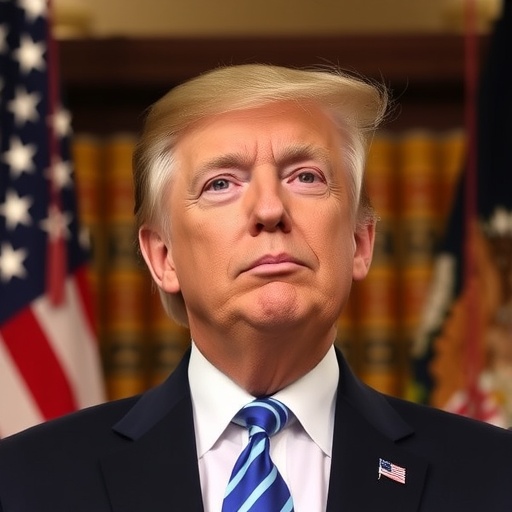
In recent years, the health of prominent political figures has become a focal point of public discourse, particularly regarding mental fitness and cognitive function. Among such figures, former President Donald Trump—elected as the oldest individual to assume the U.S. presidency—has been the subject of persistent speculation concerning his mental health. This speculation raises complex ethical questions about the role and responsibilities of medical professionals when publicly discussing the mental wellbeing of sitting presidents or other public officials. Medical ethics and professional standards clash with the public’s right to be informed about the fitness of their leaders.
The British Medical Journal (The BMJ) recently published an in-depth opinion article by David Nicholl and Trisha Greenhalgh that explores these ethical tensions. Their analysis focuses on the boundaries that should restrict doctors from commenting publicly on a head of state’s mental health without a formal clinical evaluation. They challenge the notion that professional discretion should be overridden by political or public concerns, emphasizing that medical confidentiality and standards must remain paramount even when addressing figures of significant public interest.
A critical point outlined by the authors involves the professional obligation of clinicians to refrain from diagnosing any medical or psychiatric condition without conducting a direct patient assessment. This fundamental ethical stance ensures diagnostic accuracy and protects individuals’ privacy. Moreover, the article warns strongly against medical professionals or commentators making speculative diagnoses based solely on media footage, secondhand reports, or video recordings of public appearances, which represent insufficient clinical evidence.
Particularly, the article references complex neurodegenerative conditions such as behavioral variant frontotemporal dementia (bvFTD), which are often cited in speculative discourse about the mental health of public figures. bvFTD is a distinct clinical syndrome characterized by specific behavioral and cognitive deficits, diagnosed only via a combination of comprehensive neurological examination, neuropsychological testing, and confirmatory imaging studies like MRI or PET scans. The authors argue that behavioral observations alone—such as those gleaned from speeches or interviews—fall dramatically short of the rigorous criteria necessary for a definitive diagnostic conclusion.
Despite public speculation, the article underscores that no credible diagnosis of probable bvFTD or other neurodegenerative diseases can be made without detailed clinical assessments and relevant neuroimaging. The complex symptomatology and overlapping features of various cognitive disorders demand a careful and systematic approach to diagnosis that is unattainable outside clinical contexts. This gap between public commentary and professional medical evaluation represents a significant ethical dilemma, as premature or inaccurate professional opinions can fuel misinformation and stigma.
Yet, Nicholl and Greenhalgh draw a nuanced distinction between formal diagnosis and the expression of broader, clinically informed concerns regarding an individual’s mental fitness for leadership roles. Historical precedent is cited from 2016 when a group of senior US psychiatrists wrote to then-President Barack Obama, expressing concerns about Donald Trump’s mental appropriateness for office. Critically, these psychiatrists refrained from offering a formal diagnosis but recommended an impartial, thorough medical evaluation, highlighting the importance of objective clinical examination when public welfare is potentially at stake.
The authors endorse this approach, advocating for an objective, impartial medical assessment for public officials when reasonable doubt exists about their cognitive or psychological capacity. Such evaluations should be conducted by qualified professionals within a framework that respects confidentiality as well as public interest. This balanced approach respects both ethical guidelines and the societal need to ensure that those in power possess the requisite mental capabilities.
Another core theme in The BMJ article is the need for greater clarity and understanding within the medical profession about when, how, and under what criteria comments about a public figure’s mental health might be appropriately made. The authors argue that medical professionals should exercise caution and humility when engaging in public debates about the cognitive or psychological status of national leaders or other high-profile individuals. The risks of overstepping professional boundaries could not only harm individuals but erode public trust in medical objectivity.
The discussion inevitably intersects with the well-known “Goldwater Rule,” a guideline issued by the American Psychiatric Association in 1973, which discourages psychiatrists from offering professional opinions on public figures whom they have not personally examined and from whom they have not obtained consent. Although controversial and debated over time, the rule functions as a safeguard against the politicization of psychiatric practice and the dangers of armchair diagnosis based on incomplete or public information alone.
Complementing their ethical reasoning, Nicholl and Greenhalgh review how public experts have commented on Donald Trump’s physical and mental health over time, demonstrating a spectrum of cautious discourse to outright speculative conjecture. The article emphasizes that, regardless of public interest, medical evaluations and assertions must remain grounded in clinical evidence and respect for professional standards.
The BMJ opinion piece ultimately calls for ongoing discourse within the medical community and the broader public about maintaining the integrity of clinical judgement. It urges professionals to balance transparency and public interest with the need to avoid undermining the confidentiality and dignity of individuals, even those in the highest offices of power. Ethical considerations are paramount, especially when diagnoses or concerns potentially impact political stability and public trust.
In conclusion, Nicholl and Greenhalgh’s article highlights a vital intersection of medicine, ethics, and politics—challenging doctors to navigate the complexities surrounding public commentary on presidential mental health carefully. Their insights provide a prudent framework that protects both the dignity of public figures and the critical responsibility of physicians to uphold scientific rigor and ethical standards amid politicized environments.
Cite Scienmag News
Glenn Wilkins. (April 23, 2026). Should Medical Experts Discuss a President’s Mental Health? Scienmag. https://scienmag.com/should-medical-experts-discuss-a-presidents-mental-health/
Glenn Wilkins. "Should Medical Experts Discuss a President’s Mental Health?" Scienmag, 23 April 2026, https://scienmag.com/should-medical-experts-discuss-a-presidents-mental-health/. Accessed 4 September 2026.
Glenn Wilkins. "Should Medical Experts Discuss a President’s Mental Health?" Scienmag. April 23, 2026. https://scienmag.com/should-medical-experts-discuss-a-presidents-mental-health/


