


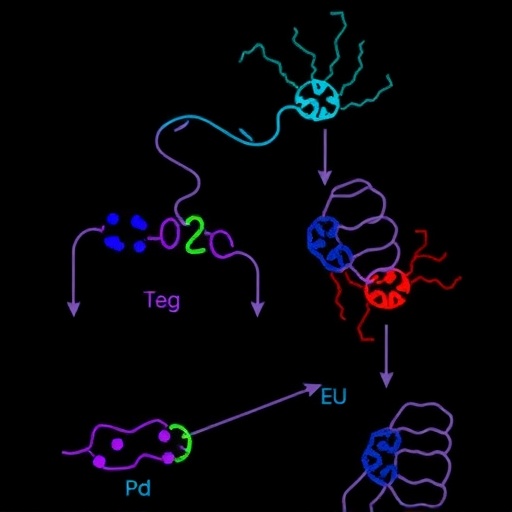
In an exhilarating breakthrough that promises to reshape our understanding of breast cancer metabolism and its treatment trajectory, recent research has illuminated the intricate role of Let-7b-5p, a microRNA, in suppressing breast cancer cell growth and metastasis. These groundbreaking findings pivot on the molecular interplay between Let-7b-5p and hexokinase 2 (HK2), a pivotal enzyme that governs aerobic glycolysis, often dubbed the “Warburg effect,” which cancer cells hijack to support their relentless proliferation and invasive capabilities.
The cutting-edge study meticulously elucidates how Let-7b-5p operates as a tumor suppressor by directly targeting HK2, thereby crippling the metabolic lifeline that breast cancer cells depend upon. This repression of HK2-mediated aerobic glycolysis significantly undermines cancer cell bioenergetics and biosynthesis, halting their aggressive progression. Researchers employed a series of advanced molecular biology techniques, including RNA interference, luciferase reporter assays, and metabolic flux analysis, to validate the specificity and efficacy of Let-7b-5p in modulating key glycolytic pathways.
Delving deeper into the cellular biochemistry, hexokinase 2 catalyzes the first committed step of glycolysis by phosphorylating glucose to glucose-6-phosphate, setting the stage for energy production and anabolic processes vital for rapid cell growth. Cancer cells, with their increased metabolic demands, often upregulate HK2 to sustain the glycolytic flux even in oxygen-rich environments, an adaptive phenomenon that confers a survival advantage. By downregulating HK2, Let-7b-5p effectively starves the tumor cells of their metabolic fuel, providing a compelling metabolic checkpoint that could be exploited therapeutically.
Moreover, the research highlights how the enforced expression of Let-7b-5p leads to a marked decrease in lactate production, a metabolic hallmark of aerobic glycolysis, alongside diminished glucose uptake. These metabolic shifts not only attenuate tumor growth but also reduce the metastatic potential of breast cancer cells. The suppression of metastasis is particularly significant given that metastatic dissemination remains the primary cause of mortality in breast cancer patients, underscoring the therapeutic promise of strategies targeting metabolic vulnerabilities.
Intriguingly, the study also examined the molecular pathways downstream of HK2 repression, revealing that Let-7b-5p triggers a cascade of metabolic and signaling alterations which collectively impair cancer cell proliferation and mobility. Notably, the modulation of key signaling molecules involved in epithelial-mesenchymal transition (EMT), a process essential for metastasis, was observed. This suggests that Let-7b-5p’s impact extends beyond metabolism and orchestrates a broader anti-tumorigenic program.
In functional assays, breast cancer cell lines treated with Let-7b-5p mimics exhibited significant reductions in colony formation and invasiveness in vitro, establishing a proof of concept for its tumor-suppressive capacity. When these findings were contextualized within in vivo models, xenograft tumors derived from Let-7b-5p-overexpressing cells showed stunted growth and diminished metastatic lesions, reinforcing translational potential.
These insights invite a paradigm shift in breast cancer therapeutics, advocating for microRNA-based interventions that synergize with existing chemotherapy or targeted therapies. Harnessing Let-7b-5p or its functional analogs could potentially reprogram cancer metabolism, sensitize tumors to treatment, and inhibit dissemination, thereby improving patient outcomes. Furthermore, the non-coding RNA approach may offer benefits in terms of specificity and reduced systemic toxicity, which are paramount in oncology.
The implications of this study also ripple into the burgeoning field of cancer metabolism, where the quest to disrupt aberrant metabolic circuits remains a vibrant frontier. By characterizing the precise molecular crosstalk mediated by Let-7b-5p, researchers have opened avenues to identify novel biomarkers for breast cancer prognosis and treatment response, which could herald a new era of personalized medicine.
Despite the promising data, challenges remain in translating these findings from bench to bedside. MicroRNA delivery systems must overcome biological barriers to achieve efficient, tissue-specific targeting and sustained expression. Additionally, discerning the context-dependent effects of Let-7b-5p across heterogeneous tumor microenvironments is critical to gauge its therapeutic universality and mitigate off-target risks.
Nonetheless, the foundational knowledge established through this comprehensive investigation sets a robust framework to propel clinical trials exploring Let-7b-5p-based therapeutics. It lays fertile ground for interdisciplinary collaborations integrating molecular oncology, pharmacology, and nanotechnology to optimize delivery and efficacy.
In summary, this pioneering research spotlights Let-7b-5p as a formidable molecular antagonist of breast cancer metabolism and metastasis, acting through a refined repression of hexokinase 2-driven aerobic glycolysis. By delineating the molecular narrative underpinning this suppression, the study ushers in a promising horizon where microRNA-mediated metabolic targeting may become a cornerstone in combatting breast cancer’s lethal spread.
Cite Scienmag News
Nathaniel Bowman. (April 23, 2026). Let-7b-5p Halts Breast Cancer by Targeting Glycolysis. Scienmag. https://scienmag.com/let-7b-5p-halts-breast-cancer-by-targeting-glycolysis/
Nathaniel Bowman. "Let-7b-5p Halts Breast Cancer by Targeting Glycolysis." Scienmag, 23 April 2026, https://scienmag.com/let-7b-5p-halts-breast-cancer-by-targeting-glycolysis/. Accessed 3 September 2026.
Nathaniel Bowman. "Let-7b-5p Halts Breast Cancer by Targeting Glycolysis." Scienmag. April 23, 2026. https://scienmag.com/let-7b-5p-halts-breast-cancer-by-targeting-glycolysis/


