


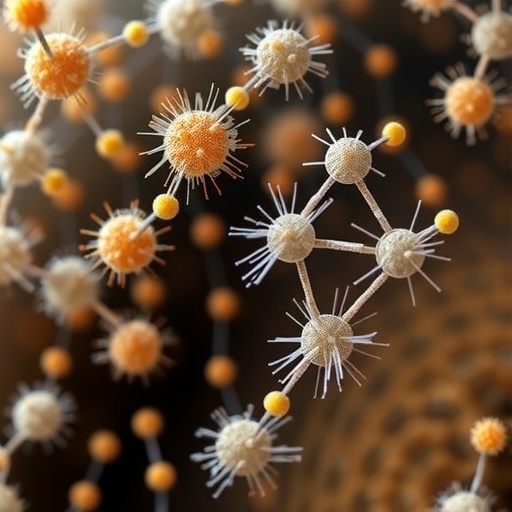
A groundbreaking study from North Carolina State University is redefining our understanding of fermented foods by illuminating the substantial contribution of microbial proteins to their overall nutritional profile. Utilizing sophisticated metaproteomic analyses, researchers have revealed that microbes, the microscopic architects behind fermentation, provide a surprisingly large portion of the protein content in everyday fermented foods such as yogurt, cheese, and bread. This discovery opens novel avenues for exploring how these microbial proteins might influence human health beyond traditional probiotic effects.
The research team sought to unravel how the fermentation process transforms the protein landscape of foods and which microbial proteins are ultimately ingested. Employing high-resolution liquid chromatography combined with advanced mass spectrometry, the scientists systematically profiled the complete array of proteins—from both the original food substrates and the microbial communities—in 17 fermented foods alongside three non-fermented controls. This comprehensive analysis included familiar dairy products, various fermented soy derivatives, and different types of bread. The meticulous approach allowed the team to detect, identify, and quantify diverse microbial proteins at an unprecedented depth.
Remarkably, the study found that microbial proteins could constitute up to 11% of the total protein content in fermented foods and, astonishingly, make up as much as 60% of the total number of distinct proteins detected. This indicates that microbial biomass is not merely a functional agent in fermentation but a major contributor to the food’s final protein composition. Such insights challenge conventional assumptions about protein sources in fermented products, highlighting a complex biochemical interaction between microbes and the food matrix.
Taken as a case study, Brie cheese demonstrated an overwhelming microbial protein dominance, where out of 1,573 unique proteins identified, 65% originated from microbial sources. This pattern was consistent across various dairy-based fermented foods, underscoring the pervasive influence of microbial communities on their composition. The findings signal a shift in how nutritionists and food scientists might evaluate the health benefits of these products, suggesting microbial proteins should be considered a critical nutritional component.
The proteins derived from microbes were not random or incidental; they included molecules central to microbial metabolism such as enzymes involved in glycolysis, components of the protein synthesis machinery, and molecular chaperones. Intriguingly, the microbial proteome also encompassed specialized functional proteins like carbohydrate-degrading enzymes and proteases—key players in adapting to the unique ecological niches within the fermented food environment. These functional proteins may have downstream effects on host physiology, including possible modulation of gut health.
Associate Professor Manuel Kleiner expressed astonishment at these findings. The data indicated that a substantial fraction of proteins consumed from common fermented staples like bread are actually yeast-derived, upending typical perceptions that the protein content is largely from the food’s original plant or animal sources. This revelation underscores the intricate biological transformation during fermentation, whereby microbial cells proliferate and convert food substrates into their own biomass, which then becomes part of our diet.
Co-corresponding author Ayesha Awan emphasized that this microbial protein presence signals a broader role for fermentation microbes beyond simple food preservation or flavor development. Such proteins could potentially interact with the host’s immune system or gut microbiota, thereby influencing health outcomes in ways not previously appreciated. This highlights a promising frontier for microbiome and nutrition research, where the molecular specifics of what we ingest from fermented foods are connected to human biology.
Looking ahead, the researchers plan to extend their inquiries into animal models to delineate how these microbial proteins impact the gut microbiome and overall health. By feeding mice various fermented foods and monitoring microbiome changes and immune responses, the team hopes to elucidate the physiological significance of these proteins. Such studies promise to advance personalized nutrition strategies and could lead to the design of functional fermented foods tailored to promote specific health benefits.
Moreover, the methods employed in this research—combining metaproteomics with high-precision analytical chemistry—set a new standard for studying the complexity of fermented food products. This integrative approach can dissect not just compositional elements but also functional attributes, thereby providing a more holistic understanding of fermentation-driven nutritional enhancements. Future food engineering efforts might leverage this knowledge to customize microbial communities that optimize protein profiles and health-promoting qualities.
This investigation into fermented food proteomes also broadens our grasp of how food-originating microbes contribute dynamically to human diets. Previously, research focused extensively on isolated probiotic strains or fermentation metabolites; however, by profiling the actual proteins coming from microbial biomass, the current study adds a vital piece to the puzzle. It opens the door to reconsidering fermented foods as living molecular ecosystems whereby microbial contributions substantially redefine nutritional content.
Published on March 26, 2026, in the journal Food & Function, the peer-reviewed paper, co-authored by Laura Winkler, Ayesha Awan, Nicole Rideout, and Manuel Kleiner, spotlights an emerging area of study in food microbiology and nutrition science. Supported by major institutions including the National Institutes of Health and the European Union, the work signifies an important step towards understanding the functional role of microbes in what we consume daily.
The implications of these findings are manifold. They challenge the conventional categorization of dietary proteins, suggest novel mechanisms for probiotic action, and provide a framework for designing next-generation fermented foods with targeted health benefits. As public interest in microbiome-friendly diets grows, this research holds potential to influence consumer choices and food production paradigms globally.
In sum, this NC State University study redefines the nutritional landscape of fermented foods by unveiling the extensive presence and functional importance of microbial proteins. These insights not only deepen scientific understanding but also pave the way for innovations in food science and human health, underscoring the intricate interplay between microbes, food, and the consumer.
Keywords
Fermented foods, microbial proteins, metaproteomics, gut microbiome, fermentation, nutrition, probiotics, mass spectrometry, microbial biomass, functional foods, microbiology, human health
Cite Scienmag News
Daisy Hatcher. (April 22, 2026). Microbes Produce an Unexpectedly Diverse Range of Proteins in Fermented Foods. Scienmag. https://scienmag.com/microbes-produce-an-unexpectedly-diverse-range-of-proteins-in-fermented-foods/
Daisy Hatcher. "Microbes Produce an Unexpectedly Diverse Range of Proteins in Fermented Foods." Scienmag, 22 April 2026, https://scienmag.com/microbes-produce-an-unexpectedly-diverse-range-of-proteins-in-fermented-foods/. Accessed 3 September 2026.
Daisy Hatcher. "Microbes Produce an Unexpectedly Diverse Range of Proteins in Fermented Foods." Scienmag. April 22, 2026. https://scienmag.com/microbes-produce-an-unexpectedly-diverse-range-of-proteins-in-fermented-foods/


