


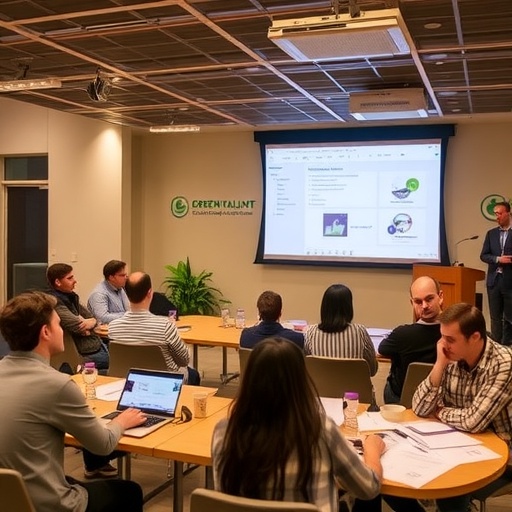
The Green Talent project represents a transformative European initiative designed to cultivate a new generation of specialists capable of tackling the complex challenges posed by sustainability, biodiversity loss, and climate change. By fostering collaboration between academic institutions and industry, this project aims to equip emerging researchers and professionals with the interdisciplinary skills and practical experience necessary to develop systemic solutions for environmental crises at local and international scales.
At the heart of Green Talent’s strategy lies the DemoHubs initiative—an innovative network of real-world, interactive environments situated primarily in Europe’s Widening Countries. These demonstration hubs serve as vital platforms where practitioners, scientists, policymakers, and industry leaders converge to exchange knowledge, promote innovation, and engage in hands-on learning. The hubs are strategically located in Malta, Greece, Cyprus, and Bulgaria, each addressing region-specific environmental challenges while contributing to the broader goals of sustainability and climate resilience.
The pioneering workshop in Bulgaria, held on February 25th at the Ministry of Environment and Water, marked the official launch of the DemoHubs initiative. Organized collaboratively by the National Institute of Geophysics, Geodesy and Geography, the National Museum of Natural History, and Pensoft Publishers, this workshop aimed to reinforce an existing community of practice originally developed under the SELINA project. Central to the agenda was the utilization of biodiversity data frameworks and the integration of authoritative IPBES (Intergovernmental Science-Policy Platform on Biodiversity and Ecosystem Services) and IPCC (Intergovernmental Panel on Climate Change) assessments, which formed the scientific basis for identifying strategic environmental priorities. A critical focus was placed on expanding this collaborative format internationally while bolstering Bulgaria’s involvement in global environmental governance.
Progressing to the Greek DemoHub event in Crete on March 18th, the workshop attracted nearly 50 stakeholders from academia, NGOs, and diverse sectors of the economy through a hybrid meeting format. Hosted by the University of Crete alongside MedINA and Harokopio University of Athens, this workshop underscored the interconnectedness of biodiversity conservation, cultural heritage preservation, and ecosystem services essential for island sustainability. Participants delved into pressing ecological challenges such as biodiversity degradation driven by overgrazing, tourism pressures, land-use alteration, pollution, and inefficiencies in waste management. Emphasis was placed on employing advanced technical tools including ecosystem mapping, spatial modeling, and machine learning algorithms to enable data-driven policy development and adaptive management on small- and medium-sized island systems.
Malta’s DemoHub convened next in Kalkara, with the University of Malta and Ecostack Innovations orchestrating a dynamic workshop focused explicitly on climate stress and the scarcity of natural spaces amid rapid urban and economic development. This event was distinguished by high-level political engagement, featuring keynote contributions from European Parliament President Dr. Roberta Metsola, Malta’s Minister of Economy Silvio Schembri, and members of both the European Parliament and national environmental authorities. The workshop prioritized transitioning from theoretical discourse to actionable strategies through panel discussions and participatory networking, fostering multisectoral dialogue to balance ecological integrity with socioeconomic advancement in Malta’s vulnerable island context.
The final DemoHubs workshop took place on March 31st in Nicosia, Cyprus, jointly organized by the Cyprus Institute, the Open University of Cyprus, and VL Sustainability Metrics Ltd. This session was notable for its interactive design, where participants were actively engaged in collaborative exercises to pinpoint research and innovation priorities within nature-based solutions (NbS) targeting agroecosystem sustainability. The dialogue advanced understanding of organisational barriers, skill gaps, and structural deficiencies impeding cross-sectoral research collaboration. Complementing the intellectual exchange, the workshop incorporated a field visit to the Strovolos Urban Agriculture Living Lab—developed within the Feed4Food project—highlighting practical applications of sustainable urban agriculture and ecosystem stewardship.
Overarching these diverse events, the Green Talent project has successfully catalyzed synergistic partnerships between academic researchers, governmental bodies, industry stakeholders, and civil society across its network of Widening Countries. By creating dedicated spaces for dialogue, mutual learning, and co-creation, the initiative not only amplifies capacity-building for environmental innovation but also reinforces multi-level policy integration. In fostering sectoral interoperability and knowledge exchange, DemoHubs effectively serve as living laboratories that generate replicable models for addressing climate change adaptation and biodiversity conservation in regionally distinct socio-ecological settings.
Technically, the project’s emphasis on integrating authoritative IPBES and IPCC data into actionable frameworks exemplifies a cutting-edge approach to evidence-based environmental decision-making. The adoption of machine learning and ecosystem service modeling reflects an advanced use of environmental informatics, enabling stakeholders to identify critical vulnerability hotspots, forecast ecosystem responses under multiple scenarios, and design targeted interventions with measurable impacts. Moreover, by facilitating stakeholders’ active engagement in knowledge production and policy alignment, Green Talent paves the way for a more resilient, adaptive governance paradigm attuned to complex environmental challenges.
Significantly, the initiative’s focus on islands within Greece, Cyprus, and Malta also brings attention to unique ecological and societal dynamics that merit specialized attention in European environmental strategy. Islands often represent biodiversity hotspots facing acute pressures from climate change, human activity, and limited resource availability. By tailoring solutions to these contexts, the DemoHubs cultivate specialized expertise and innovative practices that can be scaled or adapted across other insular and vulnerable regions globally.
The project underscores the essential role of participatory approaches in addressing environmental crises. The consistently interactive format of workshops—from co-creation sessions in Greece to problem-identification exercises in Cyprus—demonstrates the value of fostering stakeholder agency and multi-actor collaboration. This generated a dynamic knowledge ecosystem characterized by diverse perspectives, innovation potential, and shared commitment critical to sustained environmental stewardship.
Green Talent’s strategic web of DemoHubs also presents an exemplary case for linking European Union funding and research infrastructures with tangible environmental outcomes. Supported by EU grant no. 101217375, the initiative exemplifies how investment in capacity building, stakeholder engagement, and integrative environmental science can accelerate progress towards systemic climate and biodiversity solutions, advancing the EU’s Green Deal and related sustainability commitments.
Looking forward, the lessons distilled from these four DemoHubs workshops will directly inform future research and innovation efforts, refining methodologies and deepening cross-sector partnerships. As Green Talent nurtures stronger institutional networks and cultivates hands-on experience within key environmental domains, it contributes not only to the resilience of the participating countries but also to the broader global knowledge base needed to confront the intertwined climate and biodiversity emergencies.
Through this multifaceted endeavor, the Green Talent project stands out as an innovative beacon in European sustainability research. It bridges scientific expertise, policy ambition, and community engagement into a cohesive movement that champions pragmatic, scalable, and systemic environmental solutions—an urgent necessity in today’s rapidly changing world.
News Publication Date: Not specified
Web References:
- Green Talent project: https://green-talent.eu/about
- DemoHubs initiative: https://green-talent.eu/demonstration-hubs
- National Institute of Geophysics, Geodesy and Geography: https://niggg.bas.bg/
- National Museum of Natural History: http://historymuseum.org/?lang=en
- Pensoft Publishers: https://pensoft.net/
- SELINA project: https://project-selina.eu/
- IPBES: https://www.ipbes.net/node/36759
- IPCC: https://www.ipcc.ch/
- University of Crete: https://www.uoc.gr/en/home/
- MedINA: https://med-ina.org/
- Harokopio University of Athens: https://www.hua.gr/en/
- Ecostack Innovations: https://www.ecostackinnovations.com/
- University of Malta: https://www.um.edu.mt/
- European Parliament: https://www.europarl.europa.eu/portal/en
- Malta Chamber: https://maltachamber.org.mt/about-us/
- Environment & Resources Authority: https://era.org.mt/
- Cyprus Institute: https://www.cyi.ac.cy/
- Open University of Cyprus: https://www.ouc.ac.cy/index.php/en/
- VL Sustainability Metrics Ltd.: https://www.sustainabilitycy.com/
- Feed4Food Project: https://feed4food.eu/the-feed4food-project/
Cite Scienmag News
Sloane Callahan. (April 22, 2026). GREEN TALENT Project Hosts Four DemoHub Workshops to Boost Capacity-Building Across Europe. Scienmag. https://scienmag.com/green-talent-project-hosts-four-demohub-workshops-to-boost-capacity-building-across-europe/
Sloane Callahan. "GREEN TALENT Project Hosts Four DemoHub Workshops to Boost Capacity-Building Across Europe." Scienmag, 22 April 2026, https://scienmag.com/green-talent-project-hosts-four-demohub-workshops-to-boost-capacity-building-across-europe/. Accessed 5 September 2026.
Sloane Callahan. "GREEN TALENT Project Hosts Four DemoHub Workshops to Boost Capacity-Building Across Europe." Scienmag. April 22, 2026. https://scienmag.com/green-talent-project-hosts-four-demohub-workshops-to-boost-capacity-building-across-europe/


