


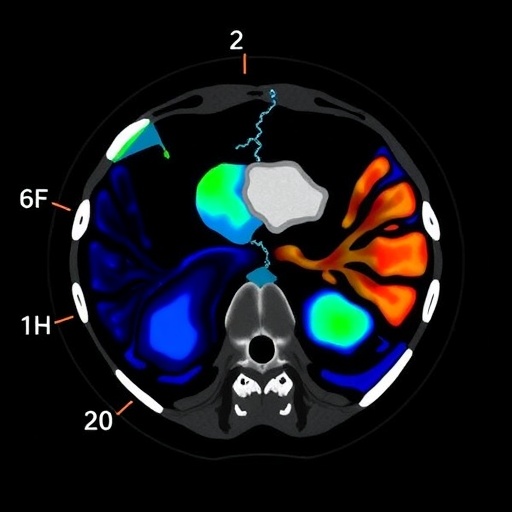
In a groundbreaking advancement that promises to revolutionize diagnostic radiology, researchers have unveiled a pioneering 3D foundation model designed to enhance disease detection in head computed tomography (CT) scans. The study, led by Zhu, Huang, Tang, and colleagues, introduces an AI architecture capable of generalizing across a wide array of neurological pathologies with unprecedented accuracy and efficiency. This development stands poised to address long-standing challenges faced in medical imaging interpretation, transforming clinical workflows and patient outcomes worldwide.
Central to this innovation is the creation of a versatile and robust 3D deep learning model that processes volumetric head CT data natively. Unlike traditional 2D convolutional neural networks (CNNs) that analyze slices independently, this model leverages spatial contextualization across all three dimensions, capturing intricate anatomical and pathological features that span multiple slices. This volumetric approach allows the system to detect subtle abnormalities often missed by slice-wise analysis, contributing to its superior diagnostic performance.
The foundation model is meticulously trained on an extensive dataset comprising diverse head CT scans from multiple institutions, encompassing various pathological conditions such as hemorrhages, ischemic strokes, tumors, and traumatic injuries. By exposing the network to a broad and heterogeneous array of imaging data, the researchers ensure its capacity to generalize effectively beyond the confines of training cohorts. This generalizability addresses the critical bottleneck of model overfitting, a common issue in prior AI applications within radiology.
Innovatively, the architecture integrates self-supervised learning paradigms that enable the model to learn intrinsic imaging features without relying solely on large volumes of annotated data. This approach dramatically reduces the dependency on laborious and costly manual labeling, which has historically limited the scalability of AI tools in medical imaging. Instead, the model extracts meaningful representations from the data autonomously, facilitating improved recognition of disease patterns.
Furthermore, the design incorporates attention mechanisms that prioritize salient regions within the scans, thereby enhancing interpretability. This feature grants clinicians insight into the model’s decision-making process, fostering trust and facilitating integration into clinical practice. By highlighting critical areas linked to pathology, the model not only aids diagnosis but also assists in educational and research contexts by elucidating imaging biomarkers.
The researchers validated the model’s efficacy using a diverse external test set, demonstrating remarkable sensitivity and specificity across multiple disease categories. This performance is particularly noteworthy in detecting minuscule hemorrhages and nuanced ischemic changes, conditions often challenging even for experienced radiologists. The model’s accuracy rivals, and in certain cases surpasses, human experts, heralding a new era wherein AI can serve as a reliable second reader.
Equally important is the model’s adaptability to variations in scan protocols, scanner manufacturers, and patient demographics—a reflection of its robust design and extensive training diversity. This resilience addresses a significant hurdle in AI deployment, where performance frequently deteriorates when confronted with data distribution shifts encountered in real-world clinical environments, distinct from research settings.
From a technical perspective, the model architecture synthesizes elements of transformer networks and convolutional operations, synergizing their strengths in modeling both local and global dependencies within volumetric imaging data. This hybrid design ensures comprehensive feature extraction while maintaining computational efficiency, a critical consideration for integration within hospital IT infrastructures.
Another transformative aspect of the foundation model pertains to its potential impact on triage workflows in emergency settings. Rapid and reliable head CT analysis is vital in acute neurological events such as stroke or traumatic brain injury, where every minute counts. By providing real-time alerts and preliminary assessments, the AI system can expedite clinical decision-making, potentially improving patient prognosis through timely intervention.
Moreover, the open framework and modularity of the model facilitate future enhancements and customization, allowing development teams to extend its capabilities to other anatomical regions or imaging modalities. This flexibility is essential for fostering a scalable AI ecosystem within radiology, capable of evolving alongside clinical demands and technological advances.
Ethical considerations have also been forefront in this research endeavor. The study rigorously ensures patient data privacy and addresses potential biases by incorporating diverse demographic representation in training data. Such diligence is imperative to prevent health disparities and to ensure broad accessibility of AI benefits across global populations.
The researchers envision broad deployment of this foundation model, integrated seamlessly into radiology workstations and picture archiving and communication systems (PACS). This integration would empower radiologists with augmented diagnostic insights without disrupting established workflows, thereby enhancing efficiency and reducing burnout.
Looking ahead, continuous validation in prospective clinical trials and real-world environments will be essential to cement the model’s clinical utility. Furthermore, collaborative efforts between AI scientists, radiologists, and healthcare institutions will drive the refinement and user acceptance critical to widespread adoption.
This landmark study heralds a paradigm shift in medical imaging, demonstrating how sophisticated AI models capable of 3D volumetric analysis can transcend previous limitations. By delivering generalizable, accurate, and interpretable disease detection in head CT scans, the model underscores the transformative potential of foundational AI models in medicine.
As AI continues to permeate clinical domains, developments such as this lay the groundwork for a future where rapid, precise, and equitable diagnostic support becomes the norm, ultimately improving patient care on a global scale.
Cite Scienmag News
Ophelia Keating. (April 22, 2026). 3D Model Enhances Generalizable Disease Detection in CT. Scienmag. https://scienmag.com/3d-model-enhances-generalizable-disease-detection-in-ct/
Ophelia Keating. "3D Model Enhances Generalizable Disease Detection in CT." Scienmag, 22 April 2026, https://scienmag.com/3d-model-enhances-generalizable-disease-detection-in-ct/. Accessed 4 September 2026.
Ophelia Keating. "3D Model Enhances Generalizable Disease Detection in CT." Scienmag. April 22, 2026. https://scienmag.com/3d-model-enhances-generalizable-disease-detection-in-ct/


