


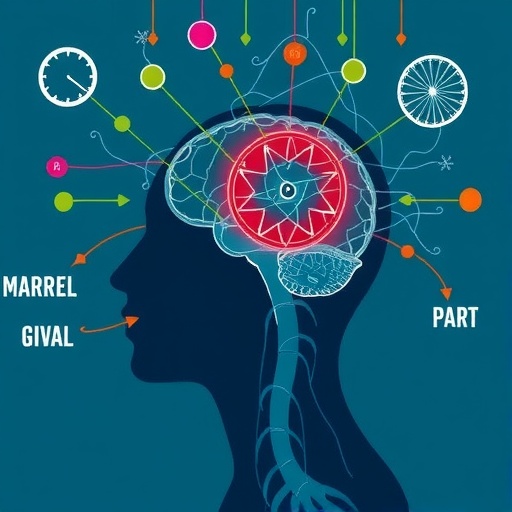
In a groundbreaking study published in Cell Reports, researchers at Kobe University have unveiled a crucial neuronal pathway linking the motor cortex to the insular cortex through an intermediary thalamic relay, shedding new light on the neural underpinnings of Tourette syndrome. This discovery marks a significant advance in understanding how motor dysfunctions, traditionally localized to the brain’s motor regions, interact with emotional and cognitive circuits implicated in the disorder. The intricacies of this connection not only elucidate why tics are often accompanied by complex premonitory urges but also open promising new therapeutic avenues.
Tourette syndrome, a neuropsychiatric disorder characterized by involuntary motor and vocal tics, has long been associated with aberrations in the motor cortex. However, patients frequently report an inner sensation—known as the premonitory urge—that precedes tic onset, suggesting that brain areas beyond the motor cortex are involved. Moreover, the frequent comorbidity of Tourette’s with disorders such as obsessive-compulsive disorder, ADHD, and autism spectrum disorder hints at a network of brain regions contributing to the condition’s multifaceted symptoms.
Neurophysiologist TACHIBANA Yoshihisa and his team took a pioneering approach by focusing on the interaction between the brain’s motor functions and its emotional awareness centers. Their earlier work found that a dental mouthguard, worn by many Tourette’s patients, significantly alleviated both motor and vocal tics, implying that somatosensory inputs and their processing play a substantial role. Building on this, they utilized mouse models with artificially induced tics to dissect the precise neural circuitry involved.
Their experiments identified a novel neural conduit originating from the motor cortex that projects to the insular cortex, an area integral for emotional processing and interoceptive awareness. Crucially, this pathway routes through the intralaminar thalamus, a relay station already targeted in some deep brain stimulation therapies despite its exact role being previously unclear. By applying targeted inhibition to this relay, the researchers successfully reduced tic intensity, though not the frequency, indicating a modulatory effect on tic expression rather than initiation.
This finding suggests that while the motor cortex generates the tics, their spread and subjective experience are mediated via this thalamus-insula relay. The insular cortex’s involvement provides a neural basis for the premonitory urges—internal sensations preceding tics—which have long puzzled clinicians and scientists alike. The coupling of motor commands with emotional awareness areas may also explain why Tourette syndrome is often accompanied by neuropsychiatric comorbidities, reflecting a broader network disruption beyond purely motor circuits.
The study’s insights also bear profound clinical implications. Current treatments, including deep brain stimulation (DBS) targeting the thalamus, though effective for some, carry significant risks due to their invasiveness. The delineation of this newly discovered relay circuit points to alternative interventions, such as ultrasound neuromodulation. Such non-invasive techniques could selectively target and modulate neuronal activity within this pathway, potentially offering safer, more precise treatments to alleviate tic severity.
Moreover, the research explores the complexity of tic genesis from a systems neuroscience perspective, highlighting the integration of sensory-motor processing with emotional and cognitive circuits. The thalamus acts as a critical hub that not only transmits signals but may also regulate the intensity and emotional salience of tic-related activity, thereby linking brain regions once assumed to operate independently.
Tachibana’s interdisciplinary approach, combining advanced neuroanatomical tracing with functional manipulations in animal models, provides a powerful blueprint for future studies probing the interface between movement disorders and emotional brain systems. This work underscores the importance of looking beyond isolated brain areas to understand the comprehensive neural networks that underpin complex neuropsychiatric conditions.
Importantly, these findings emphasize that tics’ manifestation and subjective experience are products of a distributed brain network rather than a singular dysfunctional node. The motor cortex’s aberrant activity initiates tics, but their integration with internal bodily awareness and emotional states via the insular cortex shapes how these symptoms are perceived and managed, both by patients and clinicians.
Furthermore, this research strengthens the conceptual framework for viewing Tourette syndrome not solely as a motor disorder but as a condition deeply embedded within the brain’s broader affective and cognitive circuits. This paradigm shift may stimulate the development of holistic therapeutic strategies that address not only the motor symptoms but also the emotional and cognitive dimensions of the disorder.
The study was funded by several prestigious Japanese research bodies, including the Japan Society for the Promotion of Science and the Japan Agency for Medical Research and Development. Collaborative efforts with the National Institute for Physiological Sciences and SOKENDAI reinforced the investigation’s rigor and interdisciplinary character. Such collaborative frameworks are essential for tackling the complexity of brain disorders at multiple levels, from molecular pathways to systems neuroscience and clinical outcomes.
Ultimately, the revelation of the thalamus-mediated relay between the motor and insular cortices constitutes a milestone in unraveling the brain mechanisms that generate and sustain tics. It also offers hope to millions affected by Tourette syndrome worldwide, inspiring new lines of research toward innovative, less invasive interventions that can improve quality of life by targeting the condition’s underlying neural circuitry more precisely than ever before.
News Publication Date: 22-Apr-2026
Web References: 10.1016/j.celrep.2026.117272
References: H. Kuno et al., Cell Reports 2026
Cite Scienmag News
Cassandra Pierce. (April 22, 2026). The Science Behind the Urge: How Motor and Emotional Signals Interact to Trigger Tics. Scienmag. https://scienmag.com/the-science-behind-the-urge-how-motor-and-emotional-signals-interact-to-trigger-tics/
Cassandra Pierce. "The Science Behind the Urge: How Motor and Emotional Signals Interact to Trigger Tics." Scienmag, 22 April 2026, https://scienmag.com/the-science-behind-the-urge-how-motor-and-emotional-signals-interact-to-trigger-tics/. Accessed 5 September 2026.
Cassandra Pierce. "The Science Behind the Urge: How Motor and Emotional Signals Interact to Trigger Tics." Scienmag. April 22, 2026. https://scienmag.com/the-science-behind-the-urge-how-motor-and-emotional-signals-interact-to-trigger-tics/


