


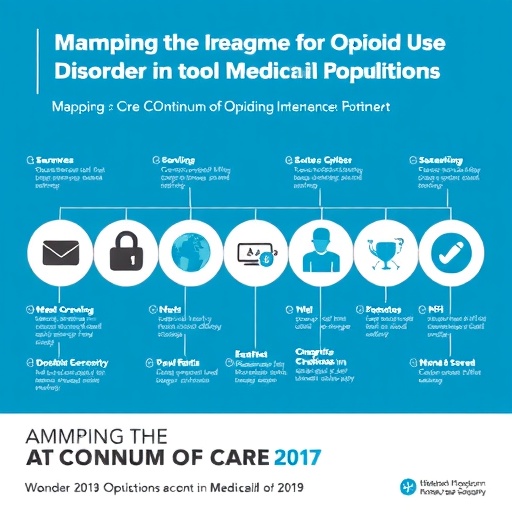
A groundbreaking cross-sectional study published in JAMA Network Open has revealed a marked increase in the administration of medications for opioid use disorder (MOUD) across nearly all states in the United States. This shift, observed over recent years, signals an encouraging trend in the battle against opioid addiction, a public health crisis that has claimed hundreds of thousands of lives and devastated countless communities. Through rigorous statistical analysis and comprehensive data collection, the research elucidates the expanding role of pharmacotherapy in mitigating the adverse effects of opioid dependence.
The study meticulously charts the trajectory of opioid treatment modalities, highlighting a substantial rise in the percentage of individuals diagnosed with opioid use disorder who have received evidence-based medications such as buprenorphine, methadone, and naltrexone. These medications function through distinct neuropharmacological mechanisms, including partial agonism of mu-opioid receptors, full agonism, or receptor antagonism, to stabilize neurochemical imbalances caused by chronic opioid exposure. By restoring homeostasis in the brain’s reward circuitry, MOUD markedly reduces cravings and the risk of fatal overdose.
Critical to understanding the implications of this study is the recognition of the complex interaction between medication access, policy frameworks, and healthcare delivery systems. The data suggest that policy changes, including the relaxation of prescribing restrictions and expanded insurance coverage, may have underpinned the increased utilization of MOUD. These systemic alterations have likely lowered traditional barriers to treatment uptake, fostering broader inclusion of vulnerable populations who were previously underserved.
Despite the promising uptick in MOUD utilization, the study emphasizes the necessity for further research to definitively link these treatment increases to reductions in opioid-related mortality. The multifactorial nature of overdose death trends demands sophisticated analyses to disentangle medication effects from other concurrent public health interventions, such as naloxone distribution programs and harm reduction strategies. Ongoing longitudinal studies and randomized controlled trials will be essential to establish causal connections and optimize therapeutic protocols.
Neurobiologically, the application of MOUD represents a paradigm shift from abstinence-only approaches to a medication-assisted framework grounded in pharmacodynamics and receptor modulation. Buprenorphine, as a partial agonist at the mu-opioid receptor, provides a ceiling effect that lowers overdose risk while attenuating withdrawal symptoms. Conversely, methadone’s full agonist action necessitates careful clinical monitoring but delivers robust craving suppression. Naltrexone’s antagonistic properties prevent opioid effects entirely, representing a distinct therapeutic avenue, especially in post-detoxification settings.
Moreover, the study’s findings carry significant economic and social implications, with increased MOUD access potentially reducing healthcare costs associated with emergency care, hospitalizations, and criminal justice involvement attributed to opioid misuse. The expansion of insurance coverage for these treatments underscores the growing recognition of opioid use disorder as a chronic medical condition warranting sustained, evidence-based intervention.
The research methodology leveraged large-scale administrative datasets and prescription monitoring programs to capture an encompassing snapshot of treatment patterns. The cross-sectional design, while offering breadth, necessitates cautious interpretation regarding temporality and causality. Nonetheless, the robustness of the data affords confidence in the observed national patterns and supports policy advocacy for continued investment in MOUD infrastructure.
Healthcare providers stand at the forefront of implementing these findings into clinical practice, integrating pharmacotherapy with psychosocial support to maximize patient outcomes. Multidisciplinary approaches that combine medication with behavioral therapies, peer support, and harm reduction services yield superior long-term recovery rates and enhance quality of life for individuals affected by opioid use disorder.
One pressing challenge identified is the unequal distribution of MOUD access geographically and demographically, with rural and marginalized populations still encountering significant hurdles. Addressing disparities through telemedicine, provider training, and culturally competent care models remains critical to fully realizing the public health potential illuminated by this study.
Scientific scrutiny also highlights the need for innovation in medication development and delivery systems. Long-acting formulations and implantable devices promise to improve adherence and reduce diversion risk, representing the next frontier in opioid addiction pharmacotherapy. Coupled with expanding our understanding of opioid receptor signaling cascades, these advances hold promise for tailoring interventions to individual neurobiological profiles.
In conclusion, this pivotal research from JAMA Network Open underscores an encouraging trend in the augmentation of medication-assisted treatment for opioid use disorder nationwide. While challenges remain, the amplification of MOUD access signals progress toward mitigating the devastating opioid epidemic. Future investigations will be crucial to confirm these medications’ role in reducing overdose fatalities and to further refine clinical strategies that address this multifaceted public health crisis.
Cite Scienmag News
Ophelia Keating. (April 22, 2026). Mapping the Continuum of Care for Opioid Use Disorder in Medicaid Populations. Scienmag. https://scienmag.com/mapping-the-continuum-of-care-for-opioid-use-disorder-in-medicaid-populations/
Ophelia Keating. "Mapping the Continuum of Care for Opioid Use Disorder in Medicaid Populations." Scienmag, 22 April 2026, https://scienmag.com/mapping-the-continuum-of-care-for-opioid-use-disorder-in-medicaid-populations/. Accessed 5 September 2026.
Ophelia Keating. "Mapping the Continuum of Care for Opioid Use Disorder in Medicaid Populations." Scienmag. April 22, 2026. https://scienmag.com/mapping-the-continuum-of-care-for-opioid-use-disorder-in-medicaid-populations/


