


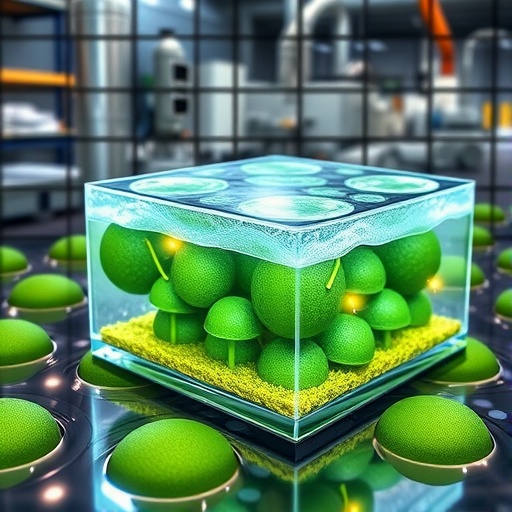
In an era marked by increasing water scarcity and growing industrial demand, innovative solutions for sustainable water recovery have never been more critical. Among the myriad sources of untapped water lies the vast and largely overlooked reservoir of water vapor emitted by industrial cooling towers. These structures, omnipresent in power plants and large-scale manufacturing facilities, discharge enormous quantities of moisture into the atmosphere—water that is effectively lost. Recent groundbreaking research introduces a transformative approach to capturing this abundant resource, leveraging bioinspiration from termite mounds to develop a sophisticated four-tier hierarchical system capable of unprecedented water recovery yields.
The genesis of this innovation springs from the remarkable thermoregulatory strategies of termite mounds, which maintain stable internal microclimates through passive ventilation and moisture management mechanisms. Mimicking this natural architectural marvel, scientists have engineered a system designed to capture and condense water vapor directly from industrial emissions. This architectural design integrates multiple functional layers, each contributing synergistically to maximize water capture efficiency while maintaining passive operation without the need for external energy input.
At the forefront of this system lies the primary tier: a heterostructured microsphere coating that revolutionizes the nucleation process, crucial for initiating condensation. By employing capillary-driven nucleation phenomena, this coating achieves a staggering nucleation rate of 33.6 grams per square meter per minute. This rate signifies a quantum leap in condensation efficiency compared to existing materials. Furthermore, the coating includes gradient-refractive index spines that impart an additional radiative cooling effect, lowering surface temperatures by approximately 1.7°C below the dew point. This localized sub-dewpoint cooling creates an ideal microenvironment for maximizing vapor condensation without mechanical refrigeration.
Building upon this foundation, the secondary tier enhances the structure’s physical robustness and thermal performance with an inverted-pyramid composite material. This innovative design acts as a mechanical shield, protecting the delicate microsphere coating from environmental damage and fouling, which can degrade performance over time. Additionally, the geometry of the composite significantly enlarges the heat-transfer surface area, facilitating more efficient thermal exchange and improving the overall water collection rate. This approach effectively balances durability with functional enhancement, ensuring that the system is viable for long-term industrial deployment.
Transitioning into the tertiary tier, the system shifts focus towards optimizing heat transfer between phases—crucial for sustaining continuous condensation. This tier establishes a gas–liquid heat-transfer scheme dominated by radiative cooling processes, boasting a net cooling power of 133.7 watts per square meter. By prioritizing radiation as the primary heat dissipation pathway, the system minimizes thermal resistance and accelerates phase change kinetics. This meticulous engineering results in a dramatic reduction in thermal buildup on condensing surfaces, maintaining optimal condensation rates even under varying environmental and operational conditions.
The final quaternary tier embodies biomimetic channels inspired by the natural fluid transport systems within termite mounds and other biological constructs. These flow channels play a pivotal role in managing vapor dispersion and directing condensate removal. By suppressing the turbulent dispersion of vapor, the system preserves the localized humidity gradients necessary for sustained condensation. Moreover, these channels maintain a closed-loop condensation–radiative cooling–recondensation cycle that is self-sustaining and energy-neutral. This architectural integration ensures continuous water recovery without the need for external energy input or active mechanical systems.
When deployed as a complete assembly, the system demonstrates extraordinary water recovery performance. Experimental results under operational conditions reveal a recovery rate of 41.6 kilograms per square meter per day, coupled with an impressive retention rate of 83%. These metrics underscore not only the efficiency of the condensation process but also the system’s aptitude for minimizing water loss post-capture. The implications for industrial water conservation are profound, considering the global scale and water footprint of thermal power plants and manufacturing hubs.
Scaling this technology to a conventional 300-megawatt power plant translates into annual water savings on the order of 270 million tonnes—an amount capable of fulfilling the domestic water requirements of approximately 2.2 million households. Beyond sheer volume, this represents a strategic decoupling of industrial water use from freshwater withdrawals, mitigating the strain on local water ecosystems and enhancing the sustainability of energy and manufacturing sectors. It also opens new avenues for water resource management policies emphasizing circularity and recovery within industrial landscapes.
Critically, the passive operation of this hierarchical system is a major enabler for widespread adoption. Harnessing natural environmental gradients and biomimetic material properties means the technology operates without grid electricity or mechanical inputs, drastically reducing operational costs and carbon footprints. This stands in stark contrast to conventional water recovery or cooling technologies that rely heavily on energy-intensive processes or complex infrastructure. The passive framework also ensures greater resilience and reduced maintenance complexity, essential factors for deployment in diverse industrial settings worldwide.
Integrating these multiple tiers within a single layered architecture required a nuanced understanding of materials science, surface chemistry, fluid dynamics, and thermal physics, underscoring the interdisciplinary nature of the innovation. The heterostructured microspheres, gradient refractive indexes, inverted geometries, radiative heat transfer models, and biomimetic fluid channels together epitomize convergence science, where biological inspiration interfaces with cutting-edge engineering techniques to solve global environmental challenges.
Beyond industrial applications, this bioinspired water recovery concept holds promise for extension to other domains where vapor recovery is desirable, including agricultural facilities, desalination plants, and even atmospheric water harvesting in arid climates. The modular design could be adapted to a variety of scales and climatic conditions, providing a versatile tool for augmenting water supplies in water-stressed regions or off-grid locations.
The research community and industries alike are poised to embrace this paradigm-shifting technology, which redefines the parameters of industrial water stewardship. The successful demonstration of a continuous, high-yield, passive water vapor recovery system marks a significant milestone towards more sustainable, circular industrial ecosystems. As water insecurity intensifies globally, innovations like this illuminate a path forward that synergizes natural ingenuity with engineering prowess to secure vital resources while minimizing environmental impacts.
Further research efforts are anticipated to optimize the materials and configurations for specific industrial contexts, improve durability under harsh operational regimes, and integrate real-time monitoring systems for maximal operational efficiency. Innovations in scalable manufacturing of the heterostructured coatings and composites will also be key to commercial deployment. Additionally, techno-economic analyses and lifecycle assessments will provide critical data for stakeholders’ investment decisions and policy formulation, ensuring alignment with broader sustainability goals.
In conclusion, the introduction of a four-tier bioinspired hierarchical architecture for high-yield recovery of industrial water vapor represents a landmark achievement in environmental engineering and sustainable resource management. By capturing and reclaiming the vast, heretofore wasted, water vapor emissions from cooling towers, this technology confronts critical water challenges head-on. It exemplifies how ancient biological wisdom, embedded in termite mounds, coupled with modern scientific innovation, can converge to deliver transformative solutions. As industries worldwide seek resilient and responsible water use strategies, this discovery offers a beacon of hope and a practical blueprint for harnessing nature’s principles to secure a sustainable future.
Cite Scienmag News
Violet Maxwell. (April 21, 2026). Bioinspired Design Boosts Industrial Water Vapor Recovery. Scienmag. https://scienmag.com/bioinspired-design-boosts-industrial-water-vapor-recovery/
Violet Maxwell. "Bioinspired Design Boosts Industrial Water Vapor Recovery." Scienmag, 21 April 2026, https://scienmag.com/bioinspired-design-boosts-industrial-water-vapor-recovery/. Accessed 4 September 2026.
Violet Maxwell. "Bioinspired Design Boosts Industrial Water Vapor Recovery." Scienmag. April 21, 2026. https://scienmag.com/bioinspired-design-boosts-industrial-water-vapor-recovery/


