


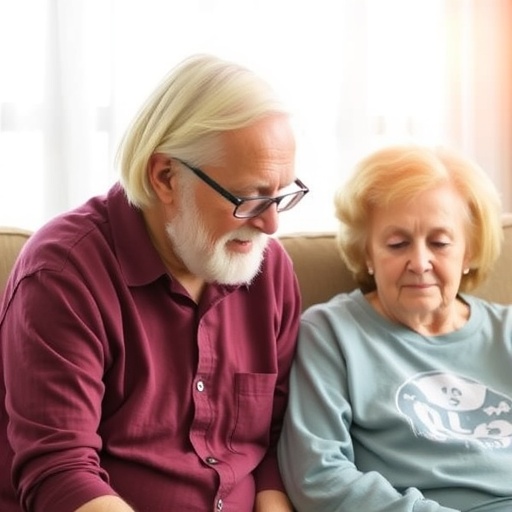
In the evolving landscape of healthcare, the care of frail elderly patients within orthopaedic settings emerges as a critical frontier demanding nuanced understanding and specialized approaches. Recent qualitative research conducted by Hammer, Nilsagård, Fjordkvist, and colleagues, published in BMC Geriatrics, sheds illuminating light on the complex dynamics that define caregiving processes for this vulnerable population within orthopaedic departments. This study ventures beyond mere clinical interventions, delving into the lived experiences of both patients and healthcare professionals, revealing a multifaceted narrative that stresses personalized care, interdisciplinary collaboration, and the systemic challenges inherent in geriatric orthopaedics.
Frail elderly patients frequently present with compounded medical challenges that extend far beyond the typical scope of orthopaedic ailments. The research underscores that frailty is not simply a biological or aging-related concept but an intricate interplay of physical, psychological, and social factors. In an orthopaedic context, these elements converge to complicate diagnosis, treatment, and rehabilitation. The qualitative methodology employed allowed researchers to capture voices from diverse stakeholders—including nurses, physiotherapists, orthopedic surgeons, and the patients themselves—providing a holistic view of the caregiving ecosystem.
One of the study’s primary revelations concerns the critical importance of individualized care plans. Unlike the standardized treatment protocols often applied in orthopaedics, the frail elderly require tailored approaches that integrate their unique health profiles and socio-emotional needs. Healthcare providers reported the necessity of continuous adjustments, often requiring creativity in balancing effective orthopaedic interventions with the minimization of risk factors such as delirium, infection, and functional decline. This nuanced care is heavily reliant on comprehensive assessment tools, which must be sensitive enough to detect subtle changes in frailty status.
The research highlights an urgent call for enhanced communication and teamwork across disciplines. Orthopaedic care for the frail is not a solitary endeavor but a complex orchestration involving surgeons, nurses, occupational therapists, social workers, and family caregivers. The study participants stressed that successful outcomes are often the product of seamless information exchange and cooperative decision-making. Traditional hierarchies in clinical settings may impede this process; therefore, fostering environments that encourage mutual respect and shared responsibility is pivotal.
Significantly, the research captures the emotional and psychological burdens borne by healthcare providers working with the frail elderly. The daily realities of witnessing their patients’ vulnerability and struggle evoke a profound sense of ethical responsibility and emotional labor. Nurses and physiotherapists described scenarios where the tension between medical directives and patient dignity became palpable, necessitating moral resilience and empathy-driven practice. These insights reveal an underrecognized facet of orthopaedic care—its psychological intensity and the need for institutional support to mitigate caregiver burnout.
Another integral dimension explored is the systemic and organizational barriers that complicate frail patient care in hospital orthopaedic units. The study exposes constraints such as inadequate staffing ratios, time pressures, and limited access to specialized geriatric resources. These limitations often force clinicians into making difficult trade-offs between efficiency and comprehensive care. The findings advocate for policy reforms that acknowledge the increased complexity of frail patient management, promoting resource allocation that can sustain longer, more attentive care pathways.
Rehabilitation emerges as a cornerstone focus within this research, emphasizing its role not only in physical recovery but also in restoring autonomy and quality of life. However, rehabilitation protocols designed for younger and more robust patients may not translate effectively to those experiencing frailty. The insights gathered point to the necessity of adaptable rehabilitation regimes that consider cognitive impairments, fatigue, and fluctuating medical conditions intrinsic to the frail demographic.
The study also presents critical considerations regarding pain management, an often under-addressed issue in frail orthopaedic patients. Pain perception in this population can be atypical or muted, leading to under-treatment or misinterpretation by care providers. The qualitative data reveals that healthcare professionals must employ vigilant and multifaceted pain assessment strategies to ensure relief measures are both adequate and safe, avoiding complications from overmedication.
Moreover, the research elaborates on the role of family caregivers, whose involvement becomes indispensable yet is frequently overlooked in clinical practice. The insights reveal that families often act as advocates, motivators, and informants, bridging gaps between institutional care and patient preferences. Their integration into care planning is not only beneficial for patient outcomes but also supports continuity post-discharge, emphasizing the importance of transition planning.
Technological innovations, including electronic health records and assistive devices, appear as a double-edged sword in the care of frail orthopaedic patients. While they can enhance monitoring and personalized treatment, the study participants caution against overreliance on technology that may depersonalize care or overwhelm providers. The balance between high-tech solutions and human-centered approaches is a recurrent theme, underscoring the imperative for technologies designed with geriatric sensitivity.
The findings from this study extend implications for educational curricula in medical and nursing schools. There is a pressing need to equip future healthcare professionals with knowledge and skills in geriatric orthopaedics that emphasize comprehensive frailty assessment, interdisciplinary collaboration, and ethical caregiving. Simulation exercises and longitudinal training with frail patient populations could better prepare clinicians for real-world challenges highlighted by the study.
From a broader societal perspective, the research challenges prevailing ageist attitudes and calls for cultural shifts within healthcare environments. Respecting the dignity and agency of frail elderly patients emerges as a fundamental ethical cornerstone. Health systems must move toward models that celebrate patient narratives, preferences, and holistic well-being rather than narrowly focusing on biomedical fixes.
In conclusion, this qualitative study contributes a vital perspective on how orthopaedic care can evolve to meet the intricate demands of frail elderly patients. By foregrounding individualized care, interprofessional cooperation, and systemic improvements, the findings create a roadmap for optimizing health outcomes and improving quality of life in a rapidly aging population. As the global demographic shift intensifies, integrating these insights will become increasingly critical for sustainable, compassionate healthcare delivery in orthopaedics and beyond.
This research marks a significant step forward in redefining frailty within orthopaedic medicine, emphasizing that care for the frail is not merely about addressing physical decline but about embracing the complexity and humanity of aging itself. The implications extend far beyond hospital walls, resonating with caregivers, policy-makers, educators, and technologists alike to foster aging with dignity and resilience.
Cite Scienmag News
Ophelia Keating. (April 19, 2026). Caring for Frail Patients in Orthopaedics: A Study. Scienmag. https://scienmag.com/caring-for-frail-patients-in-orthopaedics-a-study/
Ophelia Keating. "Caring for Frail Patients in Orthopaedics: A Study." Scienmag, 19 April 2026, https://scienmag.com/caring-for-frail-patients-in-orthopaedics-a-study/. Accessed 4 September 2026.
Ophelia Keating. "Caring for Frail Patients in Orthopaedics: A Study." Scienmag. April 19, 2026. https://scienmag.com/caring-for-frail-patients-in-orthopaedics-a-study/


