


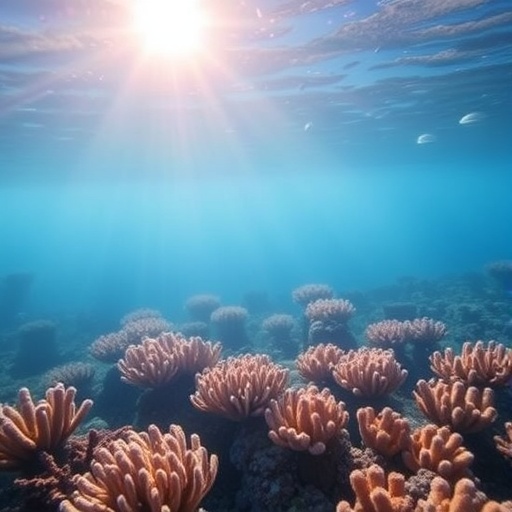
In an era where the search for groundbreaking antibiotics and cancer therapies intensifies, researchers are turning to an unlikely source: coral reefs. These vibrant underwater ecosystems harbor an immense and previously untapped biochemical wealth, comprised of bioactive metabolites—small molecular compounds produced by microorganisms. These metabolites possess profound biotechnological potential, offering new pathways for the development of pharmaceuticals and diverse industrial applications.
Marine biologist Rebecca Vega Thurber of the University of California, Santa Barbara (UCSB) played a central role in unveiling this hidden trove during the 2016-2018 Tara Pacific expedition. This expansive scientific endeavor spanned two years, targeting 32 archipelagos throughout the Pacific Ocean. Collecting a staggering 58,000 samples, the expedition marked the first of its magnitude to systematically explore the biodiversity embedded within coral reefs and their surrounding pelagic waters.
The ambitious goal was to catalog the full spectrum of biological diversity associated with these underexplored marine environments. Thurber and her colleagues concentrated on dissecting the intricate coral reef microbiome, particularly focusing on bacterial communities intimately linked with coral hosts. Unlike prior studies that predominantly examined free-living planktonic bacteria in seawater, this investigation drilled deeper into coral-specific bacterial assemblages, illuminating a dimension of biodiversity often overshadowed in marine microbiological research.
Utilizing advanced genomic sequencing technologies pioneered in metagenomics, the team reconstructed more than 13,000 microbial genomes directly from reef-building coral samples, encompassing two species of stony coral and one species of fire coral. Fire corals, fascinatingly, represent a distinct taxonomic lineage more closely related to jellyfish than to stony corals, emphasizing the microbial diversity these corals harbor.
Remarkably, approximately ninety percent of these microbial genomes had never been characterized before, culminating in the discovery of roughly 3,700 novel bacterial species unique to their coral hosts. These bacteria were conspicuously absent from surrounding seawater samples, underscoring a highly specialized symbiotic relationship between the microbes and their coral environments. Such specificity hints at complex evolutionary processes guiding coral-microbe partnerships over millennia.
The implications of uncovering such microbial novelty are far-reaching. These bacteria produce a plethora of bioactive molecules—small compounds instrumental for microbial survival, communication, and defense. These natural products have long served as blueprints for drug discovery, offering chemical scaffolds for antibiotics, anticancer agents, and immunomodulators. Beyond medicine, their metabolic repertoire could inspire innovation in industrial sectors, from environmentally friendly detergents to novel biomaterials like self-healing concrete.
Among the newly identified microbiota were several groups of Acidobacteriota, a highly versatile cluster of bacteria widespread in diverse environments yet poorly understood in marine contexts. These Acidobacteriota harbor enzymatic machinery previously unknown to science, opening exciting avenues for protein engineering applications. Such enzymes could revolutionize synthetic biology workflows, enabling tailored catalysis under environmentally benign conditions.
Intriguingly, the study revealed that the biosynthetic capacity—the potential to produce these chemically active molecules—within coral microbiomes rivals or even exceeds that found in sponges. Sponges have historically been the primary marine resource for bioactive natural products, yet corals, despite their ecological prominence, have remained largely unexplored in this regard. This paradigm shift positions coral microbiomes as a burgeoning frontier for bioprospecting efforts.
It is important to emphasize that this research represents merely the starting point: the study examined just three coral species out of hundreds inhabiting the world’s oceans. The enormity of molecular diversity that might be unlocked through comprehensive exploration of other coral species remains staggering. Each coral species and its associated microbiome could harbor unique biosynthetic traits with valuable scientific and practical applications yet to be uncovered.
Despite the immense promise contained within coral reefs, their future hangs in a precarious balance. Accelerating ocean warming and climate change have led to widespread bleaching events, severely degrading reef health and diminishing their biological complexities. This ongoing loss jeopardizes not only marine biodiversity at large but also untold molecular reservoirs that could be pivotal in future biotechnological innovations.
Thurber underscores the urgent need for conservation efforts, advocating that coral reefs serve as critical reservoirs of molecular diversity essential for humanity’s sustainable technological progress. Protecting these fragile ecosystems safeguards the potential to discover novel microbial products transformative for medicine, industry, and environmental management. The loss of coral reefs equates to the loss of invaluable biological libraries encoded within their microbes.
“Coral reefs are deteriorating rapidly,” Thurber cautions, “and with their decline, we risk forfeiting the immense scientific and societal benefits they could provide.” This study not only highlights rich genetic and chemical biodiversity but also redefines coral conservation as an imperative intertwined with biotechnological and biomedical frontiers.
The Tara Pacific expedition’s revelations shine a spotlight on an astonishing microbial frontier living within coral reefs, beckoning deeper interdisciplinary research. As climate change and anthropogenic pressures mount, the race to understand and preserve these ecosystems has never been more critical—both for the natural world’s resilience and the advancement of human health and technology.
News Publication Date: [Not provided]
Web References: http://dx.doi.org/10.1038/s41586-026-10159-6
References: Nature Journal
Cite Scienmag News
Nathaniel Bowman. (April 16, 2026). Scientists Discover Rich Source of Bioactive Compounds in Coral Reefs. Scienmag. https://scienmag.com/scientists-discover-rich-source-of-bioactive-compounds-in-coral-reefs/
Nathaniel Bowman. "Scientists Discover Rich Source of Bioactive Compounds in Coral Reefs." Scienmag, 16 April 2026, https://scienmag.com/scientists-discover-rich-source-of-bioactive-compounds-in-coral-reefs/. Accessed 6 September 2026.
Nathaniel Bowman. "Scientists Discover Rich Source of Bioactive Compounds in Coral Reefs." Scienmag. April 16, 2026. https://scienmag.com/scientists-discover-rich-source-of-bioactive-compounds-in-coral-reefs/


