


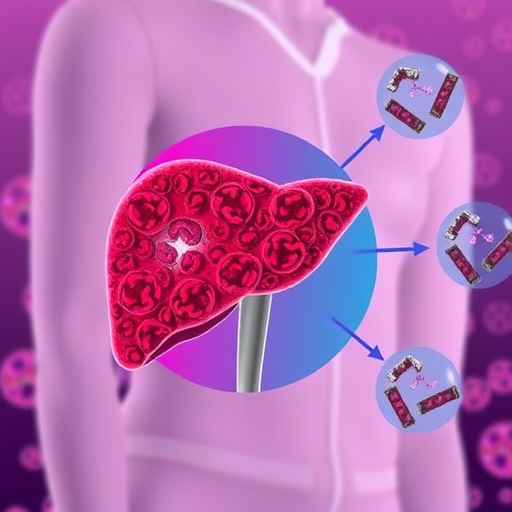
In a groundbreaking review published in the prestigious journal Cell, researchers from the Icahn School of Medicine at Mount Sinai and the Hospital Clínic de Barcelona have unveiled a comprehensive framework that redefines our understanding of liver cancer biology and treatment. By leveraging the influential “Hallmarks of Cancer” model introduced 25 years ago, this latest work elucidates the complex molecular and cellular processes that drive primary liver cancers, namely hepatocellular carcinoma (HCC) and intrahepatic cholangiocarcinoma (iCCA). This analysis not only refines the biological landscape of these malignancies but also sets the stage for more precise, personalized therapeutic approaches in a disease notoriously challenging to treat.
Primary liver cancer remains one of the deadliest cancers worldwide, accounting for nearly 830,000 deaths annually and close to one million new cases each year. Despite incremental advances in clinical management over the past two decades, many patients continue to face late-stage diagnoses with limited treatment options. Conventional therapies have traditionally yielded modest survival benefits, underscoring the urgent need for tailored strategies informed by a deep molecular understanding. This review synthesizes data accumulated from genomic, epigenomic, transcriptomic, and immunologic studies to connect liver tumor biology with actionable clinical insights.
Dr. Josep M. Llovet, a leading hepatologist and director of the Liver Cancer Program at Mount Sinai, together with Dr. Daniela Sia, spearheaded this comprehensive evaluation. Their work revisits the canonical hallmarks such as sustained proliferative signaling, evasion of growth suppressors, resistance to cell death, angiogenesis, and immune modulation, applying these principles specifically to liver cancers. Their findings reveal key differences between HCC and iCCA: HCC typically exhibits robust signaling pathways that sustain unregulated growth and a notable ability to evade immune surveillance. Conversely, iCCA is characterized by distinct metabolic reprogramming and harbors a significantly higher prevalence of targetable genetic alterations, a fact that has major implications for clinical intervention.
One of the most striking revelations of the review is the identification of molecular vulnerabilities that may be exploited therapeutically. Approximately 45 percent of iCCA tumors contain mutations or fusions in genes such as FGFR2, IDH1, ERBB2, and BRAF. These genetic aberrations have fueled the development of precision oncology drugs capable of selectively inhibiting tumor growth pathways. The advent of such targeted therapies heralds a new era in which the biological signature of the tumor guides therapy, increasing efficacy and minimizing systemic toxicities traditionally associated with chemotherapy.
The evolution of immunotherapies also features prominently in the landscape painted by this review. Immunomodulatory treatments, including checkpoint inhibitors, have transformed the management of advanced HCC. By highlighting immune evasion as a hallmark, the authors underscore how liver tumors escape immune destruction through various mechanisms such as upregulation of immune checkpoint molecules and remodeling of tumor microenvironments. Integrating immunotherapies with targeted agents may potentiate antitumor responses and prolong survival, a hypothesis increasingly validated by ongoing clinical trials.
This milestone study bridges the gap between bench science and bedside applications. For clinicians, it provides a clear framework that can inform therapeutic decisions tailored to an individual patient’s tumor profile. Mapping hallmarks to therapeutic vulnerabilities empowers physicians to select among immunotherapy, targeted therapy, or combination regimens based on robust biological rationale rather than empirical approaches. For researchers, it identifies critical gaps in current knowledge and suggests new avenues for drug development aimed at previously unrecognized hallmarks.
Despite the advances, many challenges remain. The heterogeneity within liver cancer subtypes complicates diagnosis and treatment, as intra-tumoral and inter-patient variability influence therapy responses and resistance mechanisms. Understanding how hepatic tumor cells interact with the surrounding stromal and immune cells remains essential for the design of effective interventions. Furthermore, access to molecular diagnostics and targeted drugs globally remains uneven, underscoring the need for equitable healthcare innovation.
The Icahn School of Medicine’s Liver Cancer Program, founded in 2005, has been at the forefront of translational research, clinical trials, and innovation in liver oncology. New York City’s leading center has significantly shaped the global standard of care for HCC, including pivotal clinical trials that led to the approval of novel immunotherapeutic agents and targeted therapies. Its multidisciplinary approach, integrating hepatology, oncology, surgery, radiology, and basic science, exemplifies the kind of collaborative science necessary to tackle this complex disease.
This review involved extensive collaboration among top-tier institutions, including Johns Hopkins University, Mayo Clinic, UCSF, Memorial Sloan Kettering Cancer Center, Howard Hughes Medical Institute, and NYU Grossman School of Medicine. Such a consortium exemplifies the power of multi-institutional synergy in accelerating cancer research and translating discoveries into improved patient outcomes. Funding from the National Institutes of Health and other foundations has been critical to supporting this integrative research platform.
Looking toward the future, the authors emphasize the promise of integrating large-scale ‘omics’ data, artificial intelligence, and machine learning approaches to refine diagnosis and predict therapy response. Real-world data collection and longitudinal studies will help understand disease evolution and resistance, thereby informing adaptive treatment strategies. The ultimate goal is to extend patient survival while improving quality of life through therapeutics that are both effective and well tolerated.
In sum, this authoritative review distills decades of liver cancer research into a coherent, actionable framework that unites molecular biology with clinical science. It points decisively toward precision medicine as the future of liver cancer care — a future where treatment is not only based on tumor type but intricately tailored to the unique genetic and immunologic landscape of each patient’s tumor. Such advances hold the potential to transform liver cancer from a grim prognosis to a manageable, treatable condition.
News Publication Date: 16-Apr-2026
Web References: http://dx.doi.org/10.1016/j.cell.2026.03.001
Cite Scienmag News
Nathaniel Bowman. (April 16, 2026). Mount Sinai Researchers Publish Groundbreaking Review Defining the “Hallmarks of Liver Cancer”. Scienmag. https://scienmag.com/mount-sinai-researchers-publish-groundbreaking-review-defining-the-hallmarks-of-liver-cancer/
Nathaniel Bowman. "Mount Sinai Researchers Publish Groundbreaking Review Defining the “Hallmarks of Liver Cancer”." Scienmag, 16 April 2026, https://scienmag.com/mount-sinai-researchers-publish-groundbreaking-review-defining-the-hallmarks-of-liver-cancer/. Accessed 3 September 2026.
Nathaniel Bowman. "Mount Sinai Researchers Publish Groundbreaking Review Defining the “Hallmarks of Liver Cancer”." Scienmag. April 16, 2026. https://scienmag.com/mount-sinai-researchers-publish-groundbreaking-review-defining-the-hallmarks-of-liver-cancer/


