


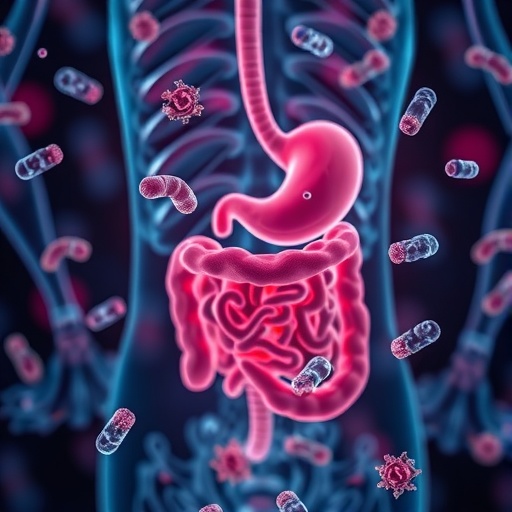
Groundbreaking research from the University of Vienna sheds new light on the profound but complex relationship between the gut microbiome and the human stress response. In an unprecedented study, researchers have demonstrated a significant connection between the diversity of gut bacteria and the acute physiological reaction to stress in healthy adults. This fascinating intersection of microbiology and neurobiology suggests that the gut’s microbial ecosystem might play a vital regulatory role in how the body responds to immediate stressors, potentially opening new avenues for therapeutic strategies targeting stress-related disorders.
The gut microbiome, an intricate community of trillions of microorganisms residing within the gastrointestinal tract, has long been recognized for its critical role in metabolic and immune system functions. Additionally, it communicates bidirectionally with the central nervous system via what is commonly referred to as the gut-brain axis. Through various pathways—including neural, endocrine, and immune signaling—the gut microbiota can influence brain function and behavior, particularly in relation to mood and stress responses. Yet, until now, empirical evidence linking variations in human gut microbial communities directly to acute stress reactivity remained elusive.
This pioneering study, conducted by Thomas Karner, Isabella Wagner, David Berry, and Paul Forbes at the University of Vienna’s Faculty of Psychology and Center for Microbiology and Environmental Systems Sciences (CeMESS), utilized a robust interdisciplinary approach. Healthy adult participants underwent a validated standardized stress challenge or a non-stressful control task. Researchers meticulously measured stress hormone (cortisol) levels in saliva as an objective biochemical marker, alongside subjective self-reports of stress experience. Furthermore, detailed analyses of participants’ gut microbiota were performed using stool samples, allowing the team to assess both microbial diversity and the predictive capacity of these microbes to produce key metabolites known as short-chain fatty acids (SCFAs).
Remarkably, results indicated that participants with higher gut microbial diversity exhibited a more pronounced acute stress response, characterized by elevated cortisol release and heightened subjective stress perception. This finding challenges the conventional notion that lower stress reactivity is inherently beneficial. Instead, it underscores the adaptive nature of a well-regulated acute stress system, where an adequately flexible and responsive phenotype may confer resilience in facing environmental challenges. A diverse and balanced gut microbiome may contribute to this physiological flexibility, enabling more nuanced and effective stress regulation.
A deeper dive into microbial functionality revealed an intriguing differential association of specific SCFA production potentials with stress reactivity. SCFAs, including butyrate and propionate, are metabolic byproducts generated by the fermentation of dietary fibers by gut bacteria and have well-documented roles in modulating host immune function and metabolic homeostasis. In this study, a higher capacity for butyrate production correlated positively with increased stress reactivity, whereas a greater propionate production capacity was linked to dampened stress responses. Such findings illuminate the nuanced and bidirectional nature of microbiota-derived metabolites in shaping the neuroendocrine stress axis.
Butyrate, known for its anti-inflammatory properties and ability to influence gene expression through epigenetic mechanisms, may enhance stress system sensitivity, potentially preparing the organism for more rapid and robust adaptive responses. Conversely, propionate, which can modulate neurotransmitter synthesis and inflammatory pathways, might exert a buffering effect on stress reactivity, attenuating potential overactivation of the hypothalamic-pituitary-adrenal (HPA) axis. These divergent roles of SCFAs underscore the multidimensional relationship between microbial metabolism and host neurobiology.
The study’s methodology reflects a high degree of rigor. By integrating subjective psychometric assessments with objective endocrinological markers and advanced microbial sequencing, the research provides one of the most comprehensive examinations to date of the gut-brain axis in the context of acute stress. The careful differentiation between microbial diversity and metabolite-specific capacities grants deeper insight into functional interactions rather than merely compositional associations, paving the way for more targeted microbiome interventions.
Implications of these findings are vast. Understanding that gut microbiota diversity and function influence acute stress reactivity supports the hypothesis that modulating the microbiome could become a viable strategy to enhance mental health and resilience. Lifestyle factors such as diet, physical activity, and stress management techniques that shape microbial ecosystems may thus have profound effects on how individuals physiologically respond to stress. This adds a new dimension to personalized medicine and psychobiological health paradigms.
Furthermore, the research highlights the dynamic nature of the microbiome’s influence. Rather than simplifying the gut-brain interaction to linear cause-effect relationships, it reveals a complex interplay where diverse microbial communities and their metabolic outputs orchestrate nuanced physiological responses. Such complexity challenges current therapeutic approaches and calls for sophisticated models that consider both microbial diversity and functionality in managing stress-related disorders.
As acute stress responses constitute a fundamental aspect of human adaptation to environmental pressures, elucidating biological modulators such as the gut microbiome broadens the understanding of health and disease. This study invites further longitudinal and mechanistic investigations to explore whether strategic manipulation of microbial populations through probiotics, prebiotics, or dietary fibers could optimize stress reactivity in clinical and non-clinical populations alike.
In summary, the University of Vienna’s landmark study significantly advances the science of microbiota-host interactions in stress physiology. It establishes a compelling association between gut microbial diversity, SCFA-producing capacity, and acute stress response profiles in healthy adults. These insights not only enrich the field of neurobiology but also hold promise for innovative interventions that harness the gut microbiome for mental health optimization.
The potential for using gut microbiome modulation as a strategy to manage acute stress and mitigate stress-related conditions could revolutionize approaches to health and well-being. Future research could focus on translating these findings into practical, scalable treatments, thereby enhancing resilience and quality of life through microbiome-centric therapeutics.
As researchers continue dissecting the intricate connections of the gut-brain axis, this study stands as a beacon illustrating how microbial ecosystems within us can profoundly affect mind and body. For those interested in stress biology, mental health, and the evolving landscape of microbiome research, these findings are not only fascinating but potentially transformative.
Cite Scienmag News
Morgan Morrow. (April 16, 2026). The Connection Between Gut Bacteria and Acute Stress. Scienmag. https://scienmag.com/the-connection-between-gut-bacteria-and-acute-stress/
Morgan Morrow. "The Connection Between Gut Bacteria and Acute Stress." Scienmag, 16 April 2026, https://scienmag.com/the-connection-between-gut-bacteria-and-acute-stress/. Accessed 3 September 2026.
Morgan Morrow. "The Connection Between Gut Bacteria and Acute Stress." Scienmag. April 16, 2026. https://scienmag.com/the-connection-between-gut-bacteria-and-acute-stress/


