


In a groundbreaking advancement that promises to reshape our understanding of autoimmune disorders, scientists have uncovered compelling evidence that somatic mutations within immune-regulatory genes may facilitate the escape of self-reactive lymphocytes from the body’s built-in tolerance checkpoints. This revelation emerges from a deep dive into the cellular landscape of autoimmune thyroid disease, a condition notoriously complex and enigmatic in its molecular underpinnings. For decades, researchers have speculated that these mutations may act as a clandestine mechanism, allowing rogue immune cells to bypass the surveillance systems designed to maintain self-tolerance. Yet, technical limitations have stymied definitive explorations—until now.
A team led by Nicola, Lawson, and Tidd employed an innovative sequencing technology known as NanoSeq, alongside traditional whole-exome sequencing, to meticulously examine tissue biopsies from patients afflicted with autoimmune thyroid disease. NanoSeq’s single-molecule precision permitted the detection of extremely rare, low-frequency somatic mutations in immune cells that older methods might have overlooked. This comprehensive genomic mapping revealed a striking pattern: numerous independent B cell clones convergently acquiring loss-of-function mutations in crucial immune checkpoint genes, significantly TNFRSF14, also known as HVEM, and CD274, better recognized as PD-L1.
These mutations in checkpoint genes are especially consequential. Under normal circumstances, molecules such as PD-L1 and HVEM serve as molecular brakes that prevent immune cells from attacking the body’s own tissues. The discovery that myriad B cell clones harbor disruptions in these genes explains how these cells might evade self-tolerance restrictions, contributing to the chronic inflammation and tissue damage observed in autoimmune thyroiditis. The prevalence of such mutations was staggering; in biopsies characterized by intense inflammation, there were tens to hundreds of distinct mutant clones co-existing, each potentially driving pathological immune activation.
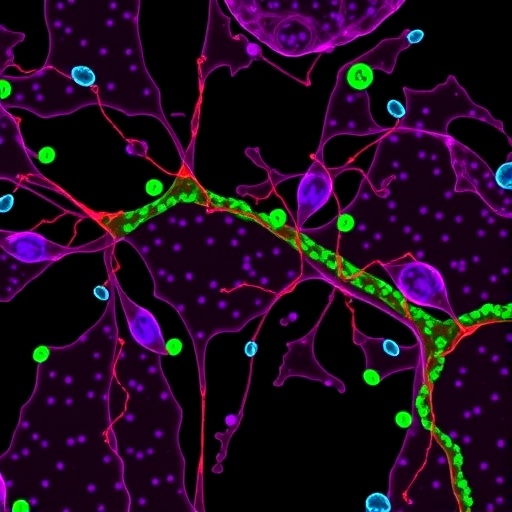
Beyond merely cataloging genetic alterations, the study masterfully linked genotype to phenotype through advanced spatial and functional analyses. Using laser microdissection and methylation sequencing, the researchers localized mutant clones precisely within inflamed thyroid tissues, confirming that these altered cells were predominantly B cells. Spatial transcriptomics and immunostaining anchored the molecular findings in real tissue context, enabling visualization of where mutant clones congregated relative to areas of immune attack. Further corroboration came from single-nucleus DNA sequencing, which uncovered clones harboring multiple driver mutations—some accumulating as many as four to six discrete genomic hits within immune checkpoint pathways.
The evidence for widespread biallelic loss at the TNFRSF14 locus was particularly significant. Biallelic loss implies that both copies of this gene were nonfunctional in affected clones, effectively obliterating the gene’s immune-inhibitory impact and potentially granting the mutant B cells unchecked inflammatory potential. Critically, these mutations were not restricted to a few dominant clones but were scattered across a polyclonal landscape, suggesting a complex evolutionary cascade rather than a monoclonal expansion. This multiplicity of mutant clones, each representing a small fraction of the total cellular milieu—often less than 1%—collectively amounts to a substantial immune reservoir capable of sustaining chronic autoimmunity.
This study thus reframes autoimmune thyroid disease not simply as an aberrant immune response triggered by external factors but as a dynamic process driven by somatic evolution within the immune system itself. The polyclonal nature of checkpoint mutations challenges prior paradigms of autoimmune clonality and suggests that therapeutic interventions targeting these molecular pathways may need to address a diverse array of mutant B cell populations simultaneously to achieve clinical efficacy.
Moreover, the integration of multiple cutting-edge technologies—whole-exome sequencing, highly accurate single-molecule DNA sequencing via NanoSeq, methylation profiling, spatial transcriptomics, immunohistochemistry, and single-nucleus sequencing—provides a blueprint for dissecting other complex autoimmune diseases. This approach opens avenues to interrogate the mutational landscapes of immune cells in conditions such as systemic lupus erythematosus, multiple sclerosis, and rheumatoid arthritis, potentially revealing new therapeutic targets and biomarkers.
The implications of somatic mutations enabling immune cells to escape regulatory checkpoints extend beyond autoimmunity. They offer intriguing parallels with cancer biology, where checkpoint blockade has revolutionized treatment—but in this context, mutated checkpoint genes might exacerbate self-directed immunity instead of restraining tumor evasion. Understanding how these mutations accumulate and propagate in non-malignant immune cells promises to deepen our comprehension of immune tolerance, clonal dynamics, and pathogenesis.
Future investigations will undoubtedly focus on determining the timing and triggers for the emergence of these mutant clones. Are these somatic variations induced by chronic inflammation itself? Do environmental factors like infection or endocrine disruptors promote mutagenesis? Answering these questions could illuminate critical preventive strategies. Likewise, characterizing the antigenic specificities of mutant B cells will clarify whether these clones preferentially target self-antigens contributing to disease pathology.
Perhaps most exciting is the potential to exploit this molecular insight clinically. Therapies designed to restore checkpoint functions or selectively deplete mutated B cell populations might revolutionize treatment paradigms for autoimmune thyroid disease. This could lead to personalized medicine approaches tailored to each patient’s unique clonal mutation landscape, transcending the limitations of existing immunosuppressive therapies that non-specifically dampen immunity.
Ultimately, this pioneering work unravels a new layer of complexity in how the immune system can fundamentally alter its behavior through somatic genetic evolution, challenging longstanding dogmas about self-tolerance and autoimmunity. It spotlights somatic mutations as harbingers of immune dysregulation and opens unprecedented routes for multi-scale interrogation spanning genetic, cellular, and tissue-level phenomena. As technologies evolve, the refined characterization of autoimmunity’s genomic signature will inspire innovative diagnostics and transformative therapeutics, heralding a new era in immune medicine.
Cite Scienmag News
Juliet Wilcox. (April 14, 2026). Polyclonal Selection Drives Immune Checkpoint Mutations. Scienmag. https://scienmag.com/polyclonal-selection-drives-immune-checkpoint-mutations/
Juliet Wilcox. "Polyclonal Selection Drives Immune Checkpoint Mutations." Scienmag, 14 April 2026, https://scienmag.com/polyclonal-selection-drives-immune-checkpoint-mutations/. Accessed 4 September 2026.
Juliet Wilcox. "Polyclonal Selection Drives Immune Checkpoint Mutations." Scienmag. April 14, 2026. https://scienmag.com/polyclonal-selection-drives-immune-checkpoint-mutations/


