


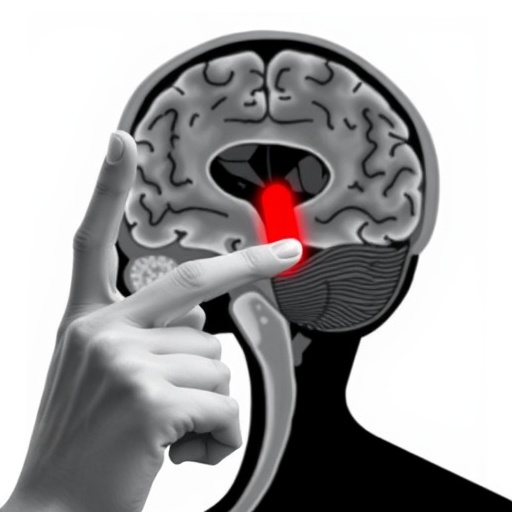
In a groundbreaking study published in npj Parkinson’s Disease in 2026, researchers Chen, Xu, Duan, and their colleagues have unveiled compelling evidence highlighting a distinct finger-tapping feature in patients diagnosed with progressive supranuclear palsy (PSP). This characteristic motor signature is not only unique to PSP but also demonstrates significant correlations with motor function impairments and underlying brain atrophy, marking a considerable leap forward in our understanding of this devastating neurodegenerative disorder.
Progressive supranuclear palsy is a rare but severe condition characterized by impaired balance, speech difficulties, and problems with eye movement, alongside progressive motor decline. Unlike Parkinson’s disease, which shares some symptomatic overlaps, PSP follows a different pathological and clinical progression. The early and accurate diagnosis of PSP remains a formidable challenge given its symptomatic similarity to other parkinsonian syndromes. The novel insights provided by this study may serve as a pivotal biomarker for distinguishing PSP with a higher degree of precision, potentially transforming diagnostic criteria and patient management.
Central to the study’s innovative approach was the analysis of finger-tapping tasks as a window into motor control deficits. Finger tapping, a simple yet revealing motor task, has long been a tool in neurological assessments, revealing subtle deficits in coordination, timing, and motor planning. Chen et al. implemented advanced digital tracking techniques to quantify finger-tapping performance in PSP patients, capturing nuances beyond what is observable through clinical examination alone. The findings indicate a distinct temporal and spatial pattern of finger-tapping abnormalities that correlate strongly with disease severity.
The methodology employed rigorous motion capture technology, employing high-resolution sensors capable of measuring speed, rhythm, amplitude, and consistency of finger taps. Intriguingly, patients with PSP exhibited a marked decrement in tapping speed and amplitude compared to healthy controls and those with other forms of parkinsonism. Moreover, the variability in inter-tap intervals was significantly elevated, suggesting disrupted motor timing and compromised central nervous system control, which are hallmark features of PSP’s motor phenotype.
Further linking these motor abnormalities to neurological underpinnings, the research team employed advanced neuroimaging modalities, including structural MRI, to map brain atrophy patterns. The most profound atrophic changes were noted in the basal ganglia, midbrain, and frontal cortex regions—areas critically involved in motor planning and execution. Strikingly, the extent of finger-tapping deficits showed a robust correlation with the degree of atrophy in these brain regions, suggesting a direct mechanistic link between neurodegeneration and motor performance degradation.
This integrative approach aligns with emerging trends in neurological research that emphasize the importance of multimodal assessments combining behavioral, clinical, and neuroanatomical data. The correlation between motor function decline and brain structure deterioration fosters a more comprehensive model of disease progression in PSP. It also underscores the potential utility of finger-tapping metrics as a non-invasive, cost-effective biomarker to monitor disease evolution and therapeutic response.
In addition to diagnostic implications, this research opens new avenues for therapeutic interventions targeting motor deficits in PSP. Understanding the specific motor impairments contributing to functional decline may facilitate the development of tailored rehabilitation strategies and neuromodulatory therapies. For instance, interventions could focus on enhancing motor timing and coordination through task-specific training or brain stimulation techniques aimed at the implicated neural circuits.
The study also raises intriguing questions about the neural mechanisms underlying motor timing disruptions in PSP. The observed increased tap interval variability points to dysfunctional cortical and subcortical circuitries orchestrating fine motor control, potentially involving impaired neurotransmitter systems such as dopamine and glutamate pathways. Future investigations will be essential to dissect these complex neurochemical alterations and their relationship with structural degeneration.
Beyond PSP, the findings may have broader implications for understanding motor control deficits across neurodegenerative diseases. Finger-tapping abnormalities are observed to some extent in Parkinson’s disease, multiple system atrophy, and other disorders, albeit with distinct profiles. Comparative analysis of these patterns could refine differential diagnosis and foster personalized medicine approaches by leveraging specific motor phenotypes as clinical biomarkers.
Importantly, the research by Chen and colleagues exemplifies the power of integrating cutting-edge technology such as digital sensor platforms and sophisticated neuroimaging in clinical research. Such tools enable the capture of high-dimensional data providing richer insights into disease mechanisms than traditional assessment methods. The digital quantification of motor performance could revolutionize routine clinical examinations, enabling earlier and more accurate detection of neurodegenerative pathologies.
The implications of this work also extend into research frameworks and clinical trial design. Objective motor biomarkers like the finger-tapping feature identified here may serve as reliable endpoints to evaluate the efficacy of emerging therapies. This is critically important in PSP where clinical heterogeneity and rapid progression pose significant hurdles to trial recruitment and outcome assessment.
Moreover, the adoption of digital motor assessments could facilitate remote monitoring of PSP patients, addressing accessibility issues and reducing the burden on healthcare systems. Continuous at-home tracking of motor function could enable real-time disease monitoring and personalized adjustments in therapeutic regimens. This shift towards digital health paradigms aligns well with broader trends in neurology and medicine.
While the study’s findings are promising, the authors acknowledge the need for larger cohorts and longitudinal follow-ups to validate the prognostic value of the finger-tapping feature fully. Understanding how these motor abnormalities evolve alongside clinical progression over time will be critical to establishing their utility in routine clinical practice. Such prospective studies are underway, building on the foundational findings reported here.
In conclusion, the identification of distinct finger-tapping features linked to motor function and brain atrophy in progressive supranuclear palsy heralds a new era in the clinical and research landscape of this challenging disorder. Through meticulous integration of motor assessments and neuroimaging, Chen and colleagues have charted a path toward more precise diagnostics, improved disease monitoring, and potentially novel therapeutic targets. As this line of investigation advances, it holds the promise of enhancing the lives of patients grappling with PSP and related neurodegenerative diseases.
Moving forward, the continued convergence of neuroscience, engineering, and clinical research will be paramount in unraveling the complexities of motor dysfunction in neurodegeneration. The nuanced characterization of fine motor abnormalities, exemplified by finger-tapping deficits, represents a powerful tool in this endeavor. The study by Chen et al. thus stands as a landmark contribution, illuminating the ways in which subtle motor assessments can yield profound insights into brain health and disease progression.
Chen, Z., Xu, W., Duan, R. et al. Distinct finger-tapping feature in progressive supranuclear palsy correlates with motor function and brain atrophy.
npj Parkinsons Dis. (2026). https://doi.org/10.1038/s41531-026-01316-9
Cite Scienmag News
Cassandra Pierce. (April 8, 2026). Finger-Tapping in Supranuclear Palsy Links to Brain Atrophy. Scienmag. https://scienmag.com/finger-tapping-in-supranuclear-palsy-links-to-brain-atrophy/
Cassandra Pierce. "Finger-Tapping in Supranuclear Palsy Links to Brain Atrophy." Scienmag, 8 April 2026, https://scienmag.com/finger-tapping-in-supranuclear-palsy-links-to-brain-atrophy/. Accessed 4 September 2026.
Cassandra Pierce. "Finger-Tapping in Supranuclear Palsy Links to Brain Atrophy." Scienmag. April 8, 2026. https://scienmag.com/finger-tapping-in-supranuclear-palsy-links-to-brain-atrophy/


