


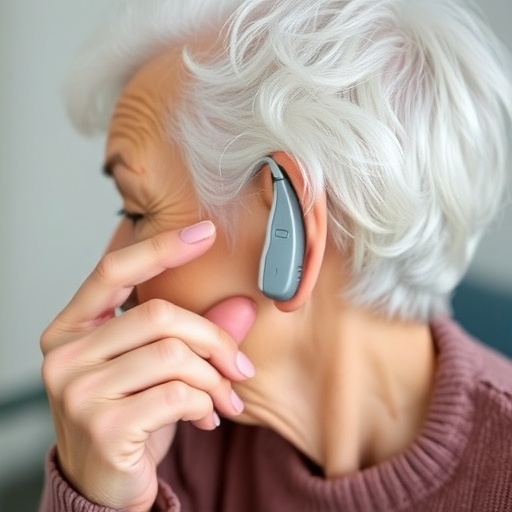
In recent years, the intricate interplay between sensory impairments and physical health deterioration among the elderly has emerged as a critical area of gerontological research. Specifically, hearing loss, a prevalent condition affecting millions of older adults globally, has been implicated in exacerbating frailty—a multifaceted syndrome characterized by decreased physiological reserve and heightened vulnerability to adverse health outcomes. A groundbreaking study conducted in Japan sheds new light on this relationship, revealing that the duration of hearing-aid use may play a pivotal role in mitigating frailty among community-dwelling older adults with hearing impairment, an insight carrying profound implications for public health policies and clinical interventions.
Hearing loss often remains an underrecognized and undertreated problem in aging populations. Characterized by a gradual decline in auditory function, it not only impairs communication but is increasingly linked to cognitive decline, social isolation, depression, and diminished physical function. The Japanese cross-sectional study meticulously examines how sustained use of hearing aids interfaces with the frailty status of older adults, providing robust evidence that early and prolonged intervention can attenuate the progression of frailty.
Frailty itself represents a complex clinical syndrome marked by diminished strength, endurance, and physiological function. It predisposes individuals to falls, hospitalization, disability, and mortality. Assessing frailty involves multifactorial metrics including gait speed, muscle strength, exhaustion, and weight loss. Importantly, frailty is considered potentially reversible or at least modifiable through targeted interventions, making the identification of modifiable risk factors an urgent priority.
Central to the study was the utilization of a comprehensive dataset derived from community-dwelling elders in Japan with documented hearing loss. The researchers stratified participants based on their duration of hearing-aid use, ranging from non-users to those who had consistently used hearing aids over extended periods. Standardized frailty criteria were applied, alongside adjustments for confounding variables such as age, comorbidities, and socioeconomic factors.
The findings revealed a statistically significant inverse relationship between the length of hearing-aid use and frailty prevalence. Older adults who had embraced hearing aids earlier and maintained their use exhibited notably lower frailty scores. This suggests that hearing aids may confer protective benefits beyond auditory rehabilitation, possibly by fostering improved communication, social engagement, and physical activity levels.
Mechanistically, hearing aids likely influence frailty by mitigating sensory deprivation, which often triggers a cascade of adverse outcomes including social withdrawal and cognitive decline. By restoring auditory input, hearing aids can facilitate greater participation in social and physical activities, essential elements for maintaining muscle mass, balance, and overall physiological resilience. Furthermore, improved hearing may reduce depressive symptoms, which are themselves linked to frailty.
This study’s cross-sectional design limits causal inference but provides compelling associations that justify longitudinal investigations. The researchers emphasize the necessity of early screening and management of hearing loss as a feasible public health measure to combat frailty. Given the aging demographics worldwide and the rising prevalence of both hearing impairment and frailty, integrating hearing healthcare into geriatric care frameworks could substantially improve quality of life and reduce healthcare burdens.
Notably, the study underscores cultural and systemic nuances in hearing aid adoption in Japan, where stigma and accessibility issues have historically hindered utilization. Addressing these barriers is paramount to unlocking the potential benefits identified. Policymakers are urged to consider subsidizing hearing aids and launching educational campaigns to normalize their use among older adults.
Technological advancements in hearing-aid devices, including enhanced sound processing algorithms and user-friendly designs, further augment the promise of mitigating frailty. Future research may explore personalized auditory rehabilitation programs jointly addressing cognitive and physical domains to optimize outcomes.
Experts comment that this research enriches the understanding of sensory rehabilitation as a cornerstone of healthy aging. It challenges gerontology to view hearing loss not merely as an isolated sensory deficit but as a modifiable determinant of broader physical decline. This paradigm shift aligns with a holistic, multidisciplinary approach to elder care.
Clinicians are encouraged to integrate hearing assessments routinely into geriatric evaluations and to proactively discuss hearing-aid options with patients. Early intervention can transform trajectories, preventing the entrenchment of frailty and its sequelae. Moreover, community awareness must be enhanced to dispel myths surrounding hearing aid use and to promote social support networks.
In conclusion, the association between hearing-aid usage duration and reduced frailty offers an actionable pathway to bolster resilience in aging populations. This Japanese cross-sectional study contributes a vital piece to the puzzle of healthy longevity, highlighting that technological aids, when embraced timely and consistently, may serve as bulwarks against the physical vulnerabilities of old age. Future longitudinal and interventional research are warranted to fully elucidate causal relationships and optimize hearing rehabilitation protocols, with the ultimate goal of fostering robust aging trajectories across global societies.
Cite Scienmag News
Beatrice Stafford. (April 8, 2026). Hearing Aid Use Linked to Frailty in Elderly. Scienmag. https://scienmag.com/hearing-aid-use-linked-to-frailty-in-elderly/
Beatrice Stafford. "Hearing Aid Use Linked to Frailty in Elderly." Scienmag, 8 April 2026, https://scienmag.com/hearing-aid-use-linked-to-frailty-in-elderly/. Accessed 5 September 2026.
Beatrice Stafford. "Hearing Aid Use Linked to Frailty in Elderly." Scienmag. April 8, 2026. https://scienmag.com/hearing-aid-use-linked-to-frailty-in-elderly/


