


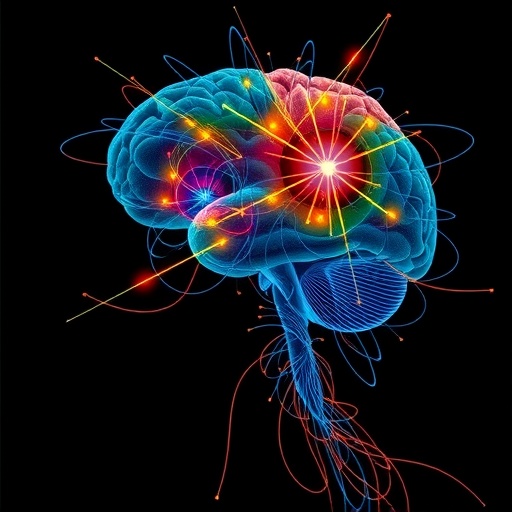
In a groundbreaking study published in Translational Psychiatry this year, researchers have uncovered a unifying thread in the complex tapestry of psychiatric disorders by identifying common alterations in spontaneous brain activity. This innovative research addresses one of the most significant challenges in mental health: the overlapping symptoms and neural mechanisms that span multiple psychiatric conditions. By focusing on intrinsic brain activity, the team led by Guo, Tang, and Xiao provides new insights that could revolutionize diagnostic strategies and therapeutic interventions alike.
Psychiatric disorders such as schizophrenia, bipolar disorder, depression, and anxiety have long been viewed through the lens of distinct clinical presentations. However, emerging evidence suggests shared neurobiological underpinnings that transcend traditional diagnostic boundaries. This study delves deep into spontaneous brain activity—brain signals occurring in the absence of explicit tasks—to uncover alterations common across various psychiatric conditions. These resting-state neural dynamics are critical because they reflect the brain’s intrinsic functional architecture, offering a window into the baseline state of brain networks implicated in mental health.
The research utilized advanced neuroimaging techniques, specifically resting-state functional magnetic resonance imaging (rs-fMRI), to capture and analyze the brain’s spontaneous activity patterns. By aggregating data across multiple psychiatric disorders, the researchers employed robust analytical models to isolate commonalities in neural activity disruption. This meta-analytic approach enhances statistical power and offers a more generalized understanding of psychiatric pathology beyond single-disorder studies.
Central to the study’s findings is the identification of aberrations in key brain networks responsible for cognitive control, emotional regulation, and self-referential thought. One such network consistently implicated is the default mode network (DMN), a collection of brain regions active during rest and internal cognition. Altered activity within the DMN was observed across disorders, suggesting a shared dimension of disrupted internal processing. This aligns with clinical observations where patients exhibit deficits in introspection, rumination, or altered self-awareness.
Moreover, the study highlights dysfunction within the salience network, which evaluates the significance of stimuli and orchestrates switching between different brain states. Disruptions in salience network dynamics were common among psychiatric conditions, potentially underpinning difficulties patients experience in processing emotional and environmental cues. This neural signature could explain common symptomatic domains such as emotional dysregulation and impaired attention.
Importantly, the research also points to the central executive network (CEN), vital for higher-order cognitive functions including working memory and problem-solving. Altered spontaneous activity in the CEN suggests a generalized deficit in cognitive control mechanisms across psychiatric diagnoses. The convergence of alterations in DMN, salience, and executive networks underscores a tripartite model of intrinsic brain dysfunction that transcends diagnostic categories.
The methodological rigor of the study is noteworthy; integrating datasets from multiple cohorts and ensuring harmonized preprocessing demonstrated the reliability of observed patterns. Advanced machine learning algorithms were also leveraged to classify brain activity alterations, distinguishing psychiatric patients from healthy controls with promising accuracy. Such computational approaches herald a new era of precision psychiatry, where neuroimaging biomarkers might one day aid in personalized diagnosis and treatment planning.
The implications of discerning common spontaneous brain activity alterations are profound. First, it challenges the categorical classification of psychiatric disorders, advocating for a dimensional model grounded in underlying neurobiology. Understanding shared neural dysfunction could lead to cross-disorder pharmacological targets, potentially streamlining drug development focused on core neural circuits rather than heterogeneous symptoms.
Furthermore, this research provides a framework for early detection and intervention. Resting-state brain activity can be measured non-invasively and may serve as an objective biomarker to identify at-risk individuals before clinical symptom onset. Such proactive strategies could mitigate disease progression and improve long-term outcomes, heralding a paradigm shift from reactive to preventive psychiatry.
Equally significant is the potential to refine neurostimulation therapies, such as transcranial magnetic stimulation (TMS) or deep brain stimulation (DBS), by targeting common dysfunctional networks delineated in this study. Precision modulation of aberrant intrinsic activity patterns promises to enhance therapeutic efficacy and reduce side effects, ultimately transforming patient care.
The study also invites a reevaluation of psychiatric comorbidity, which poses a major challenge in both clinical practice and research. By elucidating overlapping neurofunctional signatures, the work suggests that co-occurrence of disorders like depression and anxiety might reflect shared disruptions in core brain networks rather than distinct pathological processes. This insight could streamline treatment algorithms and enhance holistic care.
Critically, while the study propels the field forward, it also recognizes the complexity and heterogeneity within disorders. Not all patients exhibit identical neural alterations, emphasizing the need for stratified approaches considering individual variability. Future research will likely expand on integrating genetic, environmental, and neurodevelopmental factors with brain activity findings to build comprehensive, multidimensional psychiatric models.
Moreover, technological advances in neuroimaging resolution and analysis are anticipated to refine these findings. Ultra-high-field MRI and real-time brain activity monitoring may reveal dynamic fluctuations in network connectivity, deepening our understanding of how spontaneous brain activity contributes to symptom expression and disease trajectories.
This study is a testament to the power of interdisciplinary collaboration, fusing neuroscience, psychiatry, computational biology, and clinical expertise. It exemplifies how leveraging large-scale data and sophisticated analytic tools can uncover fundamental principles governing brain function and dysfunction across mental illnesses.
The identification of common spontaneous brain activity alterations holds promise not just for scientific discovery but also for breaking stigma surrounding psychiatric disorders. Recognizing shared biological bases may foster empathy and destigmatization by framing mental illness within a neurobiological continuum akin to other medical conditions.
In synthesizing these findings, the research offers hope for a future where psychiatric diagnosis and treatment are informed by objective brain measures rather than solely by subjective symptomatology. This would mark a transformative leap, enabling precise, personalized, and effective mental healthcare.
As the neuroscience community digests these insights, one anticipates a surge in related research aimed at validating and expanding upon these results. The potential for integrating spontaneous brain activity biomarkers into clinical practice is immense, promising improvements in early diagnosis, treatment selectivity, and monitoring therapeutic outcomes.
In conclusion, the work by Guo, Tang, Xiao, and colleagues represents a pivotal milestone in psychiatric research. By delineating common spontaneous brain activity alterations shared across psychiatric disorders, it paves the way for unified neurobiological frameworks that could ultimately revolutionize how we understand, diagnose, and treat mental illness in the coming decades.
Cite Scienmag News
Glenn Wilkins. (April 3, 2026). Shared Brain Activity Changes in Psychiatric Disorders. Scienmag. https://scienmag.com/shared-brain-activity-changes-in-psychiatric-disorders/
Glenn Wilkins. "Shared Brain Activity Changes in Psychiatric Disorders." Scienmag, 3 April 2026, https://scienmag.com/shared-brain-activity-changes-in-psychiatric-disorders/. Accessed 5 September 2026.
Glenn Wilkins. "Shared Brain Activity Changes in Psychiatric Disorders." Scienmag. April 3, 2026. https://scienmag.com/shared-brain-activity-changes-in-psychiatric-disorders/


