


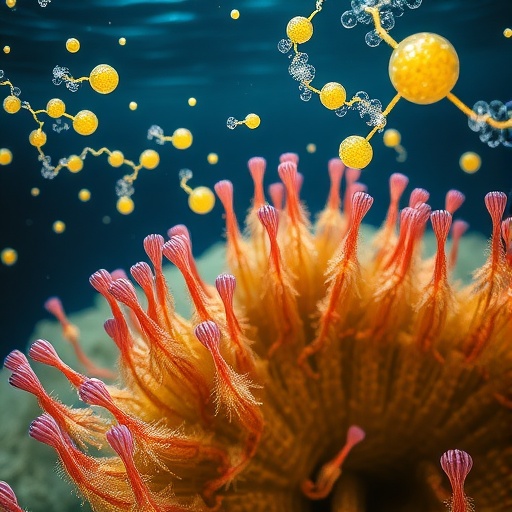
In the vast, dynamic ecosystems of our oceans, phytoplankton serve as microscopic powerhouses, fundamental to marine food webs and global biogeochemical cycles. These tiny organisms, thriving at the interface between the atmosphere and ocean, govern the productivity of marine environments by converting sunlight and nutrients into biotic matter. Recent research has unveiled a transformative insight into how climate change is not merely reshaping the distribution patterns of phytoplankton but is fundamentally altering their very biochemical fabric. This shift in macromolecular composition under warming scenarios could ripple through marine ecosystems, influencing nutrient flows, food quality, and even carbon cycling on a global scale.
Phytoplankton’s biochemical architecture comprises primarily proteins, carbohydrates, and lipids. These macromolecules are essential to their cellular functions and act as nutritional proxies for higher trophic levels such as zooplankton, fish, and ultimately, human consumers. Traditionally, phytoplankton found in nutrient-abundant, low-light high-latitude waters have been characterized by protein-rich biomass. In contrast, their counterparts dwelling in the nutrient-poor oligotrophic subtropical gyres typically harbor increased quantities of carbohydrates and lipids. This baseline biochemical partitioning reflects adaptation to environmental conditions such as nutrient availability, light intensity, temperature, and grazing pressure.
However, as anthropogenic climate change accelerates, these natural biochemical equilibria are undergoing profound alterations. The study published by Sharoni and colleagues in Nature Climate Change employs advanced ecosystem-biogeochemical modeling alongside compiled empirical datasets to unravel projected trajectories of phytoplankton macromolecular composition under future warming. Their comprehensive model integrates environmental variables spanning nutrient fields, temperature gradients, and light regimes, simulating responses under a high-emission representative concentration pathway throughout the twenty-first century.
One of the key revelations of the research is the prediction that high-latitude phytoplankton—traditionally protein-dense—will experience a biochemical remodeling where carbohydrate and lipid content significantly increase at the expense of proteins. This transformation is mapped in direct correlation with rising sea surface temperatures and shifting nutrient regimes emerging from stratification and altered mixing patterns. The shift from protein to energy-dense carbohydrate and lipid fractions reflects cellular adjustments to metabolic demands and resource availability under warming stress.
Such biochemical remodeling bears important ecological consequences. Proteins are nutrient-rich, nitrogen-containing molecules that provide critical amino acids indispensable to marine consumers, while carbohydrates and lipids primarily serve as energy reservoirs. Therefore, a decline in protein concentration in phytoplankton could translate into diminished nutritional quality for zooplankton grazers, creating cascading effects through the trophic web that may ultimately impact fish stocks and ecosystem services relied upon by human societies.
Notably, the compiled datasets already reveal incipient signs of this macromolecular shift in Arctic phytoplankton populations—the frontline region for climate impact. The Arctic Ocean’s rapidly warming environment, coupled with changing ice cover and nutrient dynamics, seems to be fostering conditions conducive to increased carbohydrate and lipid accumulation relative to proteins. These early observations underscore the urgency to monitor biochemical markers as indicators of ecosystem health and function amid accelerating anthropogenic perturbations.
Beyond trophic interactions, this biochemical shift may also influence global biogeochemical cycles, particularly carbon sequestration processes. Proteins and carbohydrates differ in their oxidation states and sinking behaviors, potentially modulating the ocean’s biological carbon pump. Enhanced production of carbohydrates and lipids may alter how organic carbon is transported to the deep ocean, thereby affecting the efficiency of long-term carbon storage and feedback loops in climate regulation.
The researchers emphasize that continuous, high-resolution monitoring of phytoplankton biochemical composition is imperative. Such surveillance should extend beyond traditional biomass and community structure assessments, integrating molecular and biochemical profiling in situ and through remote sensing proxies. This approach will refine predictions and inform adaptive management strategies for fisheries, conservation, and global climate mitigation efforts.
Ultimately, the biochemical remodeling of phytoplankton under climate change epitomizes a subtle yet significant aspect of oceanic response to environmental stressors. It reveals that climate-driven changes permeate not only species distributions and phenology but also foundational cellular-level traits with ecosystem-wide ramifications. These findings call for integrative research efforts bridging marine biology, ecology, biogeochemistry, and climate sciences.
In summary, the study by Sharoni and colleagues fundamentally advances our understanding of marine ecosystem vulnerabilities by illustrating how climate-induced shifts in phytoplankton biochemistry may cascade through food webs and biogeochemical cycles. As our oceans continue to warm and stratify, this biochemical lens offers a critical perspective on the resilience and future trajectories of marine life and human well-being dependent upon ocean resources.
These insights advocate for bolstered scientific collaboration and expanded monitoring infrastructures to anticipate and mitigate the far-reaching consequences of oceanic biochemical shifts. It also invites a reexamination of existing ecosystem and climate models to incorporate macromolecular composition dynamics as vital variables. Doing so will enhance predictions of marine productivity and facilitate more nuanced policy interventions targeting ocean sustainability under a rapidly changing world.
In a broader context, the biochemical transformation of phytoplankton aligns with the global narrative of climate change imposing complex, multifunctional stress on natural systems. The subtle realignment of cell composition, imperceptible at first glance, embodies the often-overlooked phenomena with potentially profound ecological and socioeconomic outcomes. As such, this research amplifies the need for vigilance and innovation in marine science to safeguard future oceanic health and its services.
As we fathom the intricate interplay between climate forces and microscopic ocean life, it becomes ever clearer that small-scale cellular changes can have outsized impacts. The evolving carbohydrate and lipid enrichment in phytoplankton cells heralds a new chapter in understanding ocean biochemistry’s role in climate resilience and vulnerability. Unlocking the mechanistic pathways behind these biochemical alterations holds promise not only for basic science but also for enhancing human adaptive capacity in the face of environmental uncertainty.
This pioneering work ushers in a paradigm shift, where the biochemical traits of phytoplankton—the ocean’s foundational producers—are recognized not just as biological attributes but as critical indicators and drivers of ecosystem transformation under global change. With this perspective, the future of ocean health and the sustainability of marine food webs can be better anticipated, managed, and protected against the mounting pressures of a warming planet.
Cite Scienmag News
Sloane Callahan. (March 31, 2026). Phytoplankton Biochemical Shifts Amid Climate Change. Scienmag. https://scienmag.com/phytoplankton-biochemical-shifts-amid-climate-change/
Sloane Callahan. "Phytoplankton Biochemical Shifts Amid Climate Change." Scienmag, 31 March 2026, https://scienmag.com/phytoplankton-biochemical-shifts-amid-climate-change/. Accessed 3 September 2026.
Sloane Callahan. "Phytoplankton Biochemical Shifts Amid Climate Change." Scienmag. March 31, 2026. https://scienmag.com/phytoplankton-biochemical-shifts-amid-climate-change/


