


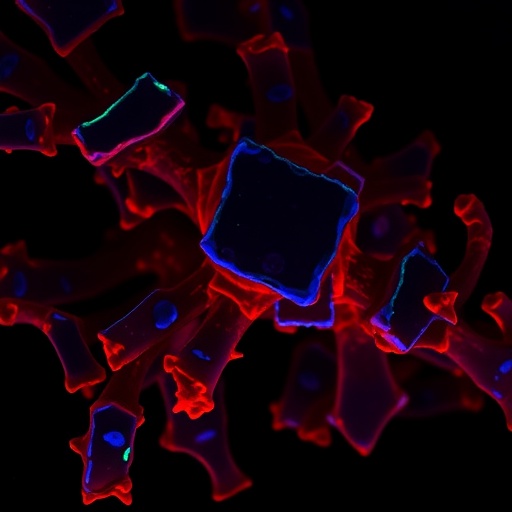
In the ongoing battle against acute myeloid leukemia (AML), scientists are relentlessly pursuing strategies to outsmart this aggressive blood cancer. A groundbreaking study recently published in Cell Death Discovery sheds new light on a promising therapeutic avenue that could revolutionize treatments for patients with the notoriously difficult-to-treat FLT3-ITD subtype of AML. The research, led by Albuquerque de Melo and colleagues, unveils a compelling synergy between autophagy inhibition and FLT3-targeted therapies, opening the door to overcoming drug resistance that has long hindered effective disease management.
FLT3 mutations, particularly internal tandem duplications (ITDs), represent a major driver mutation present in nearly a third of AML cases. These mutations hyperactivate the FLT3 receptor tyrosine kinase, promoting uncontrolled proliferation and survival of leukemic cells. While FLT3 inhibitors have been a cornerstone of targeted therapy, their clinical potential is often curtailed by both intrinsic and acquired resistance mechanisms, resulting in frustratingly transient remissions. The crux of the current challenge lies in decoding and circumventing the cellular processes that blunt the efficacy of these drugs.
Enter autophagy — a cellular recycling program crucial for maintaining homeostasis under stress conditions. Paradoxically, autophagy can act as a double-edged sword in cancer, sometimes suppressing tumorigenesis, yet in other contexts sheltering malignant cells from therapeutic insults. The study by Albuquerque de Melo et al. meticulously dissects how autophagy acts as a protective lifeline for FLT3-ITD AML cells during FLT3 inhibition, enabling them to survive and adapt despite the drug assault.
Using comprehensive molecular and cellular assays, the authors demonstrate that blocking autophagy markedly enhances the cytotoxicity of FLT3 inhibitors. This combinatorial approach effectively disrupts leukemic cell survival pathways, leading to increased apoptosis and impaired clonogenic potential. Notably, this strategy not only augments initial responses but also suppresses the emergence of resistant clones, a paramount hurdle in AML treatment.
What sets this study apart is its integration of pharmacological and genetic tools to inhibit key autophagy regulators, confirming that autophagy is more than an epiphenomenon in drug resistance. For instance, the use of clinically relevant autophagy inhibitors, in conjunction with established FLT3 kinase inhibitors, triggers synergistic cell death in a spectrum of AML cell lines and primary patient samples harboring FLT3-ITD mutations. This dual targeting approach represents a significant leap towards personalized therapeutics tailored to the molecular Achilles’ heel of this leukemia subtype.
Delving deeper, the investigation explores the mechanistic underpinnings that confer autophagy’s protective shield. It reveals that upon FLT3 inhibitor treatment, AML cells activate a compensatory metabolic and stress response via autophagy, clearing damaged organelles and maintaining mitochondrial integrity. Interrupting this process leads to accumulation of reactive oxygen species and metabolic collapse, tipping cells into cell death. This elegant mechanistic insight provides a rational basis for clinical evaluation of autophagy blockade in combination with FLT3-directed therapy.
The implications of these findings extend far beyond FLT3-ITD AML. They exemplify a broader paradigm wherein adaptive stress responses in cancer cells can be exploited to amplify treatment efficacy. Autophagy, long considered a complex and sometimes confounding element in oncology, emerges here as a tangible and actionable target. This study redefines the therapeutic landscape, suggesting that overcoming drug resistance may require dismantling the very cellular lifelines that cancer cells deploy under pharmacological pressure.
Moreover, this research aligns with a growing recognition that monotherapies targeting single oncogenic drivers frequently fall short due to the dynamic adaptability of cancer cells. Multimodal approaches that combine targeted agents with inhibitors of cellular stress pathways like autophagy represent a future-proof strategy to outmaneuver cancer’s plasticity. The preclinical evidence provided by Albuquerque de Melo et al. paves the way for clinical trials combining autophagy inhibitors and FLT3-targeted drugs, potentially setting a new standard of care for patients with FLT3-ITD AML.
Critically, the study also addresses the safety and feasibility of autophagy inhibition, acknowledging that systemic blockade of autophagy carries risks owing to its physiological roles. The authors suggest that selective targeting within the cancer context and careful dose optimization will be crucial for minimizing adverse effects in clinical applications. This nuanced perspective balances optimism with pragmatism, underscoring the need for rigorous translational research.
In the context of personalized medicine, the identification of biomarkers predicting response to autophagy modulation could revolutionize patient stratification. By harnessing molecular profiling to pinpoint AML patients most likely to benefit, clinicians can deliver more effective, less toxic regimens. This precision approach dovetails seamlessly with the rising tide of targeted therapies that are reshaping hematologic oncology.
As the scientific community digests these compelling findings, the study serves as a beacon for drug development pipelines targeting refractory AML and perhaps other hematological malignancies. It challenges researchers and clinicians alike to rethink therapeutic strategies, not merely in terms of hitting cancer drivers but also dismantling the cellular fortresses cancer erects to survive.
Looking ahead, the integration of autophagy inhibition with FLT3 inhibitor therapy holds transformative potential. Enhanced understanding of the interplay between oncogenic signaling and cellular stress responses will undoubtedly expand the therapeutic arsenal against AML. With resistance mechanisms becoming increasingly illuminated, rational combination therapies such as this may finally translate into durable remissions and improved survival outcomes.
In summary, the work of Albuquerque de Melo and colleagues delivers a paradigm-shifting concept: targeting autophagy can break the spell of FLT3 inhibitor resistance in AML, breathing new life into treatment prospects. This multidimensional approach combining molecular insights, translational relevance, and clinical foresight stands to impact the lives of countless patients who currently face limited options. The horizon for AML therapy just brightened, promising a new chapter in the conquest of this formidable disease.
Cite Scienmag News
Nathaniel Bowman. (March 28, 2026). Blocking Autophagy Boosts FLT3 Inhibitor Leukemia Fight. Scienmag. https://scienmag.com/blocking-autophagy-boosts-flt3-inhibitor-leukemia-fight/
Nathaniel Bowman. "Blocking Autophagy Boosts FLT3 Inhibitor Leukemia Fight." Scienmag, 28 March 2026, https://scienmag.com/blocking-autophagy-boosts-flt3-inhibitor-leukemia-fight/. Accessed 4 September 2026.
Nathaniel Bowman. "Blocking Autophagy Boosts FLT3 Inhibitor Leukemia Fight." Scienmag. March 28, 2026. https://scienmag.com/blocking-autophagy-boosts-flt3-inhibitor-leukemia-fight/


