


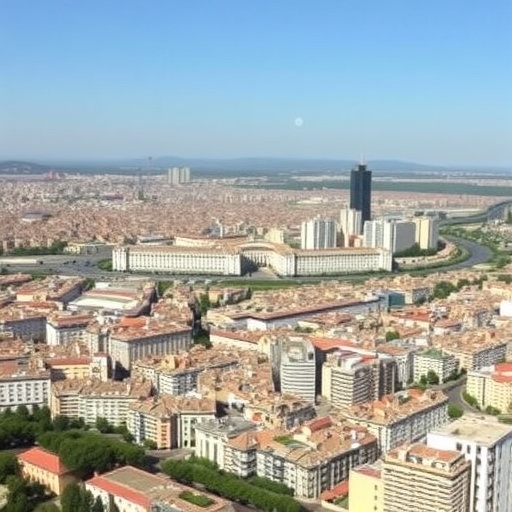
The metropolitan region of Barcelona, known for its rich cultural history and dynamic urban growth, is facing a crisis of monumental proportions—its peri-urban agriculture is rapidly disappearing. A recent study by the Institute of Environmental Science and Technology at the Universitat Autònoma de Barcelona (ICTA-UAB) reveals an alarming 70% reduction in agricultural land within the Barcelona Metropolitan Area (AMB) over recent decades. This drastic decline not only reshapes the landscape but also threatens the delicate balance between urban expansion and sustainable food production that cities worldwide strive to achieve.
Integrating spatial land-use analysis from 2003 to 2015 alongside qualitative data from interviews and participatory workshops, the study offers a comprehensive examination of the complex web of factors driving this decline. Among the most significant are urban sprawl fueled by real estate speculation, coupled with the inherently low economic returns of farming in the region. Today, agriculture occupies a mere 8.5% of the metropolitan area, translating into barely 16 square meters of farmland per resident—a stark diminishment that signals a worrying trend for urban food security and environmental quality.
This transformation mirrors global patterns where peri-urban lands are increasingly converted to residential, industrial, and infrastructural uses. In Barcelona, soaring land values in peri-urban zones incentivize such conversions, often at the expense of highly fertile soils. The pressure from urban development, acting in concert with fragmented landholdings and competition from cheaper international agricultural markets, has eroded farmers’ profitability and sustainability. Moreover, cumbersome land and water access restrictions, alongside strict protection policies for forests and other ecosystems, complicate the prospects for rejuvenating or expanding agricultural activities.
A key concern emerging from the study is the severe generational gap threatening the future of peri-urban agriculture. Younger potential farmers face insurmountable obstacles to entry in terms of land acquisition, infrastructure, and economic viability, resulting in an aging farming population and the gradual loss of agricultural knowledge and skills. This demographic shift portends not just an end to farming but also a loss of cultural identity tied to local food production traditions.
Beyond the immediate economic consequences, the decline of peri-urban agriculture carries profound implications for urban resilience and sustainability. Historically, the coexistence of urban and agricultural landscapes allowed cities to mitigate food supply risks during crises such as economic downturns or conflicts. As philosopher Johannes Langemeyer highlights, the contemporary physical separation between cities and food-producing lands is an anomaly severely compromising food security. Localized agricultural zones reduce dependency on long global supply chains, lower the carbon footprint of food transportation, and contribute significantly to urban climate regulation, biodiversity conservation, and landscape aesthetics.
Nevertheless, these multifaceted ecosystem services provided by peri-urban farmland are seldom factored into spatial and territorial planning. The omission underscores a glaring undervaluation of agro-ecological functions in policymaking, despite mounting evidence that integrated urban-agricultural landscapes are pivotal for sustainable metropolitan development.
The interplay between agriculture and environmental conservation policies adds further complexity to the AMB’s land use challenges. In upland peri-urban areas such as Serra de Collserola, Serralada Marina, and Serra de l’Ordal, agricultural abandonment has facilitated forest regrowth, altering landscape mosaics and presenting formidable barriers to reinstating farmland. Conversely, in flatter zones like the Llobregat delta, urban encroachment combined with stringent environmental protection measures generates tensions around land use, wildlife proliferation, and water resource management, further marginalizing agricultural activities.
Technological and infrastructural challenges compound these issues. The deterioration and loss of irrigation systems critical to agricultural productivity, combined with limited water availability, pose significant constraints. Additionally, the fragmentation of farmland by roads and other transport infrastructures obstructs efficient farm operations and scalability. These technical hurdles have inadvertently fostered informal or urban gardening practices in peri-urban spaces, giving rise to new land-use conflicts and regulatory dilemmas.
Despite the gravity of the situation, the research highlights glimmers of hope and pathways to reversal. Recognizing peri-urban agriculture as a strategic asset—both for food sovereignty and urban sustainability—calls for its formal incorporation into metropolitan planning frameworks. Successful initiatives such as the Parc Agrari del Baix Llobregat illustrate that targeted protection and active management of agricultural land can sustain farming activities even amid intense urban pressures. Such models underscore the feasibility and necessity of policies that prioritize agro-ecological resilience alongside urban growth.
Barcelona thus finds itself at a critical crossroads. The challenge lies in halting the ongoing loss of agricultural land and revitalizing the multiple roles these green spaces play in food production, environmental integrity, and social cohesion. Achieving this balance is indispensable for transitioning toward a metropolitan model that is truly sustainable, resilient, and equitable for future generations.
In a world grappling with climate change, resource scarcity, and urban overcrowding, Barcelona’s peri-urban agriculture story resonates beyond its borders. It serves as a potent reminder that safeguarding agricultural land at city fringes is not just a local concern but a global imperative—one that demands integrated technological, environmental, and social solutions. Without urgent intervention, the disappearance of these intimate urban-rural interfaces could foreshadow more precarious urban futures, where the forgotten farmers signify a fundamental breakdown in the relationship between people, food, and place.
Cite Scienmag News
Alan Morgan. (March 27, 2026). Barcelona Metropolitan Area Experiences Over 70% Decline in Agricultural Land in Recent Decades. Scienmag. https://scienmag.com/barcelona-metropolitan-area-experiences-over-70-decline-in-agricultural-land-in-recent-decades/
Alan Morgan. "Barcelona Metropolitan Area Experiences Over 70% Decline in Agricultural Land in Recent Decades." Scienmag, 27 March 2026, https://scienmag.com/barcelona-metropolitan-area-experiences-over-70-decline-in-agricultural-land-in-recent-decades/. Accessed 3 September 2026.
Alan Morgan. "Barcelona Metropolitan Area Experiences Over 70% Decline in Agricultural Land in Recent Decades." Scienmag. March 27, 2026. https://scienmag.com/barcelona-metropolitan-area-experiences-over-70-decline-in-agricultural-land-in-recent-decades/


