


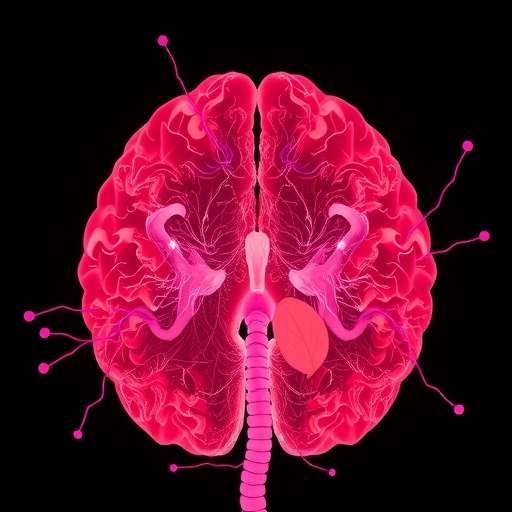
In an extraordinary leap forward in understanding the complex interplay between gut physiology and neurological disorders, new research by Cheng et al., published in Cell Death Discovery, reveals the critical role of MEKK3 in linking gut-brain communication to the pathogenesis of cerebral cavernous malformations (CCMs). This groundbreaking study elucidates molecular mechanisms that could transform how we conceptualize and potentially treat a devastating form of cerebrovascular disease.
Cerebral cavernous malformations are vascular abnormalities of the brain characterized by clusters of dilated and fragile capillaries, predisposing patients to seizures, strokes, and hemorrhagic events. Historically, CCMs have been regarded largely as isolated cerebral pathologies, with genetic mutations in KRIT1, CCM2, and PDCD10 being well-documented causes. However, the precise intracellular pathways converting these genetic defects into vascular lesions remained elusive. The present study shifts this paradigm, highlighting a previously unrecognized mechanism whereby gut-derived signals modulate cerebral vascular integrity through signaling cascades centered on MEKK3.
MEKK3, or Mitogen-Activated Protein Kinase Kinase Kinase 3, is renowned for its broad regulatory effects within cellular signaling networks, particularly in inflammatory and stress responses. The investigators employed a combination of elegant in vivo and in vitro models, including gut-specific knockouts and endothelial cell cultures, to dissect MEKK3’s function in coordinating signals originating from the gut microbiome and their impact on cerebral endothelial cells. They uncovered that alterations in gut microbial-derived metabolites could activate MEKK3-mediated pathways within brain endothelium, thereby inducing aberrant vascular remodeling typical of CCM lesions.
Significantly, the research team demonstrated that MEKK3 activity in cerebral endothelial cells acts as a molecular bridge transmitting gut microbiota signals, orchestrating changes in gene expression that predispose to endothelial barrier dysfunction and vascular instability. By utilizing advanced genetic manipulation techniques, the authors selectively disrupted MEKK3 signaling in the gut epithelium and observed a striking attenuation of cerebral vascular malformations, underscoring the therapeutic potential of targeting this axis.
The implications of these findings are profound, as they not only unveil a direct gut-brain signaling pathway involved in CCM pathogenesis but also open new horizons for microbiome-based interventions. The authors delve into how specific microbial metabolites, potentially short-chain fatty acids or other bacterial products, interface with MEKK3-dependent signaling. They propose a model where gut dysbiosis may prime brain vasculature vulnerability via an inflammatory cascade initiated at the intestinal level.
In exploring downstream effects, the study highlights that MEKK3 activates the p38 MAPK and JNK pathways within endothelial cells, driving pro-inflammatory cytokine production and extracellular matrix remodeling. These intracellular events culminate in the disruption of tight junction proteins such as claudin-5 and occludin, critical to maintaining blood-brain barrier integrity. Loss of barrier function then facilitates lesion formation and hemorrhage, providing a mechanistic explanation for the clinical manifestations observed in CCM patients.
Furthermore, the research team explores the crosstalk between immune cells and endothelial cells mediated by MEKK3 signaling. They report that gut-derived inflammatory mediators stimulate microglial cells and peripheral immune infiltration into CCM lesions, exacerbating lesion development and progression. This discovery adds another layer of complexity, illustrating how gut immune alterations can propagate neurovascular pathology via MEKK3.
From a translational perspective, this study is poised to invigorate drug discovery efforts targeting MEKK3 or its upstream intestinal triggers. The authors speculate that modulating gut microbial composition through probiotics, antibiotics, or dietary changes could indirectly attenuate MEKK3-mediated signaling, offering a non-invasive adjunct to conventional therapies. Moreover, direct pharmacological inhibitors of MEKK3 or its downstream kinases may represent viable strategies to halt CCM progression or prevent lesion formation altogether.
The methodological rigor of this work is noteworthy. Combining single-cell RNA sequencing of brain endothelial populations with functional assays, the authors precisely mapped gene expression changes attributable to MEKK3 activity. Their use of organoid models mimicking gut-brain interfaces further strengthens the physiological relevance of their findings. Such technological innovations yield a multifaceted view of how extracellular signals are transduced into pathological outcomes.
This research also invites a reevaluation of gut-brain axis dynamics beyond traditional neurological disorders. By spotlighting MEKK3 as a pivotal node connecting gut microbiota and cerebral vascular health, the study suggests analogous mechanisms might contribute to other neurovascular or neurodegenerative diseases. This conceptual expansion could have far-reaching consequences for neuroscience and vascular biology alike.
Importantly, the work by Cheng and colleagues addresses critical gaps in our understanding of CCM heterogeneity and sporadic cases. Variability in symptoms and lesion locations among patients may be influenced by differences in gut microbiome composition and the resultant MEKK3-driven signaling landscape. Personalizing treatment based on microbiome profiling could thus emerge as a future clinical strategy.
The study’s revelations come at a time of burgeoning interest in the microbiome’s influence over brain health. It elegantly integrates molecular biology, neurology, and microbiology, demonstrating that cerebrovascular disease is not merely a brain-confined issue but intricately linked to systemic homeostasis. Insights gleaned here underscore the necessity of interdisciplinary approaches to unravel complex pathologies like CCM.
In sum, the identification of MEKK3 as a critical mediator between the gut microbiome and cerebral endothelial pathology redefines our understanding of cerebral cavernous malformations. This study not only provides a compelling molecular narrative for CCM pathogenesis but also heralds new possibilities for preventive and therapeutic interventions grounded in gut-brain axis modulation. As the scientific community digests these insightful findings, the future of CCM research and treatment looks decidedly promising.
Cheng, P., Han, H., Huang, Y. et al. MEKK3 bridges gut-brain communication and cerebral cavernous malformation pathogenesis. Cell Death Discov. (2026). https://doi.org/10.1038/s41420-026-03062-6
Cite Scienmag News
Cassandra Pierce. (March 27, 2026). MEKK3 Links Gut-Brain Signaling to Brain Malformations. Scienmag. https://scienmag.com/mekk3-links-gut-brain-signaling-to-brain-malformations/
Cassandra Pierce. "MEKK3 Links Gut-Brain Signaling to Brain Malformations." Scienmag, 27 March 2026, https://scienmag.com/mekk3-links-gut-brain-signaling-to-brain-malformations/. Accessed 5 September 2026.
Cassandra Pierce. "MEKK3 Links Gut-Brain Signaling to Brain Malformations." Scienmag. March 27, 2026. https://scienmag.com/mekk3-links-gut-brain-signaling-to-brain-malformations/


