


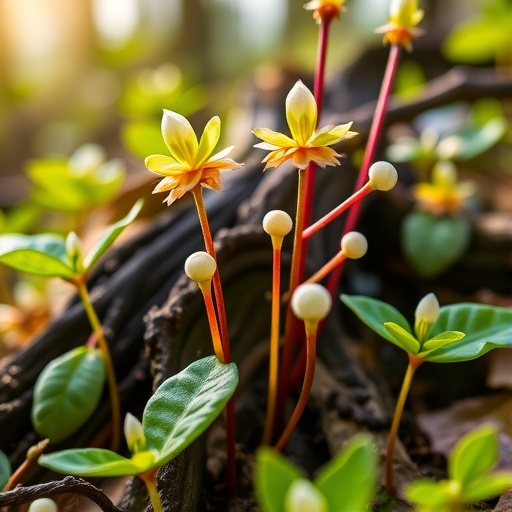
In an unprecedented collaborative effort, researchers spanning Europe, the Middle East, and the United States embarked on a groundbreaking experiment investigating the evolutionary responses of Arabidopsis thaliana plants to a sweeping array of climatic conditions. Over the course of five years, 360 intricate plots were simultaneously cultivated in diverse environments ranging from frigid alpine peaks to sweltering desert landscapes. This mammoth enterprise, led by Moisés Expósito-Alonso of UC Berkeley, set out to quantify the pace and mechanisms by which these plants adapt—or perish—in response to rapid environmental changes associated with ongoing global warming.
Climate change has long posed a pressing challenge, with scientists concerned that many species may not evolve quickly enough to cope with the swift alterations in their habitats. However, prior studies typically relied on isolated, one-off experimental trials with limited scope and scale. Expósito-Alonso’s innovative approach capitalized on a broad network of scientists and sites, enabling synchronized, large-scale experimental replication that allowed for robust comparisons across a striking gradient of climate stresses.
Central to this experiment was the use of Arabidopsis thaliana, a model organism in plant biology with substantial genetic diversity collected from multiple temperate regions. By planting genetically heterogeneous populations into various environmental conditions spanning cold alpine meadows to scorching desert plains, researchers could directly observe evolutionary dynamics in real time. The detailed genomic sequencing of over 70,000 surviving plants across 2,500 pooled samples revealed millions of allele frequency shifts—molecular signatures of ongoing adaptation.
The findings were both encouraging and cautionary. In most locations, Arabidopsis populations exhibited clear genetic changes indicative of natural selection acting to increase the frequency of alleles conferring higher fitness in novel climates. This rapid adaptation occurred within years, far faster than traditionally anticipated. Yet, intriguingly, populations exposed to the most extreme heat regimes showed little evidence of directed adaptation, instead displaying chaotic and stochastic genetic shifts followed by local extinction. This demonstrated a critical evolutionary tipping point beyond which the population size becomes too small for adaptive variants to take hold, condemning certain populations to perish.
Expósito-Alonso underscored that these insights are pivotal for conservation biology and ecosystem management. Knowing the tempo and trajectory of evolutionary change can improve predictive models regarding which species or populations are at high risk of climate-induced extinction and which might persist through evolutionary rescue. This fundamental understanding can guide interventions such as selective breeding, assisted gene flow, or habitat management aimed at bolstering natural adaptive processes.
Remarkably, this large-scale study also illustrated that repeatability of evolutionary responses was prevalent: multiple replicate plots within the same environment typically showed congruent allele frequency changes. Moreover, parallel climatic regimes in distant locations—such as dry shrublands in Spain and Greece—yielded similar genetic trajectories, highlighting the underlying consistency of natural selection’s action on standing genetic variation. Among the genes repeatedly implicated were those involved in heat stress response pathways and the regulation of flowering time, critical traits for plant survival and reproduction under climatic pressures.
The comprehensive genomic monitoring conducted annually over several generations enabled the detection of these rapid shifts in unprecedented detail, revealing adaptation taking place over just three to five years. This is a pivotal advancement in evolutionary biology, equipping scientists to detect adaptive changes while they are unfolding, rather than retrospectively.
However, not all populations flourished. In several warmer environments, evolutionary responses were absent or appeared random—signs of genetic drift rather than adaptive selection. These populations ultimately succumbed, revealing the brutal selective sieve imposed by severe climate stressors. “For populations to endure long-term environmental change, adaptive genetic shifts must occur early and be consistent,” Expósito-Alonso explains. “Otherwise, extinction is inevitable.”
With these insights, the team is now extending their research by cultivating seeds harvested annually to track ongoing evolutionary trajectories and launching new experiments involving other plant species. Their ultimate aim is to observe rapid evolution in natural, unmanaged populations, capturing the subtle, continuous genomic flux that underpins seemingly stable ecosystems susceptible to climate oscillations, wildfires, and droughts.
This pioneering work sheds light on the crucial interplay between genetic diversity, environmental stress, and survival, offering a hopeful yet urgent message: rapid evolution presents a lifeline for species confronted with climate change, but only if genetic diversity is sufficient and environmental pressures do not exceed critical thresholds. The delicate balance between adaptation and extinction will, to a large extent, determine the biological future of our planet’s ecosystems.
News Publication Date: 26-Mar-2026
Web References: DOI: 10.1126/science.adz0777
Cite Scienmag News
Gavin Prescott. (March 26, 2026). Global Study Monitors Plant Evolution Across 30 Sites in Response to Climate Change. Scienmag. https://scienmag.com/global-study-monitors-plant-evolution-across-30-sites-in-response-to-climate-change/
Gavin Prescott. "Global Study Monitors Plant Evolution Across 30 Sites in Response to Climate Change." Scienmag, 26 March 2026, https://scienmag.com/global-study-monitors-plant-evolution-across-30-sites-in-response-to-climate-change/. Accessed 3 September 2026.
Gavin Prescott. "Global Study Monitors Plant Evolution Across 30 Sites in Response to Climate Change." Scienmag. March 26, 2026. https://scienmag.com/global-study-monitors-plant-evolution-across-30-sites-in-response-to-climate-change/


