

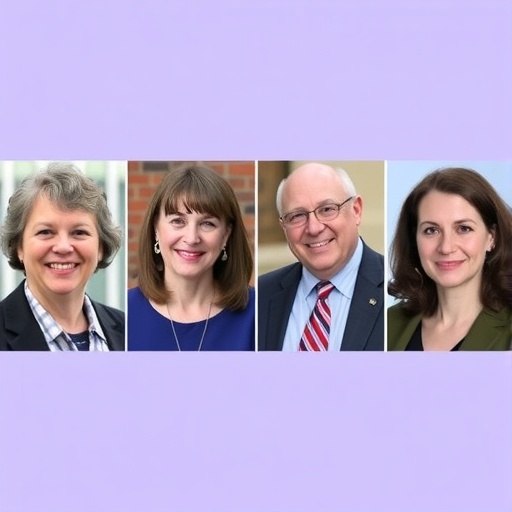
The American Association for the Advancement of Science (AAAS) has bestowed the prestigious title of AAAS Fellow upon four distinguished faculty members from New York University for the year 2025. This honor recognizes their exceptional contributions to scientific advancement across diverse fields, including chemical engineering, neuroscience, cancer research, and linguistics. The newly elected fellows are Eray Aydil, Anirban Maitra, André Fenton, and Liina Pylkkänen, each of whom has demonstrated remarkable achievements through groundbreaking research and innovative applications in their respective disciplines.
Eray Aydil, serving as senior vice dean and professor of chemical and biomolecular engineering at NYU’s Tandon School of Engineering, applies an intricate understanding of materials chemistry to the synthesis and characterization of thin films and nanostructured materials. His investigations focus on elucidating how the fabrication processes at the nanoscale influence material properties, thereby enabling novel functionalities for energy conversion devices such as solar cells. Aydil’s work integrates plasma chemistry techniques to control thin film morphologies, directly addressing challenges in improving photovoltaic efficiency through advanced materials engineering.
Neuroscience stands to benefit profoundly from the contributions of André Fenton, a professor whose research elucidates the complex interplay of electrical signaling within neural networks that underpin memory function. Fenton integrates molecular biology, electrophysiology, behavioral science, and computational modeling to unpack the mechanisms by which neural circuits dynamically encode, store, and retrieve memory. His seminal findings advance the understanding of how neuronal ensembles coordinate synchronized activity patterns crucial for cognitive processes, providing insight into the fundamental principles of brain function and information processing.
At the intersection of oncology and translational medicine, Anirban Maitra, director of the Laura and Isaac Perlmutter Cancer Center at NYU Langone Health, has made impactful strides in pancreatic cancer research. Maitra’s focus spans early cancer detection through biomarker identification, the tumor microenvironment’s role in disease progression, and innovative interception strategies aimed at halting cancer at its nascent stages. His translational research bridges bench-to-bedside applications, optimizing therapeutic approaches and improving patient prognoses by leveraging molecular diagnostics and personalized medicine frameworks.
In the realm of cognitive neuroscience and linguistic theory, Liina Pylkkänen distinguishes herself by exploring the neurobiological underpinnings of language processing. Utilizing magnetoencephalography (MEG), her laboratory investigates the spatiotemporal dynamics by which the human brain composes complex linguistic expressions from simpler components. Pylkkänen’s interdisciplinary approach merges linguistic structural theory with cutting-edge neuroimaging, revealing how specific neural circuits enable the construction and comprehension of language with remarkable precision and speed. Her work contributes significantly to unraveling the brain-language interface fundamental to human communication.
The AAAS Fellowship is a venerable recognition conferred annually to members whose scientific accomplishments or societal contributions have demonstrated exceptional distinction. This year, a total of 449 members across the global scientific community have received this honor, underscoring the high caliber and impact of their work. The election process critically assesses the originality, influence, and sustained contributions these researchers have made in advancing science and its translation into societal benefits.
Aydil’s research methodology encompasses sophisticated plasma-enhanced chemical vapor deposition techniques that allow precise control over film thickness and crystallinity at the atomic scale. These tunable features enable the tailoring of electronic and optical properties critical for next-generation solar energy harvesting materials. His lab continually pushes the boundaries of nanomaterial synthesis, offering innovative strategies to integrate new functional materials into commercially viable devices.
Fenton’s research provides a comprehensive framework describing how episodic memories are encoded through coordinated neuronal assemblies firing in time-locked sequences. Combining in vivo electrophysiological recordings with behavioral assays in animal models, his studies reveal how disruptions to these patterns can impair cognition, contributing to pathological conditions like Alzheimer’s disease. This framework offers potential pathways for therapeutic intervention to restore memory function.
Maitra’s lab employs cutting-edge genomics and proteomics to identify novel biomarkers indicative of pancreatic cancer onset and progression. The emphasis on the tumor microenvironment reveals complex intercellular interactions promoting malignancy, guiding the development of targeted therapies. Furthermore, his research on early cancer interception explores prophylactic approaches aiming to intervene before invasive disease manifests, representing a paradigm shift in cancer treatment.
Pylkkänen’s investigations utilize MEG to capture rapid neural activity changes associated with language comprehension, achieving millisecond temporal resolution. Her findings delineate how different brain regions coordinate to construct meaning from syntactic structures, advancing the understanding of neurocognitive models for language. This work has broad implications, from improving language acquisition in educational settings to informing clinical approaches for aphasia rehabilitation.
Together, these four NYU faculty exemplify the essence of interdisciplinary scientific leadership. Their commitment to expanding knowledge across chemistry, neuroscience, oncology, and linguistics highlights the rich diversity of inquiry necessary to address complex scientific questions and societal challenges. Through their pioneering research, they continue to push the frontiers of their fields, embodying the mission of the AAAS to advance science for the benefit of all.
Founded in 1831, New York University remains a leading global research institution with campuses spanning New York, Abu Dhabi, and Shanghai, and numerous academic presence worldwide. Its distinguished faculty are instrumental in driving innovations that span the full spectrum of knowledge, from fundamental sciences to applied technologies, enriching global scientific discourse and contributing to societal progress.
The designation of Eray Aydil, Anirban Maitra, André Fenton, and Liina Pylkkänen as AAAS Fellows celebrates their profound influence on scientific understanding and underscores the importance of sustained, high-impact research that bridges theoretical advances and practical applications. Their work not only enriches their respective fields but also contributes vital insights to overarching challenges in energy, health, cognition, and communication.
This accolade serves as an inspiration for emerging scientists and reinforces New York University’s reputation as a powerhouse of innovative thought and scholarly excellence. As these researchers continue to explore uncharted territories in science, their efforts illuminate pathways toward breakthroughs that will shape the technological and intellectual landscape of the future.
Subject of Research: Chemical engineering (thin films and nanomaterials for solar cells), neuroscience (memory and neural network coordination), oncology (pancreatic cancer early detection and intervention), cognitive neuroscience and linguistics (neurobiology of language processing).
Article Title: Four NYU Faculty Named 2025 AAAS Fellows for Pioneering Advances in Science and Medicine.
News Publication Date: 2024
Web References:
- Eray Aydil at NYU Tandon School
- André Fenton at NYU Neural Science
- Anirban Maitra at NYU Langone Health
- Liina Pylkkänen at NYU Linguistics
Image Credits: New York University
Keywords: Scientific community, Neuroscience, Chemical engineering, Linguistics, Cancer, Pancreatic cancer, Thin films, Nanostructured materials, Memory, Language processing, Biomarkers, Neuroimaging


