


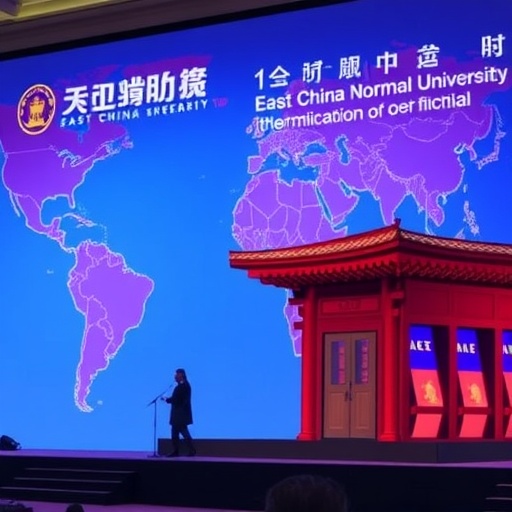
The 2025 Shanghai “International Communication of Chinese Culture” Initiative has recently revealed its latest round of selected projects, with a standout submission titled “International Dialogue on China’s Education Stories,” spearheaded by the Faculty of Education at East China Normal University (ECNU). This initiative is poised to significantly elevate China’s presence in the global academic and educational communications sphere. At the heart of this project’s international outreach is the ECNU Review of Education (ROE), an influential peer-reviewed journal, written in English, that serves as a key vehicle for disseminating Chinese educational research to a worldwide scholarly audience.
ECNU Review of Education is distinguished by its unique positioning as China’s first English-language education journal indexed in both Scopus and the Web of Science databases, boasting top-quartile rankings in the education field. This status enables it to act as a vital conduit for the globalization of Chinese educational scholarship, facilitating a nuanced and comprehensive portrayal of China’s evolving educational landscape. The selection of the ECNU-led project underlines the journal’s growing influence in fostering academic conversations that transcend cultural and national boundaries.
The initiative operates under the joint auspices of the Global Education Deans Forum (GEDF) and ROE, creating a powerful synergy between administrative leadership and scholarly dissemination. This collaboration has successfully convened educational deans from over seventy universities spanning thirty countries across five continents. These leaders engage in continuous exchanges that address emergent global educational challenges such as intelligent education technologies, equitable access to learning, and the redesign of future learning paradigms, laying the groundwork for a resilient international network dedicated to advancing educational research and policy.
ROE serves not only as a publishing platform but also as a cornerstone of this international communication architecture, offering a dedicated special collection named “Shanghai Education.” This collection features rigorous studies analyzing critical reforms within China’s educational system. Topics covered include the comprehensive overhaul of the college entrance examination system, advancements in inclusive education practices, and efforts to foster talent cultivation driven by innovation. These articles contribute robust empirical evidence and theoretical insights into China’s systematic reform efforts.
Among these significant publications is the article “Exploring the Mysteries of School Success in Shanghai,” which delves into the multifaceted factors contributing to Shanghai’s renowned educational outcomes. Additional research, such as “Making Inclusive Education Accessible and Equitable: Experiences From China,” presents a detailed evaluation of frameworks and strategies that have been instrumental in expanding inclusive education across diverse student populations. Moreover, studies like “School-to-School Collaboration, Student Learning Outcomes, and Mediating Factors: Evidence From Shanghai’s Strong School Project” provide quantitative and qualitative data that illustrate the mechanisms and impacts of institutional collaboration on student achievement.
Collectively, the body of research curated by ROE has achieved substantial international engagement, amassing over 200,000 views across global social media platforms. This reflects a growing curiosity and recognition of China’s educational practices and reform trajectories, amplifying the reach and resonance of scholarly work emanating from this region. The journal’s extensive dissemination efforts have significantly contributed to enhancing global awareness and understanding of Shanghai’s role as a leading education innovator.
ROE’s outreach extends beyond academic publishing; it is embedded in an extensive communication cycle fostered in partnership with GEDF. This dynamic collaboration integrates a chain of scholarly exchange activities, including annual forums, interactive online dialogues, and doctoral training camps. These initiatives collectively nurture intellectual exchange and capacity building among educational researchers and practitioners, facilitating robust international cooperation grounded in shared inquiry and cross-cultural understanding.
The journal’s international visibility is reflected in its cross-national downloads, which exceed 300,000 annually, alongside its reach to more than 300,000 users through overseas social media networks. These metrics underscore ROE’s effectiveness in bridging academic communities and disseminating China’s educational research on a truly global scale, thereby contributing to the diversification and enrichment of global education governance discourses.
Significantly, ROE collaborates closely with major international organizations and academic institutions, including the Organisation for Economic Co-operation and Development (OECD) and the United Nations Educational, Scientific and Cultural Organization (UNESCO). These partnerships broaden the journal’s influence, creating additional conduits for sharing Chinese educational experiences and reforms with the international educational community and policy arenas.
In leveraging its international academic platform, ROE is committed to sustaining and expanding scholarly dialogue and cultural exchange in the context of China’s educational development. By synthesizing high-quality research outputs and exploring diverse modes of scientific communication, the journal aims to provide nuanced insights into the ongoing educational transformations in China and contribute meaningfully to the global dialogue concerning education’s future.
Looking forward, ROE and GEDF are set to continue their collaborative commitment to fostering a global academic ecosystem that supports innovative research and knowledge dissemination. Their efforts are expected to play a pivotal role in shaping international perspectives on education reform and governance, promoting not only the scholarly exchange of findings but also greater cooperation among educational policymakers and practitioners worldwide.
ECNU Review of Education remains a critical platform bridging education research conducted in China with the global academic community. Through its rigorous peer review process, strategic partnerships, and multifaceted communication strategies, the journal exemplifies China’s advancing role in international education scholarship and its dedication to sharing its unique educational experiences with the world.
News Publication Date:
Not explicitly stated in the source content.
Web References:
- ECNU Review of Education homepage: https://journals.sagepub.com/home/ROE
- “Shanghai Education” special collection: https://journals.sagepub.com/topic/collections-roe/roe-1-shanghai_education/roea
- Representative articles:
- “Exploring the Mysteries of School Success in Shanghai” https://doi.org/10.30926/ecnuroe2018010107
- “Making Inclusive Education Accessible and Equitable: Experiences From China” https://doi.org/10.1177/20965311241282799
- “School-to-School Collaboration, Student Learning Outcomes, and Mediating Factors: Evidence From Shanghai’s Strong School Project” https://doi.org/10.1177/20965311251330932
Cite Scienmag News
Courtney Benton. (March 26, 2026). East China Normal University Recognized for Pioneering International Communication Initiative. Scienmag. https://scienmag.com/east-china-normal-university-recognized-for-pioneering-international-communication-initiative/
Courtney Benton. "East China Normal University Recognized for Pioneering International Communication Initiative." Scienmag, 26 March 2026, https://scienmag.com/east-china-normal-university-recognized-for-pioneering-international-communication-initiative/. Accessed 3 September 2026.
Courtney Benton. "East China Normal University Recognized for Pioneering International Communication Initiative." Scienmag. March 26, 2026. https://scienmag.com/east-china-normal-university-recognized-for-pioneering-international-communication-initiative/


