


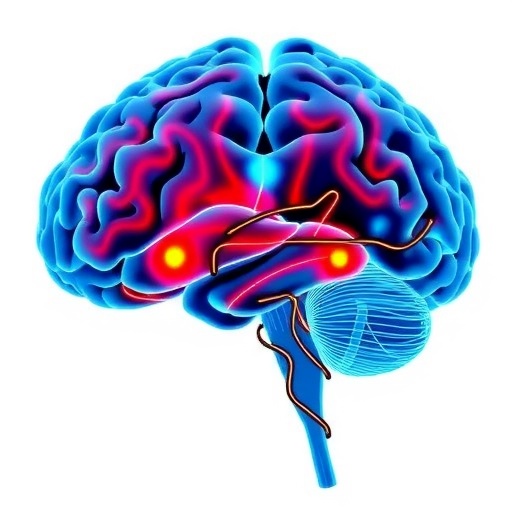
In a groundbreaking study pushing the frontiers of neurovascular research, scientists have unveiled pivotal insights into how neuromodulatory transmitters shape the brain’s hemodynamic responses. While the coupling between neuronal activity and cerebral blood flow constitutes the bedrock of functional neuroimaging, this new work takes a bold step forward by dissecting the differential impact of intrinsic neuromodulation on the neurovascular impulse response function (IRF). Utilizing innovative optical imaging techniques in awake mice, the research probes the complex interplay between norepinephrine (NE), acetylcholine (ACh), neuronal calcium signaling, and cerebral hemodynamics, revealing how neuromodulatory dynamics can recalibrate our interpretation of brain activity patterns.
The cornerstone of functional neuroimaging—whether fMRI, optical imaging, or other modalities—relies heavily on the hemodynamic response as a surrogate for neuronal activity. Typically, the impulse response function (IRF) has been employed to model how spontaneous neuronal activity translates into hemodynamic changes. However, this consensus often ignores the vasoactive properties of neuromodulators, which have the potential to substantially influence neurovascular coupling. The study meticulously investigates this gap, hypothesizing that the IRF linking spontaneous calcium dynamics in cortical neurons to hemodynamics is not static but dynamically modulated by the presence of intrinsic neuromodulators such as norepinephrine and acetylcholine.
To robustly test this hypothesis, the authors conducted a series of optical imaging experiments on the cerebral cortex of awake mice. This approach allowed simultaneous monitoring of three key signals: calcium activity in cortical neurons as a proxy for neuronal firing, hemodynamic responses reflecting blood flow and volume changes, and direct measurements of neuromodulatory signals specifically norepinephrine and acetylcholine. This tri-modal imaging strategy enabled a nuanced dissection of the causal pathways connecting neuromodulation, neuronal activity, and vascular responses under physiologically relevant, arousal fluctuating conditions.
One of the most striking findings of the study is that incorporating norepinephrine-specific IRFs alongside calcium ion-specific IRFs significantly improves the accuracy of hemodynamic prediction models compared to relying on calcium signals alone. The researchers modeled the hemodynamic response as a weighted sum of two distinct impulse response functions: one corresponding to calcium-dependent neuronal activity (IRF_Ca2+) and another linked to norepinephrine activity (IRF_NE). This dual-component modeling revealed a pronounced contribution of noradrenergic signaling to the measured cerebral blood flow dynamics, indicating that NE exerts a vasoactive influence that cannot be ignored when interpreting hemodynamic data.
In contrast, acetylcholine, another prominent neuromodulator extensively involved in cortical processing and arousal, demonstrated a largely redundant influence on hemodynamics when compared to calcium signals. Adding acetylcholine-specific IRFs to the models did not yield significant improvement in predicting hemodynamic responses. This finding suggests that while acetylcholine is crucial for modulating neuronal excitability and network states, it does not independently drive vascular changes in a manner that decouples from underlying neuronal calcium dynamics, at least within the timeframe and cortical areas studied.
Delving deeper into the functional consequences of noradrenergic modulation, the investigators explored how variations in arousal state influence neurovascular coherence between cortical areas. Norepinephrine levels, which covary with physiological arousal, were shown to disrupt hemodynamic coherence across cortical regions even when calcium signaling remained tightly synchronized. This dissociation highlights a critical confound in neuroimaging: apparent reductions in hemodynamic coherence, often interpreted as neuronal desynchronization, may instead reflect altered neuromodulatory control on vascular tone. Without accounting for noradrenergic neuromodulation, conventional interpretations of diminished functional connectivity could be misleading.
The research underscores the nuanced complexity underlying the neurovascular coupling mechanism. It reveals that the canonical one-to-one mapping from neuronal calcium activity to blood flow does not universally hold because neuromodulators like norepinephrine add an additional layer of regulation that can skew hemodynamic readouts. This insight compels reexamination of existing data and methodological frameworks in functional neuroimaging studies, especially those relying solely on hemodynamics to infer neuronal synchrony and network organization.
Methodologically, the utilization of awake mice with simultaneous multi-parameter optical recordings represents a major technical advance. Prior studies often relied on anesthetized preparations or lacked real-time neuromodulatory measurements, limiting ecological validity and mechanistic resolution. The current work’s ability to tease apart individual neuromodulator contributions in vivo provides a template for future investigations aiming to unravel the interplay between neural circuits, neuromodulatory systems, and vascular dynamics in more naturalistic conditions.
Notably, the implications extend beyond basic neuroscience into clinical and translational domains. Many neuropsychiatric disorders are characterized by dysregulated neuromodulatory systems and disrupted brain connectivity. Appreciating how noradrenergic modulation shapes hemodynamic signals enriches our interpretive toolkit for fMRI and other neuroimaging modalities widely used in diagnostics and therapeutic development. It primes the field to develop refined models that incorporate neuromodulatory state as a critical variable, potentially enhancing the sensitivity and specificity of imaging biomarkers.
Moreover, the findings emphasize the importance of considering behavioral state fluctuations—such as arousal and attention—in neuroimaging analyses. The dynamic modulation of vascular responses by norepinephrine, linked to arousal, suggests that variations in vigilance and internal state could confound cross-sectional and longitudinal studies unless appropriately controlled. This calls for analytical frameworks and experimental designs that stratify or model neuromodulatory influences explicitly.
The study also paves the way for novel neuroimaging approaches that could actively measure or manipulate neuromodulatory activity alongside hemodynamics. Emerging molecular and optical probes targeting neuromodulators may soon enable combined imaging paradigms that directly quantify neuromodulatory tone, providing richer datasets that unravel the full spectrum of neurovascular interactions. Such integrated measurement techniques could revolutionize how brain function is assessed in health and disease.
Furthermore, the distinction between norepinephrine’s vasoactive influence and acetylcholine’s redundancy in hemodynamic modulation prompts fresh questions about the specific receptor pathways and vascular mechanisms involved. Future research might explore differential engagement of adrenergic versus cholinergic receptors on cerebral blood vessels and how these pathways shape regional blood flow under varying behavioral states. This molecular granularity could inform pharmacological strategies targeting cerebral perfusion.
In sum, this research redefines the neurovascular impulse response function as a multifaceted, state-dependent phenomenon intimately shaped by intrinsic neuromodulatory signals. It dismantles the simplistic view that cortical blood flow merely shadows neuronal calcium activity, revealing a richer, more intricate neurovascular dialogue. These insights demand a paradigm shift in how neuroimaging data are conceptualized, analyzed, and interpreted, urging scientists to integrate neuromodulatory dynamics as a core determinant of hemodynamic signals.
As neuroimaging technologies continue to evolve, studies like this chart a roadmap for more sophisticated, biologically informed models that capture the complexity of brain function. By bridging the gap between neuronal activity, neuromodulation, and vascular responses, such integrative frameworks hold promise to deepen our understanding of brain organization and dysfunction, ultimately advancing neuroscience and clinical care.
This pioneering work, published in Nature Neuroscience, stands as a testament to the power of combining precise optical tools, rigorous computational modeling, and a deep conceptual understanding of neurovascular physiology. Its transformative insights underscore an exciting era where decoding the brain’s hemodynamic language will hinge on appreciating the modulatory whispers of norepinephrine and beyond.
Cite Scienmag News
Cassandra Pierce. (March 26, 2026). Neurovascular Response Reveals Brain Region Neuromodulation. Scienmag. https://scienmag.com/neurovascular-response-reveals-brain-region-neuromodulation/
Cassandra Pierce. "Neurovascular Response Reveals Brain Region Neuromodulation." Scienmag, 26 March 2026, https://scienmag.com/neurovascular-response-reveals-brain-region-neuromodulation/. Accessed 4 September 2026.
Cassandra Pierce. "Neurovascular Response Reveals Brain Region Neuromodulation." Scienmag. March 26, 2026. https://scienmag.com/neurovascular-response-reveals-brain-region-neuromodulation/


