


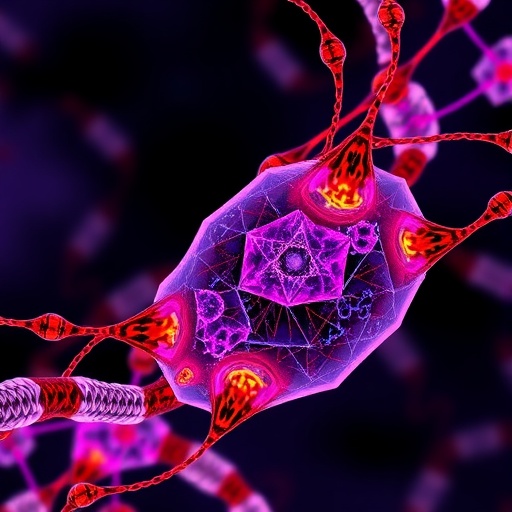
In recent years, the intricate relationship between cellular organelles has emerged as a crucial factor in understanding metabolic diseases, particularly those affecting the liver. A groundbreaking study published in Nature Metabolism brings to light the expanding role of mitochondria–lipid droplet contacts in hepatic function and how their disruption is increasingly implicated in the pathogenesis of metabolic dysfunction-associated steatotic liver disease (MASLD). This exploration provides a new dimension to our comprehension of hepatic lipid metabolism, mitochondrial health, and the cascading effects of their interplay on metabolic diseases that afflict millions globally.
At the core of this investigation is the dynamic physical and functional interaction between mitochondria and lipid droplets (LDs) in liver cells. Traditionally, mitochondria have been recognized as the powerhouses of the cell, orchestrating energy production via oxidative phosphorylation. Meanwhile, lipid droplets serve primarily as reservoirs for neutral lipids, storing energy and maintaining cellular lipid homeostasis. The study by Segalés and Liesa reveals that the contact sites where mitochondria and lipid droplets converge form specialized communication hubs essential for coordinating lipid mobilization, oxidation, and energy flux within hepatocytes.
This mitochondria–LD contact interface plays a multifaceted role, regulating not only lipid metabolism but also mitochondrial dynamics and bioenergetics. The physical coupling enables the efficient channeling of fatty acids liberated from lipid droplets directly into mitochondria for β-oxidation, a pivotal step in energy production and maintenance of cellular lipid balance. Beyond fatty acid oxidation, these contacts influence mitochondrial morphology, fission and fusion events, and overall functional competence. Importantly, disruptions in these sites can skew hepatocellular lipid handling and energy metabolism, leading to pathological states.
The study delves deep into the molecular underpinnings governing mitochondria–LD contact formation and stability. Proteins such as perilipins, Rab GTPases, and mitofusins emerge as key players orchestrating the tethering and functional communication between these organelles. Through a combination of advanced imaging techniques and biochemical assays, the authors illustrate how the dysregulation of these proteins causes a breakdown of mitochondrial-LD contacts. This, in turn, leads to impaired fatty acid oxidation, accumulation of toxic lipid intermediates, and mitochondrial dysfunction—hallmarks of MASLD progression.
Metabolic dysfunction-associated steatotic liver disease, formerly known as non-alcoholic fatty liver disease (NAFLD), remains a global epidemic. It is characterized by excessive hepatic fat accumulation, inflammation, and in severe cases, progression to steatohepatitis, fibrosis, and cirrhosis. The study elucidates that one of the earliest molecular events precipitating MASLD is the disintegration of mitochondria–lipid droplet contacts. Loss of these contacts hinders the effective utilization of lipid stores, leading to lipid overload within hepatocytes, oxidative stress, and inflammatory cascades that exacerbate liver damage.
A striking revelation from the research is the bidirectional nature of mitochondria–LD communication. While mitochondria are essential for burning fatty acids derived from lipid droplets, lipid droplets themselves serve as a defensive buffer limiting free fatty acid toxicity. The breakdown of their interaction removes this protective effect, sensitizing hepatocytes to lipotoxic insults. Thus, the study positions mitochondrial-LD crosstalk as a central mediator balancing lipid toxicity and energy demands, crucial for liver cell survival under metabolic stress.
The authors employed cutting-edge electron microscopy and super-resolution imaging to visualize these transient yet critical contact points. Their data showcase a marked reduction in contact sites in liver biopsies from MASLD patients compared to healthy controls, signifying clinical relevance. Moreover, animal models recapitulating MASLD phenotypes exhibit similar defects in mitochondrial-LD interfaces, confirming a conserved pathological mechanism across species.
Beyond mere characterization, the study ventures into therapeutic possibilities to restore or bolster mitochondria–LD interactions. Experimental interventions using small molecules or gene therapies aimed at enhancing the expression or function of contact-mediating proteins demonstrate promising results in preclinical models. These treatments improve mitochondrial fatty acid oxidation, reduce hepatic lipid burden, and alleviate inflammatory markers, offering hope for novel MASLD treatment modalities grounded in organelle crosstalk.
One of the more complex aspects uncovered involves how nutrient excess and insulin resistance modulate mitochondria–LD dynamics. High-fat diet and hyperinsulinemia conditions induce structural remodeling of hepatic mitochondria, reducing their capacity to engage with lipid droplets. This remodeling, coupled with altered expression of tethering proteins, precipitates metabolic inflexibility in hepatocytes, a hallmark of insulin-resistant states commonly associated with MASLD.
Further, the research underscores the importance of mitochondrial quality control mechanisms such as mitophagy and biogenesis in maintaining the integrity of mitochondria–LD contacts. Defects in mitochondrial turnover mechanisms exacerbate contact site disruption, fostering an environment conducive to metabolic maladaptation and liver pathology. This highlights the interconnectedness of organelle health and inter-organellar communication in metabolic disease progression.
The broader implications of this work extend beyond liver pathology. Given the ubiquity of mitochondria and lipid droplets across diverse tissues, similar organelle interactions may be implicated in other metabolic syndromes, including obesity, type 2 diabetes, and cardiovascular diseases. Understanding the fundamental principles of mitochondria–LD crosstalk could thus unlock new perspectives in systemic metabolic regulation and disease intervention.
Importantly, this research navigates the challenge of delineating causality versus consequence in organelle interaction defects. By utilizing temporal and conditional knockout models, Segalés and Liesa’s team provides compelling evidence that disruption of mitochondria–LD contacts precedes and promotes MASLD onset, rather than being a mere epiphenomenon. This establishes these contact sites as potential early biomarkers and therapeutic targets for intervention before irreversible liver damage occurs.
Moreover, the findings invite a re-examination of current diagnostic criteria and treatment strategies for MASLD. Conventional approaches focusing primarily on lipid accumulation need to incorporate mitochondrial function and organelle communication parameters to provide a more holistic evaluation of disease state and progression. This integrated perspective could revolutionize patient stratification and personalized therapeutic approaches.
In conclusion, the study by Segalés and Liesa marks a significant advance in the field of cellular metabolism and liver disease. By illuminating the pivotal role of mitochondria–lipid droplet contacts and their disruption in MASLD, they offer a novel conceptual framework linking organelle interplay, metabolic regulation, and disease pathology. As research continues to unravel the complexities of subcellular communication, targeting these microscopic yet mighty interfaces might hold the key to combating the growing burden of metabolic liver disease worldwide.
Cite Scienmag News
Drew Townsend. (March 25, 2026). Mitochondria–Lipid Droplet Contacts Disrupted in MASLD. Scienmag. https://scienmag.com/mitochondria-lipid-droplet-contacts-disrupted-in-masld/
Drew Townsend. "Mitochondria–Lipid Droplet Contacts Disrupted in MASLD." Scienmag, 25 March 2026, https://scienmag.com/mitochondria-lipid-droplet-contacts-disrupted-in-masld/. Accessed 3 September 2026.
Drew Townsend. "Mitochondria–Lipid Droplet Contacts Disrupted in MASLD." Scienmag. March 25, 2026. https://scienmag.com/mitochondria-lipid-droplet-contacts-disrupted-in-masld/


