


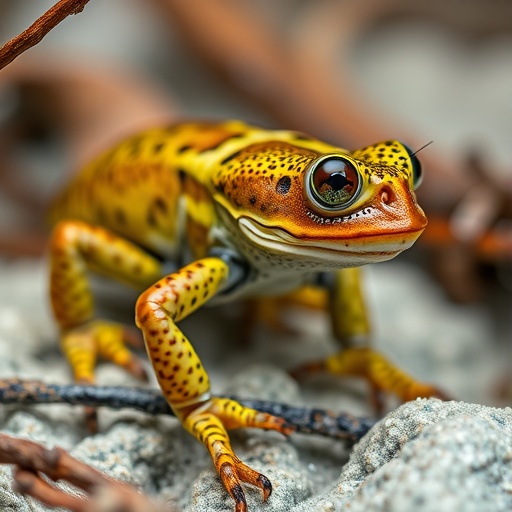
A groundbreaking study from Murdoch University shines a revealing light on the physiological limitations faced by cold-blooded animals, or ectotherms, in the context of our planet’s increasingly volatile climate. These creatures, which include the vast majority of fish, reptiles, and invertebrates, depend entirely on their external environment to regulate body temperature. The new research challenges previously held assumptions about their ability to acclimate physiologically to daily temperature fluctuations, exposing an inherent vulnerability that could have profound ecological consequences as climate change intensifies.
Daily temperature variation is a ubiquitous feature of natural ecosystems, from the subtle dawn-to-dusk changes in temperate regions to the extreme oscillations experienced in deserts and high-altitude environments. For ectotherms, whose internal body temperature closely tracks ambient conditions, these fluctuations were traditionally thought to trigger adaptive physiological responses that stabilize metabolism, cardiovascular function, and enzyme kinetics despite temperature swings. Such mechanisms would ideally buffer the organisms against thermal stress, ensuring survival and performance across variable thermal regimes.
Contrary to this established paradigm, the team led by Dr. Daniel Gomez Isaza from the Harry Butler Institute conducted an extensive meta-analysis, aggregating data from 26 independent studies spanning diverse ectothermic taxa. Their comprehensive analysis focused on key physiological endpoints—metabolic rate, locomotion, heart function, and enzymatic activity—under both constant and fluctuating temperature regimes. The expectation was to observe consistent evidence of physiological adjustments that mitigate sensitivity to thermal variation, effectively demonstrating intrinsic plasticity.
Surprisingly, the findings exposed a remarkable lack of such internal fine-tuning. Rather than adapting their biochemistry or physiology to buffer against the daily temperature oscillations they regularly experience, ectotherms showed no consistent trend of reduced sensitivity or enhanced thermal robustness. This absence of physiological modulation suggests ectotherms operate without the presumed dynamic regulatory capacity to cope with the predictable swings of their environments, highlighting a previously underappreciated constraint.
From a mechanistic standpoint, these results suggest that ectothermic organisms rely predominantly on fixed physiological parameters shaped by their evolutionary history rather than flexible, short-term acclimatory responses. This rigidity might mean that terminal processes such as enzymatic reaction rates and cardiac function remain strictly temperature-dependent, and that the organisms endure the energetic and functional consequences without internal compensation. It implies a fundamental trade-off where the costs or limits of physiological plasticity prevent daily recalibration.
The implications for ectotherm resilience amidst accelerating climate change are ominous. Dr. Essie Rodgers, co-author and environmental scientist, stresses that the incapacity for physiological adjustment to daily fluctuations means these animals may increasingly depend on behavioral strategies—like seeking shade, burrowing, or migrating to microhabitats—to maintain suitable body temperatures. While behavior can provide some relief, it cannot fully substitute for physiological adaptability, especially in fragmented or rapidly changing habitats.
Moreover, this reliance on behavior places additional energetic burdens and ecological risks on ectotherms. The spatial and temporal availability of thermal refugia might be limited, and heightened competition or predation risks associated with behavioral thermoregulation could amplify stress. The lack of rapid interior modulation increases the likelihood of physiological strain or failure during extreme thermal events, which are predicted to grow in frequency and intensity under future climate scenarios.
Looking beyond immediate responses, this study raises critical questions about the evolutionary trajectory of ectotherm populations facing longer-term environmental instability. Genetic adaptation, rather than day-to-day physiological plasticity, may become the dominant mechanism enabling survival. However, the pace of contemporary climate change challenges the ability of many species to undergo adaptive genetic shifts rapidly enough, potentially leading to demographic declines or extinctions.
The meta-analytical nature of this research synthesizes existing empirical evidence with rigorous statistical frameworks, ensuring robust conclusions that transcend individual study limitations. By integrating metabolic, locomotor, cardiovascular, and enzymatic data across multiple ectotherm clades, the study provides a holistic perspective on physiological responsiveness to thermal variability. This approach underscores the perils of assuming uniform adaptive capacities among taxa and highlights critical gaps in our understanding of organismal thermal biology.
This research not only revises foundational assumptions about ectotherm physiology but also calls for urgent reassessment of conservation strategies. Protecting and enhancing thermal heterogeneity of habitats, maintaining ecological corridors to facilitate behavioral thermoregulation, and supporting evolutionary potential through genetic diversity are pivotal. Further studies probing the molecular and cellular bases of this physiological inflexibility could unlock insights necessary to predict and mitigate climate change impacts on vulnerable species.
As the world warms and temperature variability escalates, ectothermic animals stand on a precarious edge. Their inability to physiologically adjust to the thermal rhythms they have always faced may now define their fate. Behavioral plasticity and long-term genetic adaptation will be essential buffers, but whether these will suffice remains uncertain. This new research from Murdoch University compels the scientific and conservation communities to reconsider the thermal resilience of cold-blooded animals and the intricate challenges posed by a rapidly shifting climate.
Cite Scienmag News
Russell Cooper. (March 20, 2026). Climate Variability Endangers Cold-Blooded Species. Scienmag. https://scienmag.com/climate-variability-endangers-cold-blooded-species/
Russell Cooper. "Climate Variability Endangers Cold-Blooded Species." Scienmag, 20 March 2026, https://scienmag.com/climate-variability-endangers-cold-blooded-species/. Accessed 4 September 2026.
Russell Cooper. "Climate Variability Endangers Cold-Blooded Species." Scienmag. March 20, 2026. https://scienmag.com/climate-variability-endangers-cold-blooded-species/


