


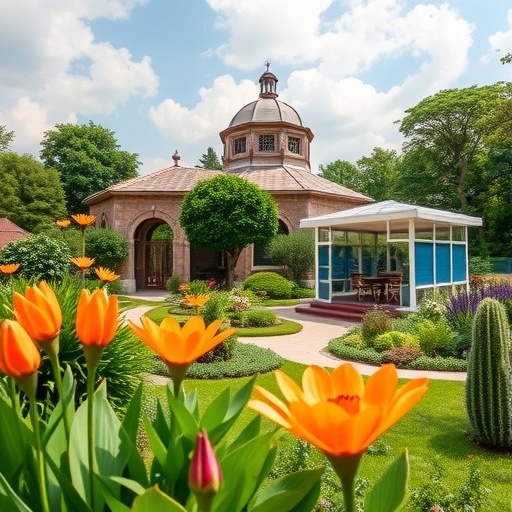
As the world hurtles towards an ever-more urbanized future, the intricate relationship between humanity and nature faces unprecedented challenges. Climate change, biodiversity loss, and escalating pollution form a triad of crises that gravely impact urban environments globally. Against this complex backdrop, a fresh perspective emerging from leading researchers in botanical sciences highlights the transformative potential of botanical gardens in nurturing a sustainable, symbiotic coexistence between cities and natural ecosystems.
Urban centers worldwide are experiencing a profound disconnection from nature, exacerbated by diminishing green spaces and compromised ecological functions. Currently, more than two-thirds of China’s population resides in cities, pushing the boundaries of urban development and intensification. Developed nations exceed even this urban concentration, surpassing 80%. Such demographic realities underscore the urgency in reimagining green infrastructure as not merely aesthetic but fundamentally functional and restorative components of urban life. Botanical gardens, with their multifaceted roles, emerge as critical agents in this paradigm shift.
Modern botanical gardens transcend their traditional aesthetic and recreational identities. They embody six essential functions crucial for urban sustainability: ex situ conservation of plant diversity, advanced scientific research, public education, resource utilization, recreational spaces, and horticultural display. Notably, botanical gardens collectively harbor roughly 30% of the world’s wild plant species within protected ex situ seed banks and living collections, positioning them as indispensable reservoirs of global biodiversity. Their research endeavors foster cutting-edge insights on climate resilience, exemplified by initiatives like the Royal Botanic Gardens Victoria’s “Landscape Succession Strategy,” which catalyzed international collaborations focused on climate adaptation and mitigation.
Beyond conservation, botanical gardens address pressing urban microclimate challenges. These green oases act as ecological buffers by mitigating urban heat islands through evapotranspiration and shading, filtering air pollutants, and facilitating stormwater management. Their carefully curated plantings inform innovative urban ecological engineering, such as the integration of drought-tolerant species on green roofs and the development of sponge city concepts that enhance urban resilience to water scarcity. Botanical gardens thus contribute critical empirical data and applied methodologies supporting the creation of low-maintenance yet ecologically valuable urban habitats.
The intersection of ecological service and human wellbeing constitutes a compelling dimension of botanical gardens’ urban contributions. They are vibrant nodes for social, cultural, and economic engagement, providing accessible green spaces that foster biodiversity appreciation and community participation. Economic research on medicinal and economically valuable plants conducted within these gardens spurs niche urban industries and supports localized economies. Educational programming enhances scientific literacy and awareness of conservation imperatives, empowering urban populations to engage actively with environmental stewardship.
Emerging research delineates seven intricate pathways by which botanical gardens elevate human quality of life. These include satisfying innate botanical curiosity, enriching leisure experiences, stimulating economic vitality, increasing scientific understanding, mitigating psychological stress, addressing ecoanxiety linked to environmental crises, and providing therapeutic horticulture interventions. The correlation between heightened biodiversity in urban green spaces and measurable psychological benefits substantiates botanical gardens as cost-effective, high-impact public health interventions embedded in nature-based solutions.
Strategically, the integration of botanical gardens within urban planning aligns seamlessly with global biodiversity frameworks such as the Kunming-Montreal Global Biodiversity Framework (KMGBF) and the Global Strategy for Plant Conservation (GSPC 2023-2030). The discourse categorizes botanical garden-city development into progressive phases: initially independent “botanical gardens in cities,” advancing toward integrated “cities in botanical gardens,” and culminating in the aspirational vision of “cities in nature.” This evolution frames botanical gardens as pivotal agents in advancing urban green infrastructure, corresponding with GSPC Action 12’s directive to enhance urban ecosystems.
The path forward demands concerted action to augment botanical gardens’ capacity to fulfill these roles. Priorities include intensifying ex situ conservation measures and ecological restoration research; fostering interdisciplinary collaborations with urban planners, architects, and policy makers to embed gardens within expansive urban ecological networks; and optimizing public engagement and educational outreach through national conservation networks. Furthermore, rooting these endeavors within the Sustainable Development Goals (SDGs), particularly Goal 11 to create sustainable, inclusive, and resilient cities, amplifies their societal relevance and policy uptake.
Inclusivity remains a cardinal principle underpinning contemporary botanical garden initiatives. Progressive programs seek to dismantle access barriers for marginalized and vulnerable communities, embracing immigrants and economically disadvantaged groups to ensure equitable participation in green spaces. Innovative social practices like “Plant Adoption” actively link individuals with living plants, nurturing a sense of spatial belonging and social cohesion within urban contexts. These efforts exemplify how botanical gardens can function as critical nodes of social equity and community resilience.
Fundamental to this discourse is the conceptualization of a symbiotic relationship between botanical gardens and cities. Gardens are not merely passive green spaces but dynamic ecological and cultural cornerstones. Conversely, urban centers provide the socio-economic infrastructure and political support essential for gardens’ development and sustainability. Within this mutualistic framework, botanical gardens catalyze the weaving of human-nature connection into the fabric of urban life, fostering cities that are not only livable but also regenerative.
Elevating the institutional status of botanical gardens is crucial to realizing their full potential in urban sustainability. By integrating botanical expertise into urban governance structures and enhancing resource allocation, cities can harness gardens’ multifarious values more effectively. Interdisciplinary collaboration spanning ecology, economics, social science, and urban design is imperative to advance a holistic understanding of garden-city dynamics and to innovate solutions responsive to complex urban environmental challenges.
In conclusion, botanical gardens emerge as indispensable pillars in building a harmonious coexistence between humanity and nature within the urban milieu. Their multifaceted functions—from conserving plant diversity and informing climate adaptation to promoting psychological wellbeing and social inclusion—underscore their transformative capacity. As the march of urbanization continues, embedding botanical gardens within the core of urban ecosystems offers a compelling blueprint for sustainable, resilient, and flourishing cities of the future.
Cite Scienmag News
Courtney Benton. (March 18, 2026). Botanical Gardens: Essential Pillars of Urban Human-Nature Harmony in the Face of Global Crises. Scienmag. https://scienmag.com/botanical-gardens-essential-pillars-of-urban-human-nature-harmony-in-the-face-of-global-crises/
Courtney Benton. "Botanical Gardens: Essential Pillars of Urban Human-Nature Harmony in the Face of Global Crises." Scienmag, 18 March 2026, https://scienmag.com/botanical-gardens-essential-pillars-of-urban-human-nature-harmony-in-the-face-of-global-crises/. Accessed 4 September 2026.
Courtney Benton. "Botanical Gardens: Essential Pillars of Urban Human-Nature Harmony in the Face of Global Crises." Scienmag. March 18, 2026. https://scienmag.com/botanical-gardens-essential-pillars-of-urban-human-nature-harmony-in-the-face-of-global-crises/


