


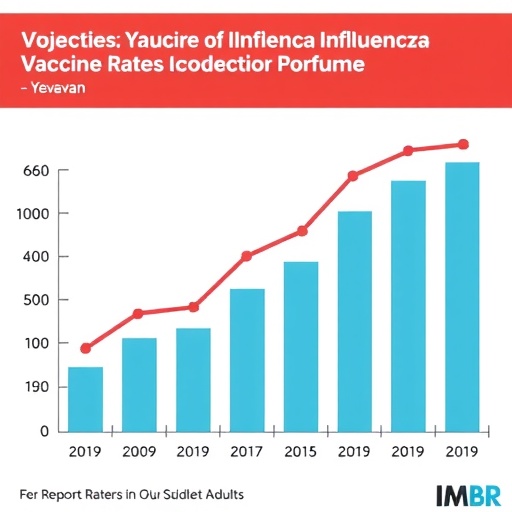
In a groundbreaking new study published in BMC Geriatrics, researchers Muradyan, Alahverdian, and Agopian shed critical light on the seasonal influenza vaccination uptake among older adults in Yerevan, Armenia. This research arrives at a crucial time, as influenza continues to pose a significant health risk to elderly populations worldwide, and vaccination remains the most effective preventive strategy. The meticulous work of this research team not only documents the current vaccination landscape in Armenia’s capital but also explores underlying factors influencing vaccine acceptance in this vulnerable demographic.
Seasonal influenza, caused by rapidly mutating viruses, presents a persistent threat particularly to older adults whose immune systems weaken due to age-related changes—a phenomenon known as immunosenescence. This state of immune decline results in a higher risk of severe influenza-related complications, hospitalizations, and mortality. Vaccination remains the cornerstone of influenza prevention, yet global vaccine uptake rates among older adults remain suboptimal. In this context, understanding local vaccination trends and barriers is indispensable for tailoring effective public health interventions.
The study conducted by Muradyan and colleagues utilizes a comprehensive epidemiological approach, involving structured surveys and data analysis to quantify influenza vaccine coverage among adults aged 65 and older. Their findings reveal a vaccination uptake rate significantly below global targets recommended by the World Health Organization. This alarming gap underscores the persistent challenges in reaching high-risk groups in Yerevan despite the availability of vaccines.
Delving deeper, the researchers investigated the determinants influencing vaccination behavior. Their analysis integrates sociodemographic parameters, health literacy levels, cultural beliefs, and accessibility issues. Notably, they identify a complex interplay between individuals’ perceptions of vaccine efficacy, fear of side effects, and mistrust of healthcare institutions. Additionally, logistical barriers such as limited vaccination clinics and inconvenient timing further dampen uptake rates among the elderly population.
This study’s technical rigor is evident in its methodological design, which controls for confounding variables through multivariate statistical modeling. The authors implement logistic regression techniques to isolate the impact of independent predictors on vaccination status, thereby providing robust insights into causal factors. This quantitative depth is critical for developing targeted strategies that address the nuanced realities faced by older adults in Yerevan’s healthcare landscape.
One of the key revelations of the study is the pivotal role of healthcare providers in influencing vaccine uptake. Physicians’ recommendations positively correlate with increased vaccination rates, highlighting the importance of trust and communication in clinical encounters. However, the study notes a worrying trend of inconsistent messaging and inadequate patient education, which inadvertently contributes to hesitancy. Enhancing provider-patient dialogue could therefore serve as a simple yet powerful intervention point.
Further complicating the pattern of vaccine uptake are systemic issues within Armenia’s public health infrastructure. The research identifies sporadic vaccine supply chains and limited public awareness campaigns as significant obstacles. These systemic inadequacies intertwine to create an environment where even willing individuals face difficulties accessing timely and affordable immunization services, a gap that government and health authorities must urgently address.
The investigators also provide a thorough comparison with global data, situating Armenia’s figures within broader regional and international contexts. While some neighboring countries report higher uptake due to stronger immunization policies and public trust, others mirror Armenia’s challenges, suggesting that cultural and economic factors across Eastern Europe and the Caucasus similarly impact influenza vaccination coverage among seniors.
Innovatively, the study incorporates behavioral science frameworks to interpret vaccine hesitancy through the lens of psychological constructs such as perceived susceptibility and social norms. This adds an explanatory depth that transcends mere statistics, offering explanations for why elderly individuals often undervalue vaccination despite heightened personal risk. These insights pave the way for behavioral interventions that could effectively reframe attitudes towards immunization.
Muradyan and colleagues also stress the urgency of integrating targeted educational initiatives tailored to older adults’ cognitive and sensory preferences. They argue for culturally sensitive materials and community engagement programs led by trusted local figures. Such approaches could demystify vaccines, dispel myths, and empower seniors with knowledge, thereby fostering an environment conducive to higher influenza vaccine acceptance.
In addition to individual-level interventions, the study urges public health stakeholders to reinforce health system resilience by ensuring uninterrupted vaccine availability through better supply chain management. Streamlining vaccine distribution logistics and establishing convenient locations and times for elderly vaccination sessions could dramatically improve uptake rates by eliminating practical barriers.
The article further discusses the critical importance of longitudinal surveillance to monitor vaccine coverage trends and the impact of evolving public health policies. Continuous data collection allows for timely adjustments and evaluation of intervention effectiveness. This proactive approach is fundamental in maximizing influenza vaccine return on investment, especially among high-risk elderly populations.
This research also hypothesizes potential repercussions if vaccination coverage fails to improve. Lower immunization rates predispose the elderly to more severe influenza outbreaks, increased healthcare burdens, and strain on hospital resources. Such scenario analysis lends an urgency to adopting comprehensive vaccination promotion strategies, combining both top-down policy measures and grassroots level engagement.
Finally, the study’s implications extend far beyond Armenia. It provides an exemplar model for other low- and middle-income countries confronting similar public health challenges related to influenza vaccination in aging populations. The blend of epidemiological data, behavioral insights, and system-level evaluations makes this research a pivotal contribution toward achieving global immunization equity and safeguarding elderly health.
In conclusion, the detailed work by Muradyan and colleagues uncovers critical gaps and opportunities in seasonal influenza vaccine uptake among older adults in Yerevan, Armenia. Their multifaceted analysis calls for a renewed commitment to tailored public health strategies, encompassing education, access, and provider involvement, to protect the most vulnerable amidst the annual influenza threat. As influenza viruses continue to evolve, ensuring optimal vaccination coverage among seniors remains not just a national imperative but a global health priority.
Muradyan, D., Alahverdian, A. & Agopian, A. Seasonal influenza vaccination uptake among older adults in Yerevan, Armenia.
BMC Geriatr (2026). https://doi.org/10.1186/s12877-026-07355-4
Cite Scienmag News
Kristina Jarvis. (March 18, 2026). Influenza Vaccine Rates in Older Adults, Yerevan. Scienmag. https://scienmag.com/influenza-vaccine-rates-in-older-adults-yerevan/
Kristina Jarvis. "Influenza Vaccine Rates in Older Adults, Yerevan." Scienmag, 18 March 2026, https://scienmag.com/influenza-vaccine-rates-in-older-adults-yerevan/. Accessed 3 September 2026.
Kristina Jarvis. "Influenza Vaccine Rates in Older Adults, Yerevan." Scienmag. March 18, 2026. https://scienmag.com/influenza-vaccine-rates-in-older-adults-yerevan/


