


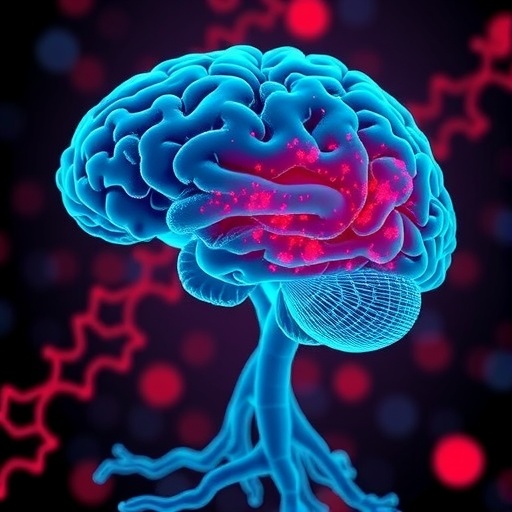
In a groundbreaking discovery poised to revolutionize our understanding of brain cancer biology, researchers at Northwestern Medicine have unveiled a critical metabolic pathway that enables glioblastoma tumors to evade immune destruction and thrive within the brain’s complex environment. The study, recently published in the prestigious Proceedings of the National Academy of Sciences, identifies fructose metabolism within microglial cells— the brain’s resident immune cells—as an essential driver of glioblastoma growth and immunosuppression. This novel insight opens an exciting therapeutic avenue for one of the deadliest and most treatment-resistant cancers.
Glioblastoma multiforme (GBM) has long presented a grim prognosis, with less than 7% of patients surviving five years post-diagnosis, highlighting an urgent need for innovative therapeutic strategies. The resilience of GBM is partially attributed to its unique tumor microenvironment, where immune cells called microglia and infiltrating myeloid cells exert profound influences. These cells can create an immunosuppressive niche, enabling tumors to circumvent immune-mediated destruction despite conventional therapies. Until now, the molecular underpinnings orchestrating this immune evasion have been poorly understood.
The Northwestern team, led by assistant professor of neurological surgery Jason Miska, focused on the metabolic activity of microglia within glioblastoma. Unlike peripheral immune cells, microglia uniquely express GLUT5, a specialized transporter facilitating fructose uptake. This transporter’s expression suggested that fructose—a sugar commonly linked to inflammatory diseases outside the brain—may play a distinctive role in tumor-associated microglial function inside the brain milieu.
Employing sophisticated methodologies, including flow cytometry and single-cell genetic sequencing, the researchers meticulously analyzed cell populations harvested from mouse glioblastoma models. This systematic interrogation demonstrated that microglia, and microglia alone among immune cell types, possess the metabolic machinery to transport and metabolize fructose. This selectivity implicates fructose metabolism as a specific regulator of microglial behavior in the tumor environment.
To probe fructose metabolism’s role in glioblastoma progression, the investigators utilized genetically engineered mice deficient in the GLUT5 fructose transporter specifically in microglia. Remarkably, tumors in these transporter-deficient animals failed to grow, correlated with a marked enhancement in immune activity. Microglia became more inflammatory and produced cytokines that stimulate the proliferation and activation of CD8+ T cells — the immune system’s primary effectors against cancer. Such T-cell activation was closely tied to tumor rejection, underscoring the vital interplay between metabolic pathways and immune responses within the brain.
Leah Billingham, a postdoctoral fellow and co-first author, noted that this metabolic circuit not only modifies microglial function but orchestrates a broader immune network involving T and B lymphocytes. The synergy between these immune cells culminates in an environment hostile to tumor survival, revealing that metabolic inhibition of fructose uptake may reinvigorate anti-tumor immunity profoundly.
The discovery holds immense promise for overcoming the persistent challenge that glioblastoma poses to effective treatment. Despite medical advances, the standard-of-care therapies for GBM—including surgery, radiation, and chemotherapy—have remained essentially unchanged for two decades, with dismal improvements in survival. Targeting microglial fructose metabolism represents a paradigm shift, potentially arming clinicians with new tools to sensitize tumors to immunotherapies and conventional regimens alike.
Intriguingly, this research also highlights how the brain’s unique metabolic landscape differs fundamentally from other organs where fructose consumption is often linked to heightened inflammation, including conditions like colon cancer or diabetic neuropathy. Within the central nervous system, fructose metabolism paradoxically supports an immunosuppressive state that favors tumor growth, signifying that metabolic pathways are exquisitely context-dependent.
Looking ahead, the research team aims to identify pharmacological agents capable of selectively inhibiting GLUT5-mediated fructose uptake in microglia. Preclinical testing will evaluate whether these agents can synergize with existing brain cancer treatments or checkpoint blockade immunotherapies to enhance anti-tumor responses. Such combinatorial strategies could potentially translate into improved survival outcomes for patients facing glioblastoma.
Beyond therapeutic implications, this study enriches our broader comprehension of the metabolic crosstalk within the brain’s immune microenvironment. By unveiling fructose metabolism as a linchpin in microglial-mediated immunosuppression, the findings underscore metabolism’s role as not merely a biochemical process but a critical determinant of immune function and cancer progression.
This pioneering work was supported by an array of prestigious funding sources, including various National Cancer Institute grants, the Cancer Research Institute, and the National Institute of Neurological Disorders and Stroke. The team’s multidisciplinary approach, combining neurological surgery, immunology, and molecular biology, exemplifies the collaborative effort needed to tackle the formidable challenges posed by glioblastoma.
In summary, the identification of microglial fructose metabolism as essential for glioblastoma growth constitutes a landmark advance in neuro-oncology. By elucidating a previously unrecognized metabolic mechanism of immune evasion, this research not only provides a promising new target for drug development but also offers hope for more effective interventions against one of the most aggressive brain tumors afflicting humanity. As subsequent studies translate these insights into clinical innovations, patients and clinicians alike may anticipate a new era in which the metabolic manipulation of immune cells revolutionizes brain cancer therapy.
News Publication Date: 17-Mar-2026
Web References:
https://www.pnas.org/doi/10.1073/pnas.2521256123
References:
Miska, J. et al. (2026). Microglial fructose metabolism is essential for glioblastoma growth. Proceedings of the National Academy of Sciences.
Cite Scienmag News
Cassandra Pierce. (March 17, 2026). Brain Tumors Reprogram Sugar Metabolism to Escape Immune Detection. Scienmag. https://scienmag.com/brain-tumors-reprogram-sugar-metabolism-to-escape-immune-detection/
Cassandra Pierce. "Brain Tumors Reprogram Sugar Metabolism to Escape Immune Detection." Scienmag, 17 March 2026, https://scienmag.com/brain-tumors-reprogram-sugar-metabolism-to-escape-immune-detection/. Accessed 4 September 2026.
Cassandra Pierce. "Brain Tumors Reprogram Sugar Metabolism to Escape Immune Detection." Scienmag. March 17, 2026. https://scienmag.com/brain-tumors-reprogram-sugar-metabolism-to-escape-immune-detection/


