


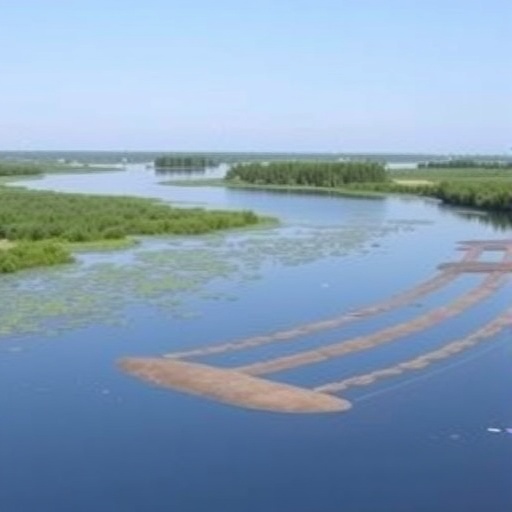
In a groundbreaking collaborative effort to safeguard vital water resources, Wayne State University has secured a significant grant to spearhead advanced research on phosphorus removal at the country’s largest single-site wastewater treatment plant. This initiative, funded by the Great Lakes Water Authority (GLWA) with an award of $473,566 spread over three years, targets improvements in the phosphorus extraction process at the GLWA Water Resource Recovery Facility (WRRF), which is tasked with treating wastewater for 77 communities including Detroit. Covering an expansive nearly 1,000-square-mile sewer watershed, the WRRF plays a crucial role in regional water management, making the success of this project fundamental in protecting the health of the Rouge River and Lake Erie.
Phosphorus is a critical nutrient involved in aquatic ecosystems; however, its excess presence due to agricultural runoff, urban discharge, and sewage overflow can result in severe ecological disturbances. One of the most devastating outcomes is the proliferation of harmful algal blooms that reduce oxygen in water bodies, leading to dead zones where aquatic life cannot survive. This research aims to enhance the facility’s capacity to comply with increasingly stringent environmental regulations by optimizing phosphorus removal through innovative chemical and biological treatment methods. Advances in removing phosphorus have direct implications on mitigating these detrimental effects, thereby preserving drinking water quality, sustaining aquatic biodiversity, and supporting recreational and commercial water use.
The research endeavor is led by Dr. Shawn McElmurry, Chair of the Civil and Environmental Engineering Department at Wayne State’s James and Patricia Anderson College of Engineering. His expertise frames the project’s strategic direction, focusing on capturing a comprehensive understanding of phosphorus dynamics within the WRRF processes. Utilizing sophisticated chemical analyses, the team will identify and quantify various phosphorus species present in wastewater streams, allowing a nuanced view into how phosphorus transitions through complex treatment stages. Such detailed chemical characterization is foundational for devising precision-focused treatment adjustments that upgrade phosphorus elimination efficacy.
Complementing the chemical analysis, the research will deploy bench-scale treatment systems to simulate and rigorously test both biological and chemical phosphorus removal strategies side-by-side. These laboratory-scale models enable controlled experimentation that is impossible at full scale and offer the opportunity to systematically assess modifications under replicable conditions. The interplay of biological uptake and chemical precipitation processes will be scrutinized to reveal optimized operational parameters that can be scaled to improve full-scale plant performance.
Moreover, this research project pioneers the integration of predictive modeling tools capable of real-time optimization of phosphorus removal operations. By developing advanced computational models that incorporate empirical data from bench tests and chemical analyses, water treatment operators will gain access to dynamic, data-driven frameworks that can adapt rapidly to fluctuating wastewater characteristics. This is a transformative leap beyond traditional static process control practices, enhancing responsiveness to operational challenges while ensuring compliance with regulatory discharge standards.
Beyond technological innovation, this collaboration underscores a central goal: educating and training the next wave of environmental and water treatment professionals. Wayne State students involved in the project will acquire hands-on experience with cutting-edge wastewater treatment research, preparing them to enter the field as highly skilled experts competent in both engineering and environmental stewardship. This dimension ensures that the knowledge generated through this initiative will propagate into the workforce, amplifying the long-term benefits for water resource management.
Dr. John Norton, GLWA’s Director of Energy, Research, and Innovation, emphasizes that partnerships between academic institutions and utility providers create synergistic opportunities to revolutionize water treatment practices. By aligning Wayne State’s research capabilities with GLWA’s operational scale and expertise, this collaboration fosters innovation with accelerated practical application. The benefits extend not only to the immediate geographic region but provide a scalable model for phosphorus management technologies and educational frameworks nationwide.
The project also embodies the ethos of Wayne State’s Grand Challenges initiative, which aims to confront complex societal problems through discipline-spanning research for tangible impact. Through this lens, the phosphorus removal project directly contributes to environmental sustainability goals and supports broader public health outcomes by striving for cleaner, healthier waterways. It stands as a testament to how university-driven research can fulfill community needs while pushing the boundaries of scientific understanding and technological capability.
Integral to the project’s multidisciplinary team are Dr. Timothy Dittrich, Associate Professor of Civil and Environmental Engineering, and Brooke Ballard, a lead student researcher from GLWA, who represent the academic and operational nexus critical to this effort. Their involvement reinforces the program’s commitment to marrying theory with application, fostering a continuous feedback loop that enhances both learning and real-world impact.
As this research unfolds over the coming years, it promises to revolutionize wastewater treatment methodologies aimed at phosphorus control. The outcomes will directly influence the resilience of important freshwater ecosystems and provide a template for future collaborative environmental research ventures. It highlights the pressing necessity and opportunity to integrate advanced engineering, environmental science, and community partnerships to address the mounting challenges of water quality in urban and rural settings alike.
Wayne State University’s role as a leading public research institution in an urban environment offers unique advantages for projects that demand a comprehensive approach to environmental engineering challenges. By leveraging its multidisciplinary strengths and maintaining strong ties with governmental and industrial stakeholders, the university continues to deliver research solutions with profound public and ecological benefits. The partnership with GLWA reinforces this mission and sets a precedent for impactful applied environmental engineering research.
In summary, the strategic focus on enhanced phosphorus removal through analytical rigor, experimental bench testing, and predictive modeling poises this project to dramatically improve water quality standards and inspire innovative operational practices. This work not only addresses a critical environmental concern with measurable outcomes but also establishes an educational framework to empower future leaders in environmental engineering, ensuring the health of vital water ecosystems for generations to come.
News Publication Date: (Information not provided)
Web References: research.wayne.edu
Cite Scienmag News
Violet Maxwell. (March 17, 2026). New Major Collaboration Initiated to Safeguard Lake Erie and Rouge River Ecosystems. Scienmag. https://scienmag.com/new-major-collaboration-initiated-to-safeguard-lake-erie-and-rouge-river-ecosystems/
Violet Maxwell. "New Major Collaboration Initiated to Safeguard Lake Erie and Rouge River Ecosystems." Scienmag, 17 March 2026, https://scienmag.com/new-major-collaboration-initiated-to-safeguard-lake-erie-and-rouge-river-ecosystems/. Accessed 5 September 2026.
Violet Maxwell. "New Major Collaboration Initiated to Safeguard Lake Erie and Rouge River Ecosystems." Scienmag. March 17, 2026. https://scienmag.com/new-major-collaboration-initiated-to-safeguard-lake-erie-and-rouge-river-ecosystems/


