


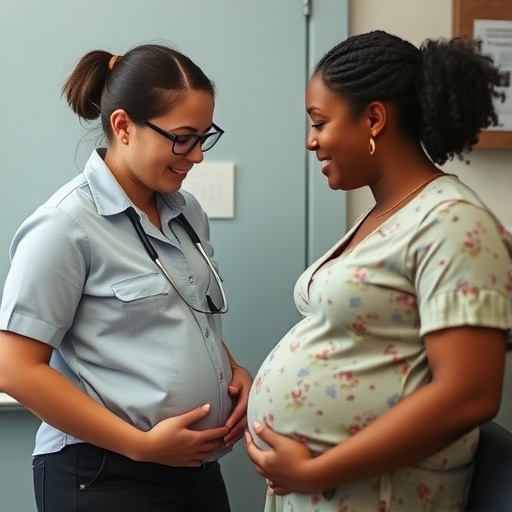
In a groundbreaking new study funded by the University of South Carolina’s Collaborative for Health Equity Research (CHEER), assistant professor Leila Larson is turning her attention to a little-understood yet globally pervasive condition known as pica—specifically its impact on pregnant women. Pica, characterized by the compulsive consumption of non-food substances such as ice, clay, soil, and starch, poses serious health risks including anemia, abnormal gestational weight gain, hypertension, and adverse birth outcomes. Despite the widespread nature of the condition, it remains underdiagnosed, underreported, and scientifically understudied, particularly in the United States.
Larson’s research situates pica not merely as a cultural phenomenon but as a complex biological and behavioral syndrome linked to micronutrient deficiencies, most notably iron deficiency. Iron deficiency anemia is a significant global health issue, and intriguingly, individuals with pica often consume items that interfere with nutrient absorption or introduce toxins and parasitic pathogens. This paradoxical behavior exacerbates maternal and fetal health risks, creating a feedback loop of nutritional deficiency and detrimental health consequences.
Historically, pica has been viewed as a normative or culturally embedded behavior in many societies. In certain regions, craving and consuming earth materials during pregnancy is considered traditional and is often openly acknowledged. However, in other communities, stigma and fear of judgment prevent pregnant women from disclosing such behaviors to healthcare providers, thereby hindering effective diagnosis and treatment. This underreporting is problematic because of the condition’s strong association with pregnancy complications that can have lifelong implications for both mother and child.
Data on pica prevalence in the United States is sparse, with only two epidemiological studies published in the last quarter-century. These studies reveal staggering prevalence rates: 51% among Hispanic women in California and 38% among rural women in North Carolina experienced pica during pregnancy. Yet, despite these high numbers, 75% of affected women in the North Carolina study had no official documentation of the condition in their medical records—a troubling gap that underscores the need for improved clinical awareness and screening.
Larson’s extensive research background includes her pivotal work in Malawi, where she demonstrated that iron supplementation could reduce the consumption of earthy substances among pregnant women. This evidence suggests that addressing micronutrient deficiencies is a promising strategy for mitigating pica behaviors. Building on these findings, her current study aims to identify which subpopulations in South Carolina are most affected by pica, the primary etiologic factors in these groups, and the lived experiences of pregnant people grappling with this condition.
The new study spearheaded by Larson is multidisciplinary in nature, bringing together clinical experts, public health researchers, and community stakeholders. Importantly, the research framework emphasizes community-engaged methodologies with continuous input from a Community Advisory Board. This inclusive approach ensures that study protocols, participant recruitment, data collection materials, and dissemination strategies are culturally sensitive and contextually appropriate, thereby enhancing both research validity and translational potential.
One of the primary scientific challenges Larson’s team faces is the multifactorial nature of pica’s etiology. While iron deficiency remains a principal suspect, other micronutrients, infections, psychological stressors, and cultural norms likely interplay in complex ways to precipitate pica behaviors. The difficulty in differentiating between culturally sanctioned pica and pathological cravings complicates assessment, necessitating rigorous qualitative and quantitative methodologies to unravel these dimensions.
The Southern United States presents a particularly important regional focus due to its high rates of prenatal anemia and rich cultural diversity, creating fertile ground for studying pica in its sociobiological context. The intersection of socioeconomic disparities, racial and ethnic health inequities, and nutritional deficits demands urgent public health attention. Larson’s initiative may lay the foundation for regionally tailored screening tools and interventions that could transform prenatal care paradigms in the Palmetto State and beyond.
Clinically, the underrecognition of pica contributes to suboptimal maternal health outcomes, not only by allowing nutrient deficiencies to persist but also by exposing women and fetuses to harmful substances. The ingestion of soil, clay, or other non-food items raises concerns about environmental contaminants such as heavy metals and soil-transmitted helminths, which can aggravate anemia and other pregnancy complications. Recognizing and addressing pica comprehensively could enhance prenatal risk assessments and improve obstetric care.
Larson emphasizes the importance of destigmatizing pica within healthcare settings to encourage open dialogue between patients and providers. Improved training for clinicians to recognize signs of pica and its underlying nutritional or psychosocial drivers is essential. By understanding pregnant people’s perspectives and experiences, healthcare systems can adopt empathetic, nonjudgmental approaches that enhance patient-provider trust and improve adherence to interventions like supplementation or behavioral counseling.
The long-term objective of Larson’s research is to develop culturally relevant, evidence-based screening and treatment protocols that can be integrated into routine prenatal care. Such protocols would help to systematically identify pica, elucidate its underlying causes in diverse populations, and tailor interventions that address both nutritional needs and the psychosocial context. This holistic approach promises to reduce adverse maternal and neonatal outcomes associated with the condition.
As this pilot study unfolds, it will not only generate critical epidemiological data but also advance scientific understanding of the pathophysiology of pica in pregnancy. Moreover, it exemplifies the power of community-engaged research in tackling a neglected health issue that disproportionately affects marginalized groups. Larson’s commitment to translational science rooted in equity holds promise for transforming pica from an overlooked curiosity into a recognized target of maternal and child health interventions.
In summary, this pioneering investigation led by Leila Larson underscores the urgent need to confront pica as a significant public health issue. The project’s interdisciplinary, community-centered approach, focused on alleviating nutritional deficiencies and improving clinical recognition, could have far-reaching implications not only for South Carolina but worldwide. By illuminating the causes, prevalence, and lived realities of pica, this initiative stands to generate actionable knowledge that will empower healthcare providers and pregnant individuals alike to break the cycle of pica-related health risks.
News Publication Date: 2024
Web References:
– University of South Carolina Health Promotion, Education, and Behavior Department: https://www.sc.edu/study/colleges_schools/public_health/study/areas_of_study/health_promotion_education_and_behavior/index.php
– Leila Larson Faculty Profile: https://www.sc.edu/study/colleges_schools/public_health/faculty-staff/larson_leila.php
– Larson’s Malawi Pica Research: https://jn.nutrition.org/article/S0022-3166(25)00292-5/fulltext
Cite Scienmag News
Harold Sullivan. (March 17, 2026). Researcher Investigates Complex Pregnancy Condition Impacting Many in South Carolina. Scienmag. https://scienmag.com/researcher-investigates-complex-pregnancy-condition-impacting-many-in-south-carolina/
Harold Sullivan. "Researcher Investigates Complex Pregnancy Condition Impacting Many in South Carolina." Scienmag, 17 March 2026, https://scienmag.com/researcher-investigates-complex-pregnancy-condition-impacting-many-in-south-carolina/. Accessed 4 September 2026.
Harold Sullivan. "Researcher Investigates Complex Pregnancy Condition Impacting Many in South Carolina." Scienmag. March 17, 2026. https://scienmag.com/researcher-investigates-complex-pregnancy-condition-impacting-many-in-south-carolina/


