


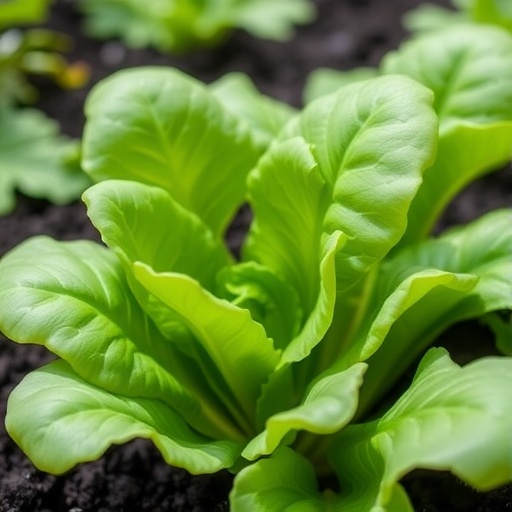
Cadmium contamination in agricultural soils presents a pressing challenge to global food safety and environmental health. This toxic heavy metal can readily accumulate in edible crops, posing significant risks to human health through dietary exposure. Recent groundbreaking research published in the journal Biochar offers new insights into how aged silicon-rich biochar, derived from rice husks, can effectively mitigate cadmium uptake in leafy vegetables. These findings not only underscore the potential of biochar as a soil amendment but also reveal the complex and beneficial transformations biochar undergoes through natural aging processes, with implications for sustainable agriculture and environmental remediation.
Biochar, a carbonaceous material produced by pyrolyzing biomass under oxygen-limited conditions, has attracted scientific and practical attention due to its multifaceted roles in soil enhancement, carbon sequestration, and pollution control. Silicon-rich biochar (Si-char), in particular, is derived from biomass high in silicon content, such as rice husks. While biochar’s capacity to immobilize heavy metals in soil has been documented, a critical knowledge gap has persisted regarding how this performance evolves over time in field conditions. Environmental factors continuously weather and chemically alter biochar after its application, yet the influence of this “aging” on biochar’s remediation properties remained largely uncharacterized until now.
In an innovative approach, researchers engineered silicon-rich biochars by pyrolyzing rice husks at three distinct temperatures, creating materials with varying physicochemical properties. To mimic real-world weathering, these biochars were artificially aged via controlled oxidative treatments simulating natural oxidative, microbial, and photochemical exposure. The study then assessed the behavior and efficacy of both fresh and aged biochars in controlled laboratory adsorption assays and greenhouse pot experiments using pakchoi (Brassica rapa subsp. chinensis). This leafy vegetable, widely cultivated across Asia, is particularly susceptible to cadmium contamination, making it an ideal model for investigating heavy metal dynamics in food crops.
The transformative effects of aging on biochar’s remediation function emerged as one of the study’s most striking conclusions, with the impact highly dependent on the initial pyrolysis temperature. Notably, biochar produced at a lower pyrolysis temperature of 300°C exhibited the most pronounced enhancement in performance after aging. This aged biochar reduced cadmium concentrations in pakchoi leaves by over 27% relative to the levels observed in untreated soils. This result challenges the default assumption that aging necessarily degrades biochar’s utility, instead demonstrating that specific biochars evolve to become more effective in situ.
Mechanistic analysis revealed two synergistic drivers underpinning this improvement. Firstly, aging triggered an increased release of silicon in bioavailable forms as well as dissolved organic matter into the soil matrix. These compounds engage in complexation and adsorption reactions with cadmium ions, significantly reducing the metal’s mobility and bioavailability to plant roots. Secondly, the silicon released from biochars was found to accumulate within plant tissues, fortifying internal defense mechanisms of pakchoi. This silicon incorporation bolstered plant resilience to heavy metal stress and impeded the translocation of cadmium from roots to aerial parts, thereby safeguarding edible tissues.
These findings illuminate a nuanced dynamic wherein the biochar aging process acts less as a degradative pathway and more as an activation mechanism, particularly for low-temperature Si-rich biochars. The oxidative and biological transformations during aging enrich the biochar’s surface chemistry and nutrient release profile, which collectively enhance its capacity to immobilize toxic metals and support plant health. This revelation invites a paradigm shift in how environmental scientists and agronomists conceive the longevity and function of biochar amendments within agricultural ecosystems.
Complementing the chemical perspectives, the study delved into the biological interactions in amended soils. Analysis of soil microbial communities revealed that aged biochar stimulated proliferation of beneficial bacterial taxa known for their roles in heavy metal immobilization and nutrient cycling. These microbial shifts likely contribute to stabilizing cadmium within soil aggregates and reducing its phytoavailability. Concurrent transcriptomic profiling of pakchoi leaves unveiled a downregulation of genes implicated in cadmium transport, alongside an upregulation of antioxidant and stress response pathways. Such gene expression modifications represent an intrinsic plant adaptation to the biochar-amended environment that mitigates cadmium toxicity.
The synergistic interplay among biochar chemistry, microbial ecology, and plant molecular biology highlights the multi-dimensional influence of aged biochar in contaminated agricultural systems. Rather than a static amendment, biochar is dynamically integrated into ecosystem processes that collectively reduce heavy metal stress, promote soil health, and protect crop quality. This integration challenges a previously held assumption that biochar remediation effectiveness diminishes steadily over time, emphasizing instead the importance of temporal evolution in biochar-soil-plant interactions.
From an applied perspective, these insights demand a re-evaluation of biochar production and deployment strategies. Designing biochars with specific properties conducive to beneficial aging reactions, such as optimizing pyrolysis temperature and feedstock selection, can maximize remediation outcomes. Furthermore, pre-aging or simulated aging treatments may be envisioned as part of biochar preparation to enhance immediate field efficacy. The consideration of aging effects also underscores the value of long-term field monitoring to capture the evolving performance profiles of biochar amendments.
In a broader context, the capability of aged silicon-rich biochars to reduce cadmium accumulation in food crops offers promising pathways for enhancing food safety and sustainability in regions impacted by soil contamination. Heavy metal pollution remains a formidable barrier to achieving secure and healthy agricultural outputs, and cost-effective, scalable remediation approaches are critically needed. Biochar, particularly when thoughtfully engineered and managed, stands out as a versatile tool that aligns with circular economy principles by valorizing agricultural residues like rice husks.
The study’s revelations also propel future research directions focused on elucidating the detailed molecular mechanisms governing biochar aging and its environmental interactions. Understanding how biochar properties evolve in diverse soil types, climates, and cropping systems will be key to tailoring interventions that optimize both agricultural productivity and ecological resilience. Moreover, integrating biochar applications with complementary agronomic practices and green technologies could magnify the collective benefits for contaminated land restoration.
Ultimately, this research enriches the scientific narrative surrounding biochar, shifting the discourse from a static remediation agent to a dynamic participant in soil-plant-microbe interactions that unfold over time. By revealing how environmental aging can activate and enhance the protective functions of silicon-rich biochars, the study opens new frontiers in harnessing biochar for safer, more sustainable agricultural landscapes attentive to both crop health and human well-being.
News Publication Date:
February 1, 2026
Web References:
Journal Biochar
DOI 10.1007/s42773-025-00556-x
References:
Zhang, Y., Liu, L., Hua, Y. et al. Influence of aged silicon-rich biochars (Si-chars) on leaf Cd accumulation in pakchoi (Brassica rapa subsp. chinensis): a pyrolysis temperature-dependent response. Biochar 8, 37 (2026).
Cite Scienmag News
Alan Morgan. (March 17, 2026). Aged Silicon-Enriched Biochar Lowers Cadmium Uptake in Leafy Greens. Scienmag. https://scienmag.com/aged-silicon-enriched-biochar-lowers-cadmium-uptake-in-leafy-greens/
Alan Morgan. "Aged Silicon-Enriched Biochar Lowers Cadmium Uptake in Leafy Greens." Scienmag, 17 March 2026, https://scienmag.com/aged-silicon-enriched-biochar-lowers-cadmium-uptake-in-leafy-greens/. Accessed 3 September 2026.
Alan Morgan. "Aged Silicon-Enriched Biochar Lowers Cadmium Uptake in Leafy Greens." Scienmag. March 17, 2026. https://scienmag.com/aged-silicon-enriched-biochar-lowers-cadmium-uptake-in-leafy-greens/


