


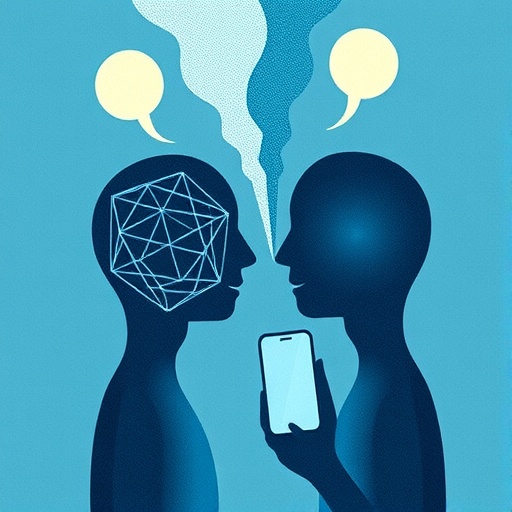
Why do widely endorsed solutions to pressing global challenges, such as climate change, so frequently fail to gain substantial traction despite overwhelming societal agreement? A pioneering study led by researchers at the University of Zurich ventures to answer this by delving deeply into the psychological and network-driven aspects that underpin resistance to change. Their empirical approach marries behavioral insights with complex network theory to illuminate the subtle mechanisms that govern social adoption processes.
At the heart of this investigation lies the novel concept of individual thresholds for change—quantitative measures that define how much social encouragement a person requires before altering their behavior. These thresholds are far from uniform; they manifest a rich spectrum reflecting varying degrees of openness or reticence towards innovation or new policies. Some individuals embrace new behaviors instantaneously upon exposure, while others exhibit pronounced inertia, waiting until a critical mass of peers has adopted the new norm before they feel compelled to follow suit.
Bridging the domains of behavioral science and complexity science, the researchers advance a synergistic framework. Behavioral science traditionally illuminates individual decision-making motives, whereas complexity science explicates the dynamics of how these decisions cascade through intricate social networks. This interdisciplinary fusion enables a more granular understanding of how personal predispositions interplay with social structure to either stymie or accelerate transformative collective action.
To empirically ground their framework, the team deployed innovative survey-based experiments traditionally used in marketing research. Participants were repeatedly presented with choices between competing options, such as varied energy policies or communication applications, while being privy to simulated levels of social endorsement for each choice. Through careful statistical modeling of these selections, researchers inferred each participant’s social threshold—the precise tipping point dictating their likelihood to adopt change as peer support fluctuates.
This methodological advancement is particularly salient as it sidesteps conventional guesswork in favor of deriving these thresholds directly from observed behavior patterns. By quantifying these individual tipping points, the team established a robust metric that captures the heterogeneity of social influence sensitivity across the population, setting the stage for tailoring interventions with unprecedented precision.
The study then takes a crucial step from individual-level parameters to system-level impact by integrating these thresholds with actual social network configurations. Utilizing extensive simulations on empirically mapped networks, the investigators evaluated various “seeding” strategies aimed at jumpstarting widespread behavioral shifts. For example, one strategy targeted early adopters to catalyze a domino effect, triggering broader adoption via network dynamics.
Their findings emphasize the superiority of approaches that jointly consider both network topology and individual thresholds. When individuals with high resistance thresholds proved difficult to sway directly, the optimal tactic focused on influencing their well-connected neighbors who were on the cusp of change. Moreover, in resource-constrained scenarios—analogous to the budget limitations found in influencer marketing efforts—algorithms that simultaneously leveraged network and threshold data outperformed simpler heuristics.
From a policy perspective, these insights bear transformative potential for addressing entrenched social challenges such as climate mitigation and public health initiatives. By discerning who within a community requires only a modest nudge and understanding the pathways through which influence percolates, interventions can be crafted to amplify impact dramatically. This nuanced precision moves beyond broad-based mass campaigns towards strategically informed, targeted engagement.
The implications also extend to digital domains where social networks are ubiquitous yet complex. Harnessing sophisticated computational tools to model behavioral readiness and connectivity patterns can enable platforms and policymakers to orchestrate change campaigns that optimize reach and acceptance, avoiding common pitfalls of diffuse messaging efforts.
While the study’s experimental design utilizes simplified social signals unlike the multifaceted realities of everyday social influence, it nonetheless marks a critical step toward integrating behavioral micro-foundations with macroscopic dynamical models. This fusion offers a powerful blueprint for designing next-generation interventions that reconcile human behavioral complexity with network science rigor.
The authors eloquently conclude that an equitable understanding of “who is ready to change” is as crucial as mapping “which networks they inhabit.” This dual focus elucidates a pathway wherein social policy and marketing can transcend traditional silos, fostering interventions that resonate deeply and spread organically.
Moreover, this research challenges existing paradigms that often treat social contagion as a monolithic process, instead revealing the layered, threshold-dependent nature of adoption. Such insight invites future studies to refine predictive models that accommodate individual heterogeneity and network diversity, heralding a new era for empirical social science.
In sum, the University of Zurich team’s integrative approach opens promising avenues for overcoming societal inertia around major issues. By quantifying individual receptiveness and weaving it through the fabric of social connectivity, their work equips decision-makers with potent tools to engineer meaningful, scalable social transformation.
Cite Scienmag News
Courtney Benton. (March 16, 2026). Why People Tend to Change Only After Others Do: A Scientific Perspective. Scienmag. https://scienmag.com/why-people-tend-to-change-only-after-others-do-a-scientific-perspective/
Courtney Benton. "Why People Tend to Change Only After Others Do: A Scientific Perspective." Scienmag, 16 March 2026, https://scienmag.com/why-people-tend-to-change-only-after-others-do-a-scientific-perspective/. Accessed 3 September 2026.
Courtney Benton. "Why People Tend to Change Only After Others Do: A Scientific Perspective." Scienmag. March 16, 2026. https://scienmag.com/why-people-tend-to-change-only-after-others-do-a-scientific-perspective/


