


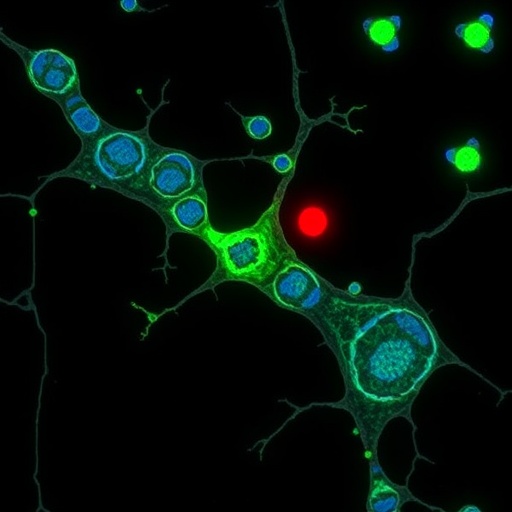
In the realm of immunology and dermatology, a groundbreaking study has emerged, illuminating the intricate cellular dialogues underlying lichen planus—a chronic inflammatory disorder affecting both skin and mucosal tissues. Utilizing the cutting-edge techniques of single-cell and spatial transcriptomics, researchers have unveiled an unprecedented crosstalk between a specialized subset of dendritic cells, termed cDC2A-CXCL13^+, and CD8^+ T cells, fundamentally reshaping our understanding of immune-mediated cytotoxicity in this enigmatic disease. This landmark research, published in Nature Communications in 2026, heralds a new era of molecular insight that could pave the way for precision therapies targeting immune cell interactions in cutaneous and mucosal lichen planus.
Lichen planus has long been a conundrum in clinical medicine, characterized by its persistent and often painful lesions, but the underlying cellular and molecular mechanisms driving this pathology remained elusive. The team led by Jiang, Bogle, and Xing employed an integrative approach combining single-cell RNA sequencing with spatial transcriptomic mapping across affected tissue biopsies. This dual modality enabled them to dissect the cellular heterogeneity and spatial architecture at an unprecedented resolution, linking cellular phenotypes with their microenvironment in situ. The findings underscore that cDC2A dendritic cells expressing the chemokine CXCL13 orchestrate a localized signaling hub, recruiting and activating CD8^+ T cells marked by high TNFRSF9 expression—better known as 4-1BB, a crucial co-stimulatory receptor in T cell-mediated cytotoxic responses.
The discovery of cDC2A-CXCL13^+ subsets emerged as a pivotal element in the immune landscape of lichen planus. Traditionally, cDC2 dendritic cells have been associated with antigen presentation and T helper cell polarization. However, this novel subset distinguished by CXCL13 production suggests a unique chemotactic role, forming spatially restricted niches that facilitate intimate interactions with cytotoxic CD8^+ T cells. This chemokine, widely recognized for its role in lymphoid tissue organization, appears here to recruit effector T cells within the cutaneous and mucosal microenvironments, amplifying localized immune responses. The spatial transcriptomics vividly depicted these cellular neighborhood clusters, illuminating a microanatomical arrangement that was hitherto unappreciated.
Further functional analyses revealed the consequential engagement of TNFRSF9 (4-1BB) on CD8^+ T cells, a receptor integral to their activation, survival, and cytotoxic potential. Activation through TNFRSF9 signaling potentiates T cell effector functions, enhancing the release of cytolytic granules and pro-inflammatory cytokines that culminate in epithelial cell apoptosis—manifesting clinically as the erosive and hyperkeratotic lesions characteristic of lichen planus. This mechanistic insight highlights TNFRSF9 not just as a passive marker but as an active participant and potential therapeutic target to modulate pathologic T cell activity in inflammatory mucocutaneous diseases.
The implications of these findings extend beyond the immediate disease context, touching on broader themes in immune regulation and tissue homeostasis. The spatially resolved interaction between cDC2A-CXCL13^+ dendritic cells and cytotoxic T cells exemplifies how immune cells marshal coordinated antigenspecific responses within tissue microenvironments, balancing protective immunity with pathological damage. Such insights offer a molecular basis for precision immunomodulation strategies, potentially involving blockade of CXCL13 or antagonism of the TNFRSF9 axis to mitigate the destructive aspects of the immune response while preserving host defense mechanisms.
Notably, the contemporaneous advances in single-cell sequencing technologies have revolutionized the capacity to interrogate complex tissues at an unprecedented scale and resolution. This study leverages those advancements by systematically delineating the transcriptional programs of individual immune and epithelial cells, allowing the identification of rare yet functionally significant subpopulations like cDC2A-CXCL13^+ dendritic cells. By integrating transcriptomic data with meticulous spatial context, researchers could spatially anchor molecular signatures to histological landmarks, bridging the gap between molecular biology and classic pathology.
The translational potential of these discoveries is tantalizing. Therapies designed to disrupt specific ligand-receptor interactions—such as CXCL13-mediated recruitment or TNFRSF9-driven cytotoxic activation—could alum the destructive immune activation in lichen planus with high precision. Current management approaches mainly rely on broad immunosuppressants that carry significant side effects and risk systemic immune compromise. This research paves the way for targeted interventions, informed by cellular dialogue maps within the diseased tissue architecture, that specifically disrupt pathogenic cell-cell communications.
Moreover, the dual cutaneous and mucosal involvement characterized in this study emphasizes that lichen planus should be viewed through the lens of a shared pathogenic immune axis affecting multiple epithelial barriers. The parallels between skin and mucosal immune microenvironments and their interactions with dendritic and T cell subsets underscore a conserved mechanism of immune dysregulation. This could stimulate investigative efforts to identify similar cellular crosstalk in other mucocutaneous diseases, potentially broadening the therapeutic applicability of these findings.
Emerging from this study is a refined conceptual framework in which the immune microenvironment’s spatial organization drives disease phenotype and severity. By mapping cellular neighborhoods and delineating their signaling cascades, we gain the ability to stratify patients based on molecular and cellular signatures, moving towards personalized medicine models. The robustness of the single-cell and spatial datasets offers biomarkers for disease activity and therapeutic responsiveness, which could revolutionize patient monitoring and clinical trial design.
The work by Jiang and colleagues stands as a testament to the power of integrating cutting-edge omics technologies with classical clinical science. By dissecting the molecular mechanisms at play in lichen planus, they transcend traditional histopathological classifications, offering a blueprint for future studies in chronic inflammatory diseases. Additionally, their approach showcases the utility of combining spatial transcriptomic methods with functional immunology to reveal complex intercellular communications driving tissue pathology.
Furthermore, the insights into the functional phenotype of CD8^+ T cells expressing TNFRSF9 stress that these cells are not merely bystanders but active executors mediating epithelial cell damage. Understanding the balance of activating and regulatory signals within this cell population opens avenues to modulate cytotoxicity without inducing generalized immunosuppression, a critical consideration for preserving immunity against infection and malignancy.
Underpinning these biological revelations is a robust technological scaffolding. The precision of single-cell RNA sequencing, coupled with spatial resolution, ensures that cellular identities are not dissociated from their native tissue context. This spatial dimension is essential for unraveling the complex crosstalk orchestrating immune responses, particularly in barrier tissues with intricate microanatomy like skin and mucosa. It also provides a template for exploring similar mechanisms in other chronic inflammatory and autoimmune diseases.
Looking forward, the identification of the cDC2A-CXCL13^+ dendritic cell subset and its role in disease pathogenesis raises compelling questions. What are the upstream signals triggering their expansion or activation? Could microbiome alterations or environmental factors influence their function? Unraveling these aspects could further refine therapeutic targeting and preventive strategies.
The study also invites exploration into the selective recruitment mechanisms driven by CXCL13 within the immune niche. Understanding how chemokine gradients shape the infiltration and retention of cytotoxic T cells offers insights into controlling tissue-specific immune responses. Modulating these chemokine axes pharmacologically could become a novel strategy to sculpt local immunity with high specificity.
By interweaving detailed cellular phenotyping with spatial organization, this research marks a transformative step in dermatology and mucosal immunology, revealing a mechanistic underpinning of lichen planus that integrates immunology, cell biology, and spatial genomics. It represents a paradigm shift from descriptive pathology towards mechanistically guided molecular medicine.
In sum, this seminal study expands the frontier of inflammatory disease research, linking specialized dendritic cell subsets with cytotoxic T cell activation via spatially orchestrated signaling networks. These discoveries enrich the molecular tapestry of lichen planus pathogenesis and chart a course for targeted immunotherapies that could revolutionize patient care, alleviate chronic suffering, and exemplify the promise of next-generation spatial omics in unraveling human disease.
Cite Scienmag News
Ophelia Keating. (March 14, 2026). Single-Cell Study Reveals Immune Crosstalk in Lichen Planus. Scienmag. https://scienmag.com/single-cell-study-reveals-immune-crosstalk-in-lichen-planus/
Ophelia Keating. "Single-Cell Study Reveals Immune Crosstalk in Lichen Planus." Scienmag, 14 March 2026, https://scienmag.com/single-cell-study-reveals-immune-crosstalk-in-lichen-planus/. Accessed 4 September 2026.
Ophelia Keating. "Single-Cell Study Reveals Immune Crosstalk in Lichen Planus." Scienmag. March 14, 2026. https://scienmag.com/single-cell-study-reveals-immune-crosstalk-in-lichen-planus/


