


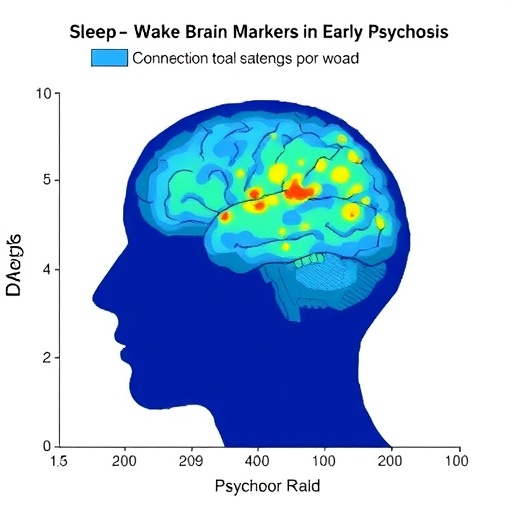
In the intricate landscape of neuropsychiatric research, emerging findings have illuminated a pivotal aspect of brain function in early psychosis and its genetic predispositions. A groundbreaking study published in Schizophrenia (2026) by Baran, Denis, Mylonas, and colleagues ventures into the elusive domain of thalamocortical activity, exploring how markers within sleep and wake states can reveal underlying neural dysfunctions and hereditary risk factors. This research harnesses cutting-edge electrophysiological techniques to dissect the neural signatures that precede and accompany early-course psychosis, unveiling new potential pathways for diagnosis and intervention.
Central to this study is the thalamocortical circuit, a fundamental neural network that orchestrates communication between the thalamus and the cerebral cortex, integral to sensory processing, cognitive functions, and consciousness states. Disruptions in this circuit have long been implicated in schizophrenia spectrum disorders, but precise biomarkers linking these disruptions to clinical symptoms and genetic vulnerability have remained ambiguous. By simultaneously examining patterns during sleep and wakefulness, the researchers provide a comprehensive characterization of thalamocortical dysregulation in individuals experiencing early psychosis, as well as their first-degree relatives, who share genetic risk yet may be asymptomatic.
This investigation employed advanced polysomnography combined with high-density electroencephalography (EEG), allowing for meticulous tracking of neural oscillations implicated in thalamocortical dynamics. In particular, the study focused on slow-wave sleep and sleep spindle activity—hallmarks of thalamocortical synchronization—as well as waking alpha rhythms. Each of these electrophysiological markers has been individually associated with cognitive integrity and neurodevelopmental anomalies, but this study uniquely couples their alterations with early psychotic states, revealing a distinctive dysrhythmic signature.
Slow-wave sleep, characterized by high-amplitude, low-frequency oscillations, embodies the deep restorative phase of sleep during which extensive neural recalibration occurs. The research revealed significant diminution in slow-wave power within early psychosis patients compared to healthy control groups. This attenuation not only mirrors impaired synaptic plasticity but also correlates with cognitive deficits commonly observed in schizophrenia, such as working memory and attention impairments. Moreover, first-degree relatives exhibited intermediate reductions, suggesting a heritable dimension of thalamocortical hypoactivity that may function as a prodromal biomarker.
Equally telling was the disruption in sleep spindles, transient bursts of oscillatory brain activity generated by the thalamic reticular nucleus that play a crucial role in memory consolidation and sensory gating. Patients with early-course psychosis demonstrated markedly decreased spindle density and coherence, affirming prior hypotheses about thalamic reticular dysfunction. Intriguingly, spindle abnormalities were also detectable in first-degree relatives, albeit less pronounced, reinforcing the notion that spindle integrity might serve as a neural endophenotype indicative of genetic susceptibility and resilience mechanisms.
The exploration extended into waking states, assessing alpha oscillations between 8 and 12 Hz, which reflect thalamocortical regulatory processes during resting consciousness. Early psychosis participants exhibited altered alpha power and synchrony, in line with theories positing aberrant sensory integration and cortical excitability within schizophrenia. The intermediate alpha marker profiles in relatives further buttressed the study’s thesis that thalamocortical circuitry disruptions span a continuum from genetic risk to manifest psychosis.
Critically, the study contextualized these electrophysiological findings with clinical symptomatology and neurocognitive performance assessments. Reductions in thalamocortical-driven sleep rhythms predicted more severe positive and negative symptoms, while correlated cognitive deficits highlighted potential mechanistic links. Such convergence advocates for an integrative framework whereby objective neural biomarkers align with subjective clinical manifestations, enhancing the prospect for early diagnosis and tailored therapeutic strategies.
From a translational perspective, these findings open exciting avenues for intervention. Targeting thalamocortical dysfunction with neurostimulation techniques—such as transcranial magnetic stimulation or closed-loop auditory stimulation during sleep—could, in theory, restore oscillatory balance, potentially ameliorating cognitive deficits and modifying disease trajectories. Furthermore, sleep-based biomarkers offer a non-invasive window into brain health, facilitating longitudinal monitoring and evaluation of treatment efficacy in clinical trials.
The genetic implications of this research are equally profound. Identifying electrophysiological biomarkers shared by affected individuals and their first-degree relatives strengthens the argument for genetic contributions to thalamocortical dysrhythmia. Such markers could enrich genetic studies, providing intermediate phenotypes that bridge gene variants with clinical outcomes. This enhances the resolution of neuropsychiatric genetics and bolsters personalized medicine approaches, tailoring interventions based on identifiable biological risk signatures.
Moreover, this study underlines the necessity of examining brain function in both sleep and wake states, a dual approach that captures the full spectrum of thalamocortical dynamics. Sleep, often neglected in psychiatric research, emerges as a critical period where neural plasticity and systemic regulation may reveal latent vulnerabilities. By integrating sleep neurophysiology with awake brain rhythms, researchers unveil a multidimensional portrait of brain dysfunction in psychosis, one that transcends simplistic static measures.
As the field moves forward, these discoveries beckon further investigation into the mechanistic underpinnings of thalamocortical disruptions. Questions remain regarding the developmental timeline of these abnormalities—whether they represent early neurodevelopmental insults, progressive degeneration, or dynamic fluctuations influenced by environmental factors. Longitudinal studies tracking at-risk individuals from adolescence through illness onset will be pivotal in unraveling these trajectories.
Additionally, expanding the scope to include diverse populations and psychotic disorders beyond schizophrenia could test the generalizability of thalamocortical markers and their specificity to disease phenotypes. Integrative multimodal imaging combining EEG with functional MRI and diffusion tensor imaging may further elucidate structural-functional correlates, enhancing biomarker precision.
With the burgeoning recognition that psychosis is fundamentally a circuit disorder, this study by Baran et al. fortifies the conceptual paradigm linking oscillatory brain activity with clinical symptoms and genetic liability. It exemplifies how meticulous neurophysiological characterization, grounded in solid theoretical frameworks, can yield biomarkers with powerful implications for early detection, risk stratification, and intervention. By illuminating the thalamocortical undercurrents of psychosis, it provides hope for shifting the clinical focus toward preemptive, biologically-informed care that could transform outcomes for millions worldwide.
As the neuroscience community digests these insights, the promise of sleep and wake markers as actionable diagnostic tools and therapeutic targets grows ever more tangible. Through the lens of the thalamocortical interface, we begin to glimpse the neural dialogue that breaks down in psychosis—and the possibility to restore it before illness overtakes. This marks a thrilling advance at the frontier of neuropsychiatric research and sets a new standard for biomarker-driven precision medicine.
Cite Scienmag News
Cassandra Pierce. (March 11, 2026). Sleep-Wake Brain Markers in Early Psychosis. Scienmag. https://scienmag.com/sleep-wake-brain-markers-in-early-psychosis/
Cassandra Pierce. "Sleep-Wake Brain Markers in Early Psychosis." Scienmag, 11 March 2026, https://scienmag.com/sleep-wake-brain-markers-in-early-psychosis/. Accessed 4 September 2026.
Cassandra Pierce. "Sleep-Wake Brain Markers in Early Psychosis." Scienmag. March 11, 2026. https://scienmag.com/sleep-wake-brain-markers-in-early-psychosis/


