


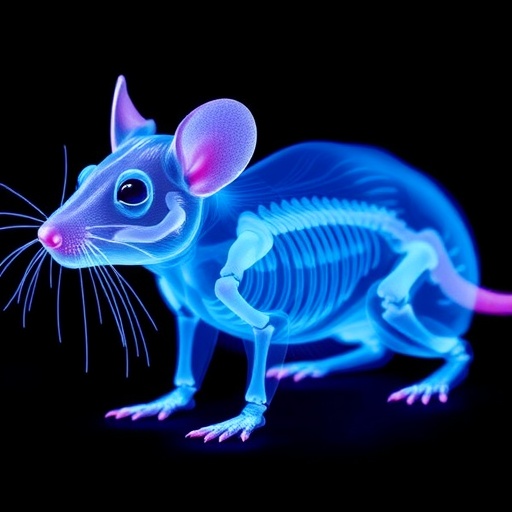
In a groundbreaking study poised to reshape therapeutic strategies for osteoporosis, researchers have unveiled compelling evidence demonstrating that a combined approach integrating physical and pharmacological anabolic therapies significantly enhances bone metabolism and mechanoregulation in female mice. This pioneering research shines a spotlight on the symbiotic potential of biomechanical stimuli and targeted drugs to amplify anabolic responses in bone tissue, a promising advancement for patients suffering from osteoporosis, a debilitating condition characterized by weakened bones and increased fracture risk.
The multifaceted investigation, carried out by a collaborative team led by Schulte, Marques, and Griesbach and published in Nature Communications, delves deep into the complex interactions between mechanical forces and pharmacological agents in modulating bone remodeling. By leveraging powerful in vivo models, the study meticulously elucidates how concurrent application of physical loading and anabolic drugs can create a synergistic environment conducive to increased bone formation and strength, surpassing the effects observed with either intervention alone.
Central to the study is the intricate concept of mechanoregulation—how bone cells sense and transduce mechanical forces into biochemical signals that regulate cellular activity and bone architecture. Osteocytes, embedded within the mineralized matrix, function as critical mechanosensors. Their ability to perceive mechanical stimuli orchestrates a cascade of signaling pathways influencing osteoblast and osteoclast activity. This mechanotransduction is pivotal in maintaining skeletal integrity and adapting bone structure to varying mechanical demands.
The researchers employed controlled mechanical loading protocols mimicking physiological stress to activate anabolic pathways in bone. These protocols involve precisely calibrated mechanical forces that stimulate osteocyte signaling and enhance bone deposition. However, what sets this study apart is its innovative coupling of such mechanical stimulation with anabolic pharmacotherapy, specifically agents that promote osteoblastic bone formation through hormonal or molecular pathways.
Anabolic drugs used in the investigation are known to activate signaling cascades such as the Wnt/β-catenin pathway, which plays a critical role in osteoblast proliferation and differentiation. By targeting these pathways pharmacologically, the drugs facilitate increased bone matrix synthesis and mineralization. Nevertheless, the pharmacological effects alone are often insufficient to fully restore bone mass or strength, particularly in the context of severe osteoporosis.
The integration of mechanical loading addresses this limitation by activating complementary mechanosensitive pathways, triggering robust osteocyte activity and enhancing responsiveness to pharmacological agents. The synergistic effects observed include amplified gene expression relevant to matrix production, increased osteoblast recruitment, and suppression of osteoclast-mediated resorption. These effects culminate in a net anabolic shift within the bone microenvironment.
Notably, the experimental design focused on female mouse models, recognizing the heightened vulnerability of women to osteoporosis, especially post-menopause due to estrogen deficiency. By modeling these physiological conditions, the researchers provided insights with profound clinical relevance. Their findings suggest that combined therapies could counteract the deleterious skeletal effects of hormonal changes more effectively than monotherapies.
Advanced imaging modalities such as high-resolution micro-computed tomography (μCT) were employed to quantify changes in bone microarchitecture. These analyses revealed significant improvements in trabecular thickness, connectivity, and cortical bone density with combined therapy compared to controls receiving singular treatments. The structural enhancements corresponded to superior biomechanical properties, including increased stiffness and resistance to fracture under load.
Complementing imaging data, histological examinations detailed increased osteoblast surface area and reduced markers of osteoclastic resorption. The molecular profile analyses further corroborated these findings, highlighting upregulation of osteogenic markers like osteocalcin and alkaline phosphatase, alongside downregulation of catabolic factors such as RANKL. This dual impact on anabolic and catabolic pathways underscores the profound regulatory influence elicited by the combined therapeutic regimen.
Beyond the immediate implications for bone health, the study advances the broader understanding of skeletal mechanobiology. It emphasizes that pharmacological interventions, no matter how potent, may achieve optimal efficacy only within the context of biomechanical environment modulation. This insight urges a paradigm shift in osteoporosis treatment toward integrated regimens encompassing both mechanical and molecular therapeutic targets.
While the research was conducted in murine models, the translational potential is substantial. Future clinical trials could explore analogous approaches in human patients, employing tailored exercise programs alongside anabolic medications to maximize bone recovery. Such strategies could revolutionize osteoporosis management, reducing fracture incidence, improving mobility, and enhancing quality of life for millions worldwide.
In summary, the compelling evidence from this study highlights that neither physical nor pharmacological anabolic interventions alone suffice for maximal bone restoration. Instead, their strategic combination harnesses distinct yet convergent pathways of osteoanabolism and mechanotransduction to evoke a superior, tightly regulated bone formation response. This has profound implications not only for osteoporosis therapy but potentially for other skeletal disorders involving impaired bone regeneration.
As the field moves forward, continuous exploration of mechanoregulation at cellular and molecular levels will be critical. Fine-tuning the parameters of mechanical stimuli and identifying novel anabolic agents that synergize with these forces could pave the way for next-generation bone therapeutics. This study marks a groundbreaking step in that direction, setting a new standard for integrative approaches in bone disease intervention.
Work by Schulte and colleagues reaffirms the intricate complexity of bone biology, reminding us that effective therapies must embrace this complexity rather than circumvent it. Through combining well-established pharmacological tools with biomechanical principles, the future of osteoporosis treatment looks poised to deliver more resilient bones and healthier lives.
Cite Scienmag News
Ophelia Keating. (March 10, 2026). Combined Therapies Boost Bone Growth in Female Mice. Scienmag. https://scienmag.com/combined-therapies-boost-bone-growth-in-female-mice/
Ophelia Keating. "Combined Therapies Boost Bone Growth in Female Mice." Scienmag, 10 March 2026, https://scienmag.com/combined-therapies-boost-bone-growth-in-female-mice/. Accessed 4 September 2026.
Ophelia Keating. "Combined Therapies Boost Bone Growth in Female Mice." Scienmag. March 10, 2026. https://scienmag.com/combined-therapies-boost-bone-growth-in-female-mice/


